




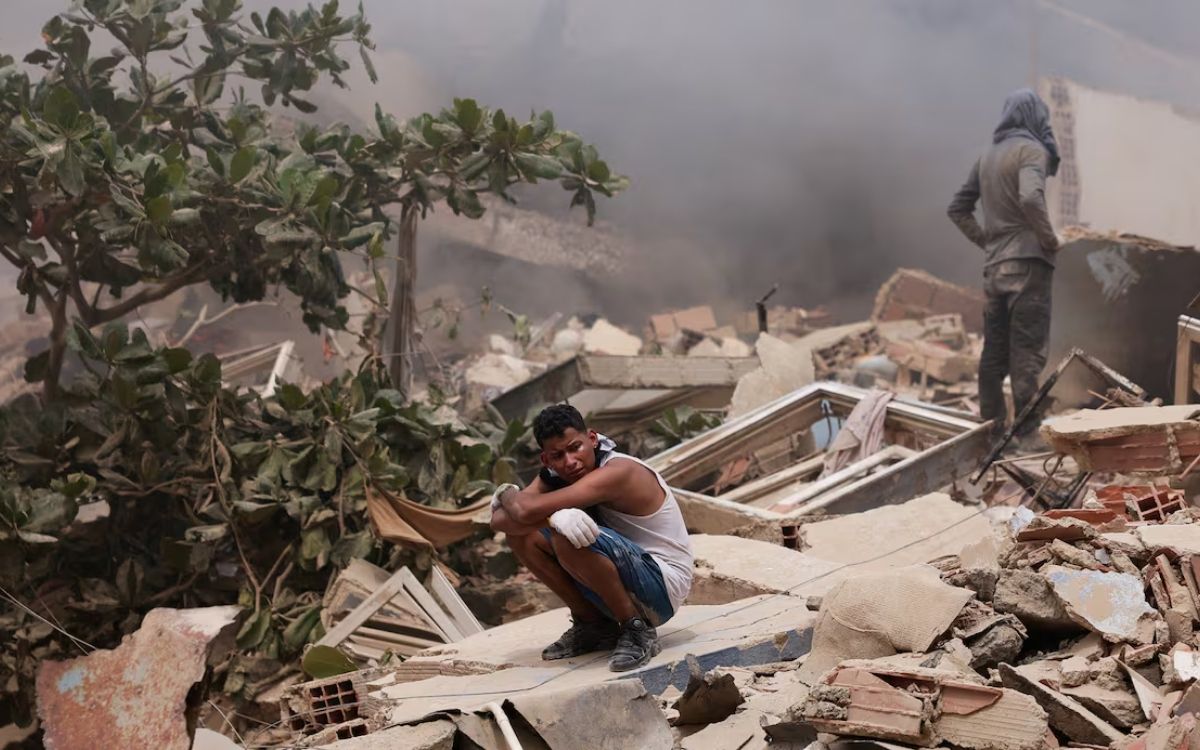
Venezuela’s interim president, Delcy Rodríguez, announced that the death toll from the earthquakes that struck the country last week has risen to at least 2,595. According to forensic pathologists, soaring temperatures are accelerating the decomposition of bodies, making victim identification increasingly difficult. They also claim the official figures represent only about one-third of the actual number of fatalities.
Rodríguez said the death toll had increased by around 300 compared to the previous day, although authorities have yet to release an estimate of the number of missing people or a final casualty count, CNN reports.
Doubts about the official figures intensified after a forensic pathologist from the state of La Guaira, one of the hardest-hit areas, told CNN that the government’s reported death toll “doesn’t represent even one-third of the real number of victims.”
According to the pathologist, the makeshift morgue where she works is processing around 400 bodies per day, while refrigerated storage facilities have reached full capacity.
Due to the lack of space, body bags are being temporarily left outdoors, where high temperatures are accelerating decomposition.
“La Guaira is beyond description. There are so many cases, so many families. Low-income families have been hit the hardest,” the pathologist said. She added that many families are recovering the bodies of their loved ones from the rubble themselves and bringing them to morgues because rescue services are unable to cope with the scale of the disaster.
Initial Estimates
Preliminary estimates by the U.S. Geological Survey indicate a high probability that the magnitude 7.2 and 7.5 earthquakes killed tens of thousands of people.
A similar assessment was made by United Nations Resident Coordinator for Venezuela Gianluca Rampolla del Tindaro, who said international organizations expect the death toll to be significantly higher than the figures released so far.
Amid the lack of official information, citizens are increasingly relying on unofficial databases to report missing persons, CNN reports.
The “Venezuela Reporta” platform, which collects information submitted by citizens, estimates that tens of thousands of people remain missing, although those figures have not been independently verified.
National Assembly President Jorge Rodríguez said that around 30,000 people were in the hardest-hit areas of La Guaira when the earthquakes struck, with approximately 20,000 of them having since been evacuated or rescued.
Identification Challenges
In addition to the rising death toll, authorities are facing major difficulties identifying the victims.
According to forensic experts, many bodies are already in an advanced state of decomposition, meaning identification often relies on tattoos, dental records, or clothing, while DNA testing is largely unavailable because of its high cost.
“We’re receiving many children whose bodies can no longer be recognized even by their own family members,” the pathologist said, adding that forensic teams are overwhelmed and working under immense psychological pressure.
Venezuela was struck on June 24 by two powerful earthquakes measuring 7.2 and 7.5 on the Richter scale, occurring just 39 seconds apart. The coastal state of La Guaira and the capital, Caracas, suffered the most severe damage.
Following the two devastating earthquakes, Venezuela experienced more than 600 aftershocks, most of them of lower intensity, including one measuring 4.6 on the Richter scale.
Residents across Venezuela say the government failed to respond in time and are calling for the immediate deployment of heavy machinery to assist in rescue and recovery operations.
MORE TOPICS:
Source: Nova.rs; Foto: Reuters
 Add Serbian Times as your Google source