




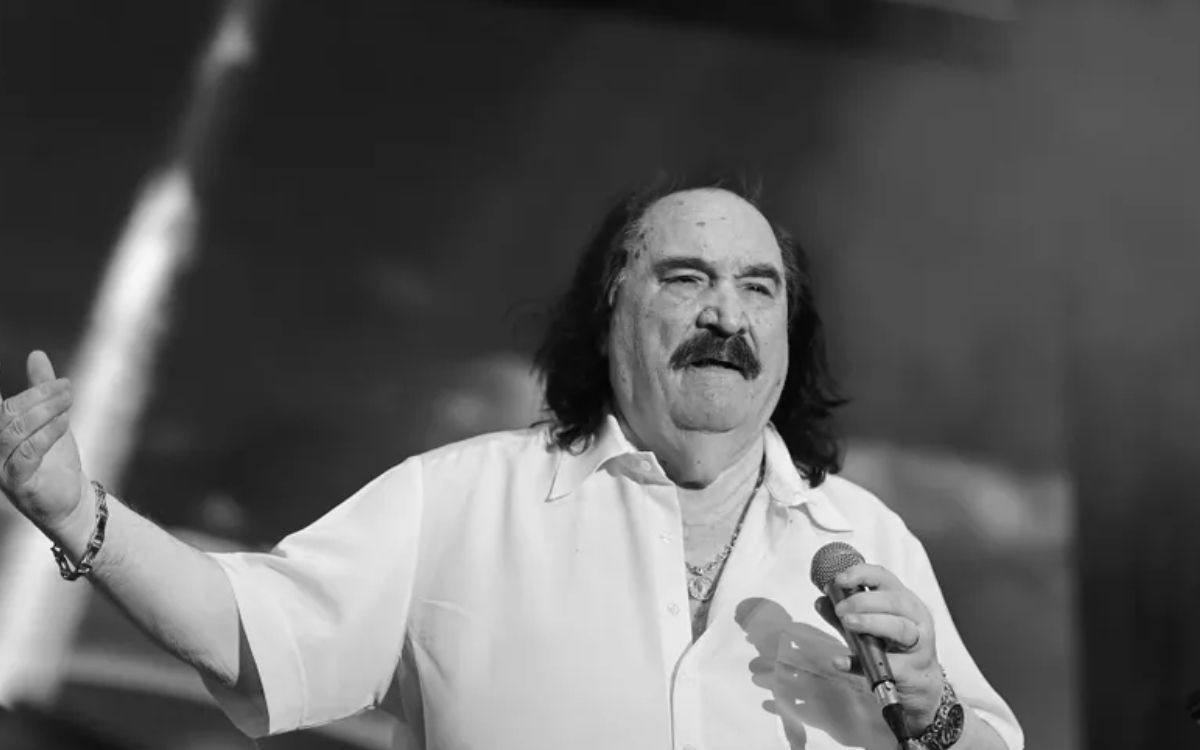
Mate Mišo Kovač has died, the legend of Šibenik, Hajduk and Dalmatia, a man who sold more than 20 million records over a career spanning almost half a century, Index.hr reports.
His death was confirmed to the Index portal by sources close to the singer.
Mišo Kovač was born on July 16, 1941, in Šibenik, during the Italian occupation. He grew up on a street that also produced two other major musical careers – those of Vice Vukov and Arsen Dedić.
Decades later, he would record the duet “Mi smo lišće s iste grane” (“We Are Leaves from the Same Branch”) with Dedić.
He decided to pursue singing at the age of sixteen, after hearing a performance by Šibenik singer Ljubo Lučev.
He graduated from an industrial secondary school as an upholsterer, and in 1961 shared first place in the “First Voice of Šibenik” competition with Mirko Vukšić. As his prize, he chose a single by Elvis Presley – the musician who would leave a lasting mark on his career.
After completing his military service in Belgrade, he moved to Zagreb. At a competition in Karlovac, he performed Ray Charles’s song “I Can’t Stop Loving You” and caught the attention of producers.
He made his first unofficial appearance in the autumn of 1964 at Zagreb’s City Café, and that same year signed a contract with Jugoton. His first record was a cover of Charles’s song “Ne mogu prestati da te volim” (“I Can’t Stop Loving You”).
Success came quickly. In the summer of 1965, he performed at the Melodies of the Adriatic festival, while the song “Više se nećeš vratiti” (“You Will Never Return”) from 1969, written by the then-young Đorđe Novković, made him a star. The single sold nearly 190,000 copies and was Jugoton’s second best-selling record that year.
With five records selling more than 250,000 copies, Kovač became the record label’s best-selling singer in 1969. His collaboration with Novković continued until the composer’s death in 2007.
The Mustache and “My Way”
After winning the Split Festival in 1971 with the song “Proplakaće zora” (“Dawn Will Break in Tears”), he became the most popular singer in Yugoslavia. That same year, he was nearly killed in a car accident near Zadar. He grew the mustache that would become his trademark to conceal a scar above his upper lip.
After recovering, he travelled to New York in 1972, where he watched Elvis Presley perform at Madison Square Garden. Presley’s rendition of “My Way” left a lasting impression on him. Decades later, in an interview with Aleksandar Stanković, he described the moment by saying that the song had then “merged with the sky.”
Two decades at the peak of his career followed, with hits including “Drugi joj raspliće kosu, a ja je volim,” “Ostala si uvijek ista,” “Ako me ostaviš,” “Sutra mi sude,” “Odavno više ne plačem zbog tebe” and “Ti si pjesma moje duše.”
He was named Singer of the Year five times, and in 1989 was also named Personality of the Year in Yugoslavia. He appeared in films as well – in 1972, alongside Rade Šerbedžija, in the movie “Popodne jednog fazana.”
The Hardest Years
He was married three times: to Ljubica Komadina, Anita Baturina, a former Miss Yugoslavia with whom he had two children, Edi and Ivana, and Lidija Pintarić, with whom he remained until the end of his life.
The 1990s brought the most difficult period of his life. In 1992, his 16-year-old son Edi died in Zagreb under circumstances that were never clarified.
Following Edi’s death, he held a major concert titled “Night of Candles” at Split’s Poljud Stadium, performing before 50,000 people. After the concert, he announced that he would never perform again. However, he did not keep that promise.
In addition to his son, he lost his mother and younger brother during the 1990s. After struggling with depression for several years, Mišo shot himself in the chest in Zagreb in January 1999. However, he survived.
He subsequently returned to the stage with a concert at the Sports Hall, recorded new albums and duets with his daughter Ivana, and won the Split Festival once again. The song “Dalmatino” stands out as the most notable release from that period. In 2012, he received the Porin Lifetime Achievement Award.
MORE TOPICS:
Source: N1 Foto: Tom Dubravec/ Cropix/Profimedia
 Add Serbian Times as your Google source