




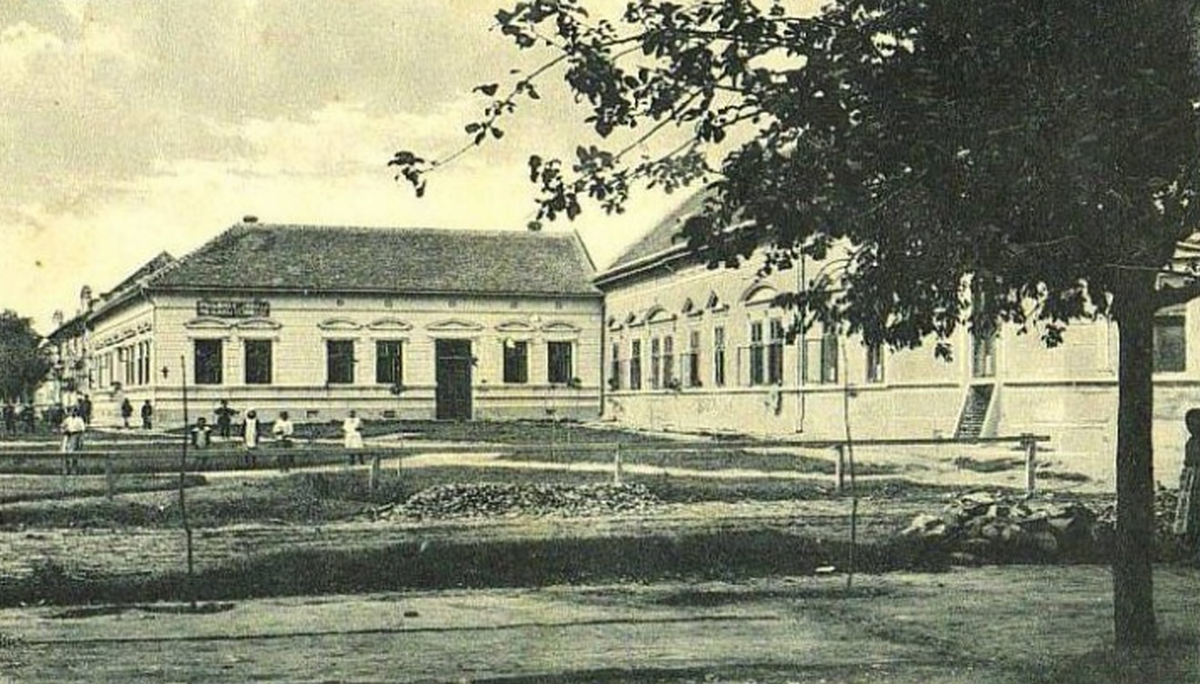
Who knows if anyone would have mentioned, let alone dedicated any of their work to the memory of the sacrifice of 14 distinguished teachers from Bjelopavlići, who 97 years ago paid with their lives for the defense of the Serbian language and Cyrillic script, if it weren’t for Nikšić professor of Serbian language Veselin Matović. Matović’s book “Cyrillic and Latinogorica” has just been published, between whose covers this event was found, as well as others from recent times that speak of the “chasing” of the Serbian language and script in Montenegro.
And there is no one more qualified to write about this, because in 2004 the professor and his wife Radmila and 24 other colleagues from Nikšić and one from Herceg Novi, lost their jobs when they stood up for the defense of the Serbian language and Cyrillic script.
“After the introduction of military administration, the occupier, at the beginning of 1916, introduced special measures in Montenegro in education. It was ordered that the Latin alphabet be introduced into Montenegrin schools instead of the Cyrillic alphabet, and that heroic and patriotic songs and Serbian history be removed from the curricula. A group of teachers from Bjelopavlići, fourteen of them, resolutely opposed this by resigning from service, for which they were soon arrested and placed under military court,” says Professor Matović.
The resignations they signed at the military command in Podgorica, on October 19, 1916, explained it this way:
“Cyrillic is the Serbian history-artery, the aorta of Serbian nationalism, and we are ready to be Serbian teachers and we will not be anational. To remain consistent with the call of a Serbian teacher in Montenegro, we are honored to inform the command that with this we are resigning from our current duty.”
FIND OUT MORE IN ENGLISH:
After a two-and-a-half-month investigation, sentences were handed down to them, as well as to three of their alleged instigators, lawyers: Nikola Dragović, Marko Jovićević and Radovan Bošković. The participants in the rebellion were: Vuksan Radović, Savo Đurović and Velizar Đuranović, who were released after serving a three-month sentence, while eleven of them (sentenced to four or five months in prison): Ilija Mijušković, Tripko Brajović, Andrija Dragović, Savo Jovović, Tomo Dragović, Radovan Popović, Miladin Vujadinović, Novo Vučinić, Blažo Radonjić, Cvetko Stanišić and Jakša Brajović, were interned in the Hungarian camp “Boldogason”, and later in “Nežider”, where they remained until the end of the First World War.
Unfortunately, not many archival documents have been preserved about this event, although worthy of being included in the most beautiful examples of “manliness and heroism”, and everything that is known about it comes mainly from the diaries of two of its participants: Jakša Brajović and Toma Dragović, which are owned by their descendants. The rebellion was preceded by two gatherings of Bjelopavlići teachers in Danilovgrad, at which there was disagreement about the method of resistance (by resigning from service).
Older teachers, except for Ilija Mijušković, did not agree with any resistance, and loyally accepted the obligations required by the new program rules, motivating this by the basic obligation of teachers to educate young generations. In contrast to them, fourteen young and newly graduated teachers, not wanting to serve the enemy, although lonely, firmly decide to resign.

A clerk in the command was a Serb from Vojvodina. He tried to dissuade the young teachers from resigning:
“I am a Serb. I am the son of an Orthodox priest. I wish you and your people well. You will be shot immediately,” said the clerk.
However, the teachers stood their ground. Giving up the rebellion meant a secure existence and, under occupation, even a fairly comfortable life, that is, a secure civil service and “special identifications” that protected them from internment and compulsory work.
“These brave people decide not to give in, believing that whoever wants to remain consistent with the call of a Serbian teacher must not, under any circumstances, call into question the vowed values of their ancestors – the Cyrillic alphabet and national history,” emphasizes our interlocutor. We see this from the testimony of Savo Jovović:
“I agreed to perform the duties of a public school teacher under the administration of the imperial and royal authorities, believing that the former elementary school program would remain in place. By order, Cyrillic, Serbian history and the singing of national songs are removed from teaching. Cyrillic script contains all the cultural traces of our people, and not teaching national history would mean renouncing the past, present and future. I am honored to inform the command that with this I am resigning from my current duty.”
It is similar in Jakša Brajović’s record:
“All textbooks have been changed, except for religious education and mathematics, and they were also printed in Latin. When I received this act, I wrote my resignation and went to Danilovgrad to hand it in at the local command. I was a teacher in Gostinje.
They slept on the bare floor without any bedding, constantly under surveillance and with the threat that they would be hanged. After the verdict was pronounced (done at night) they were transferred to the Cetinje prison, and from there deported to “Boldogason”. Teacher Brajović tried to escape three times, but was caught every time.
FIND OUT MORE:
During the trial (the president of the court was a Czech, his name was Slavik), the investigator, a Croat, asked Brajović:
“Why don’t you want this school program, it is also used in Croatian schools”?
Brajović replied:
“You accepted that program because you are slaves. We are not slaves, we are an occupied country. If you were free, your readers would contain songs about your greats – Štrosmajer, Zrinjski, Frankopan, Gubec and others, and not about Austrian archdukes and Habsburg dukes.”
In June 1916, a group of teachers from Ulcinj, who opposed the request of local Muslims and Catholics to open a separate school for their children, was also interned, which was contrary to Montenegrin law.
According to that law, which was passed in the National Assembly and confirmed by King Nikola in 1907, children of permanent citizens of Montenegro could not attend schools with a foreign language of instruction until they completed a Serbian public school.
MORE TOPICS:
TRANSFERRED BY THE SERBIAN ARMY: Twelve injured in the Kočani fire arrive in Belgrade for treatment!
LEST WE FORGET: The March pogrom in Kosovo was deadly for many Serbs, while thousands got expelled!
DUE TO THE UNPRECEDENTED TRAGEDY IN KOČANI: North Macedonia declares seven days of mourning!
Source: Milorad Đošić, Koreni, Foto: Wikipedia
 Add Serbian Times as your Google source