




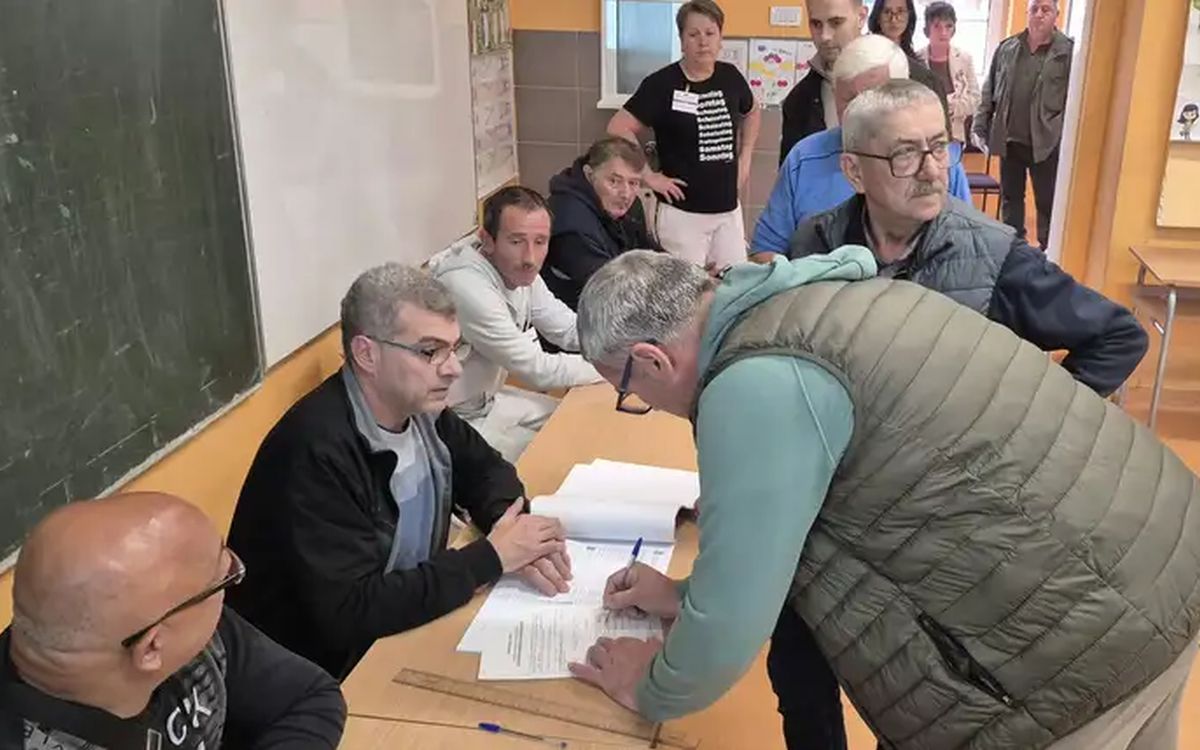
Election day in Serbia is seeing exceptionally high turnout, but also reports of electoral irregularities. In Zaječar, an actual attempt to carry out one of the best-known methods of electoral fraud — the so-called “Bulgarian train” — was reported and stopped.
From the moment polling stations opened in Zaječar, a large number of voters turned out. Although all polling stations opened on time, reports of potential irregularities soon heightened tensions. In addition to suspicions about the presence of so-called “phantom voters” and parallel records, concerns also emerged on the ground about organized voting and pressure on voters using the “Bulgarian train” method. Students from Zaječar, “Zaječarci u blokadi” (Zaječar Residents in Blockade), also issued a statement on the matter, saying that an attempt to use the “Bulgarian train” had been spotted in Mali Izvor, a village near Zaječar, and immediately stopped.
A similar but even more concrete incident took place in Užice, where an attempt to activate this illegal method was officially recorded at one of the polling stations. Polling station monitors noticed suspicious behavior and prevented an attempt to compromise the electoral process by introducing already marked ballots. This led to temporary tensions at the polling station and an urgent response from the relevant authorities.
What is the “Bulgarian train” and how does it work?
The “Bulgarian train” is a colloquial term for a systematic and illegal method of controlling voting and buying votes. The aim of this operation is to ensure with absolute certainty that a coerced or bribed voter marks a specific political option on the ballot.
The entire process unfolds in several precise steps, both outside and inside the polling station:
- Taking out a blank ballot: The first participant, often an organizer or the first bribed voter, enters the polling station, registers and receives a valid blank ballot, but does not put it in the ballot box. Instead, they put an ordinary piece of white paper or an old ballot in the box and secretly take the original blank ballot outside.
- Filling it in outside: The blank ballot is handed to the organizers, who are usually waiting in a car or a nearby building. They mark the party or candidate for whom votes are being collected on the original ballot.
- The next “passenger” enters: The next voter, who has been coerced or paid, receives the already marked ballot before entering the polling station. Their task is to conceal it and bring it inside.
- Swapping and casting the ballot: When the voter receives their regular blank ballot from the election commission, they go behind the voting screen. There, they put the blank ballot they have just received in their pocket and place the pre-marked ballot brought from outside into the ballot box.
- The chain continues: After leaving the polling station, the voter hands their newly obtained blank ballot to the organizers in exchange for the promised reward — money, a package of goods or confirmation that they have fulfilled their obligation. The new blank ballot is then marked for the next voter, allowing the “train” to continue.
This method constitutes a serious criminal offense against electoral rights and undermines the secrecy of the ballot. For this reason, domestic and international observers are urging citizens and polling station monitors to immediately report any suspicious loitering around polling stations or attempts to take papers outside to the police and the relevant electoral commissions.
MORE TOPICS:
Source: Serbian Times Foto: Glas Zaječara
 Add Serbian Times as your Google source