




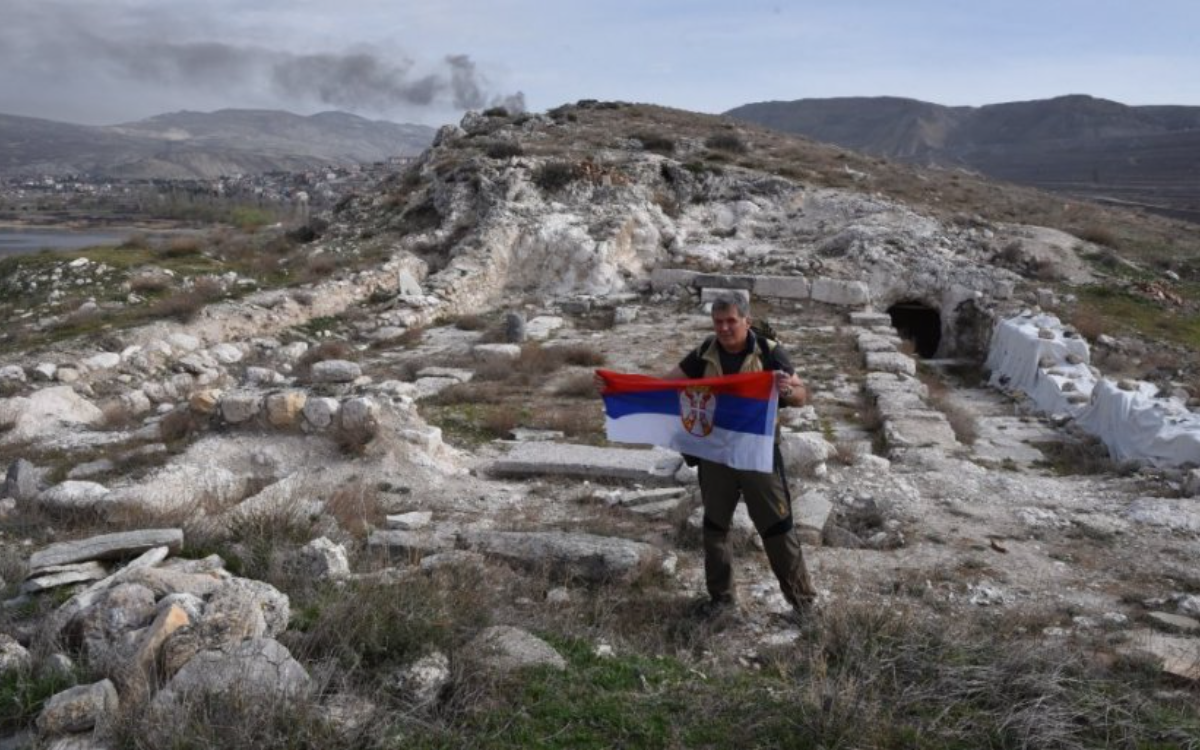
Archaeologists from Ankara’s Museum of Anatolian Civilizations last year excavated the remains of a lavish episcopal church in the village of Çayırhan, on the shores of an artificial lake created by damming the great Sakarya River (ancient Sangarius). According to Byzantine records, Bishop Gordoserbon resided in this church in 691 and 692, ruling over the “City of the Serbs from Gordia.”
This discovery aligns with the conclusions of the great historian and archaeologist Sir William Mitchell Ramsay, who in 1890 arrived at a hill above the river gorge near a remote Anatolian village and beheld the magnificent ruins of an unknown city.
After studying Byzantine chronicles, Ramsay concluded that these were the remains of Gordoserbon, with a key piece of evidence being the presence of this city’s bishop at the Ecumenical Council in Constantinople. The discovery by Ankara’s archaeologists, after 135 years, has provided material proof for Ramsay’s theory. A Večernje novosti reporter traveled to the Turkish capital, Ankara, to visit Çayırhan, a small town located 140 kilometers from the city center.
Early in the morning, on city bus number 677, alongside sleepy passengers, we retraced the same path that the scholar-adventurer, great archaeologist, and educator Sir William Mitchell Ramsay traveled on horseback in 1890. The tireless Scotsman, who roamed the Holy Land and Asia Minor in search of remnants of great civilizations, was amazed by the powerful walls of the city, whose name was unknown to the local population. Ramsay discovered that the city was built upon the much older settlement of Gordiokome (“Gordias’ village”), where, according to legend, Gordias—the great ruler of the Phrygians, who migrated from the Balkans to Anatolia in the second millennium BCE—was born.
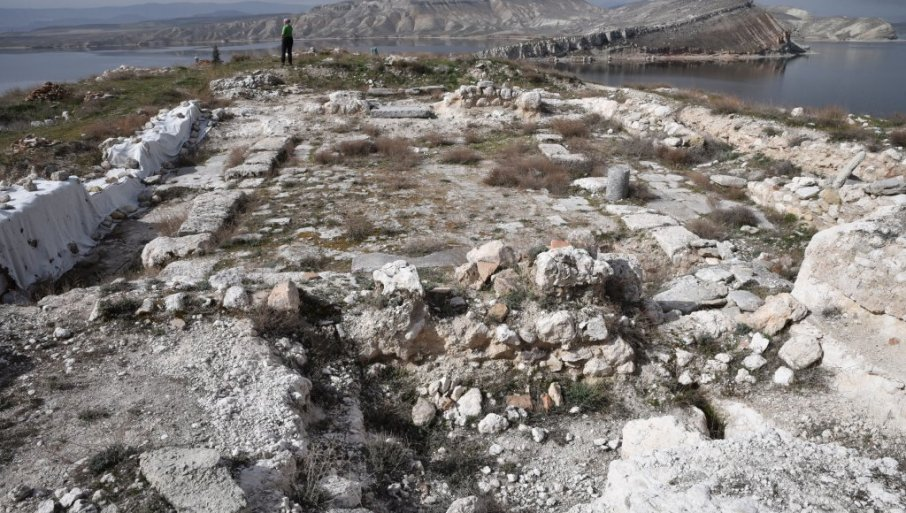
This area was conquered by the Roman legions in the 1st century, and the inhabitants of Gordiokome diplomatically renamed it Julianopolis Mela to prevent its destruction by the conquerors. However, the ancient Phrygian name associated with the legendary Gordias was never forgotten. In fact, the entire region along the Sangarius River was named Gordos, a designation that the Romans accepted. When Serbian colonists arrived in the 7th century, their capital was logically named Gorodserbon.
According to Emperor Constantine VII Porphyrogenitus (913–959), the Serbs originally migrated from their northern homeland during the reign of Emperor Heraclius (610–641). They first settled in the Thessaloniki region, where they founded a city named Servia. Some later moved northward before finally establishing themselves in the western Balkans. A portion of them, however, remained near Thessaloniki in the region of Servia on the Bistrica River, and it is very likely that they were among those affected by Emperor Justinian II’s military campaigns in 687 and 688, which resulted in their relocation to Asia Minor the following year. The fact that a city named after them had its own bishop in 691 and 692 suggests that the Serbs who were resettled in Asia Minor were already Christians. Furthermore, the use of the term “chosen people” for the army recruited by the emperor in 691 and 692—composed of Slavic tribes that had been relocated from Thessaloniki to Asia Minor in 688 and 689—indicates that Christianity was well established among them, as noted by historian Dr. Predrag Komatina of the Institute for Byzantine Studies.
When Sir William Ramsay arrived in Çayırhan in 1890, he knew nothing about the Serbian people. He literally “discovered” them while solving the mystery of the garrison that once occupied the fortified city above the Sangarius Gorge, which controlled an intercontinental trade route between Eurasia, the Middle East, and North Africa.
For millennia, this route was traversed by peaceful trade caravans carrying silk, incense, spices, and scientific knowledge to the West. From 325 AD, when Saint Empress Helena traveled along this road from Nicaea to Jerusalem, it became known as the Pilgrims’ Route and became the main overland pilgrimage path. During times of war, the Sangarius Gorge was a crucial military stronghold, which proved significant in the 7th century when the armies of the first Islamic Caliphate marched toward Constantinople through this region. According to historical records, Byzantine emperors repeatedly relocated over 240,000 Serbs from the Balkans to Bithynia in Asia Minor. These settlers became border guards of the “Orthodox Rome,” as noted by the greatest 20th-century Byzantinist, George Ostrogorsky:
“While in earlier times ‘barbarians’ joined the imperial army as mercenaries or federates, the military system in Byzantium changed: the mercenary army was replaced by a force of soldier-farmers settled in newly established themes. As a result, Slavs joined the Byzantine military as soldier-farmers. Thus, new, young Slavic forces were incorporated into the structure created in Byzantium at the time, which explains the extraordinary success of the new Byzantine system. Heraclius and his successors created the framework, while the Slavs filled it with substance, giving real strength to the system that enabled Byzantium to survive for centuries.”
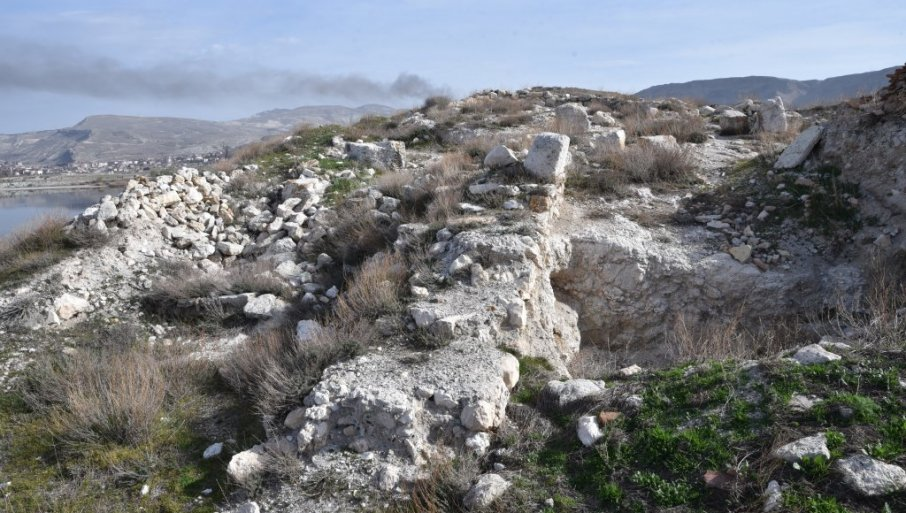
Gordoserbon was named after the most powerful Slavic tribe, the Serbs, and its military significance is evident from its thick walls made of cut stone and ceramic tiles, which now rise from the depths of the lake. These walls climb the steep hillside past the remains of once-towering circular fortifications to the ruins of large temples and a vast necropolis surrounding them. Today, this is all that remains visible, as the rest of the massive fortified settlement and its bridge over the Sangarius were submerged in the 1950s during the construction of the Çayırhan Dam.
For decades, looters of antiquities have ravaged this rich archaeological site, which lies just five kilometers from the modern settlement. It was not until 2009 that archaeologists from the Museum of Anatolian Civilizations arrived and uncovered hundreds of tombs dating from antiquity and early Christianity, carved deep into the soft stone of the hill—land that had been considered sacred even before Christianity. This is evident from the Phrygian tombs, arched rock-cut caves with stone beds for the deceased, which were later adapted and supplemented with Roman and Byzantine sarcophagi resembling small houses with sloping roofs. More recently, large communal graves, likely from wartime periods, have also been unearthed. Massive circular foundations up to 10 meters in diameter indicate that pagan sanctuaries and monumental burial temples once stood here.
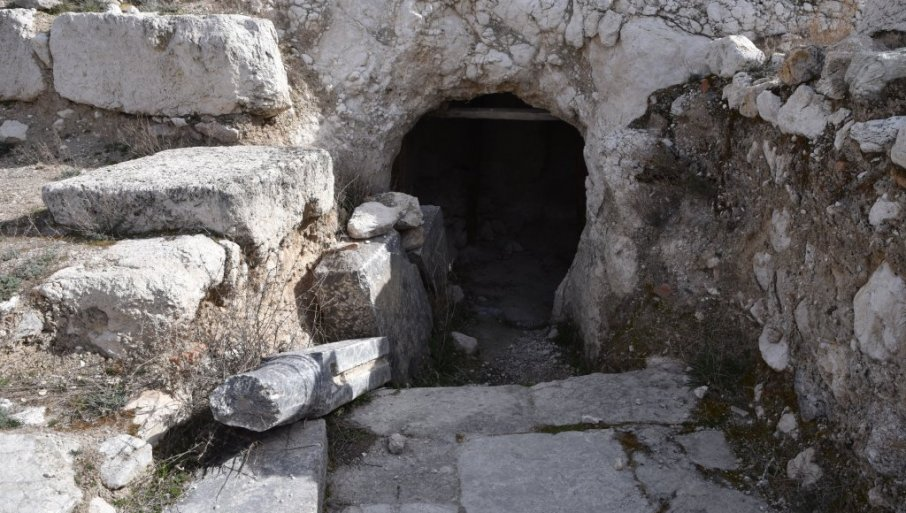
However, all these discoveries were overshadowed by last year’s excavation of the cathedral episcopal church. Its three naves were separated by colonnades of massive pillars. To the right of the altar, archaeologists found a rock-cut chamber with an altar, possibly the hermitage of an early Christian saint, in whose honor the magnificent church was built. The floor of the church was made of marble, transported from a great distance, as this type of stone is not found in the Gordoserbon region, known as the “Rainbow Hills.”

These hills were formed by volcanic ash deposits containing various minerals from past eruptions. As erosion carved valleys through these layers, it created hills with bands of colors ranging from pale green to deep red, creating a striking natural phenomenon that must have fascinated people for millennia. This visual wonder likely contributed to the area’s longstanding reputation as a sacred site, from the time of the Phrygians to the present day.
Through the study of historical sources from the 1st century BCE to the 2nd century CE, Sir Gordon Ramsay determined that Gordoserbon was built upon the foundations of Gordiokome, the village where Gordias, the Phrygian ruler, was born. It was Gordias who tied the legendary Gordian Knot, which prophesied that whoever unraveled it would become the ruler of Asia. In the 4th century BCE, Alexander the Great famously sliced through the knot with his sword—and went on to conquer Asia.
MORE TOPICS:
SERBIAN EXPERT TEAM: Data indicates that NATO deliberately committed genocide in Yugoslavia in 1999!
Source: Novosti, Foto: Boris Subašić
 Add Serbian Times as your Google source