




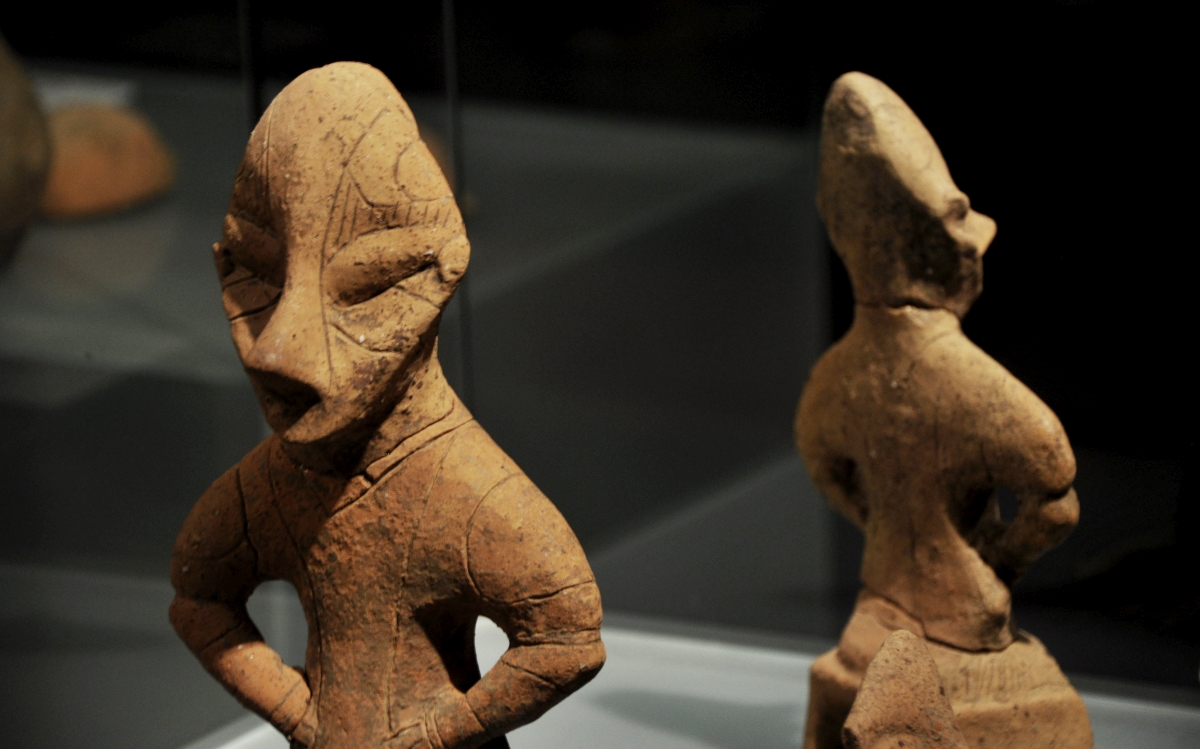
They were in the Balkans for almost a thousand years, they knew the basics of thermal insulation during house construction, they were excellent craftsmen, ceramists and traders, they had a developed culture of housing, they lived in societies that, possibly, functioned on the principle of equality.
But scientists, who have been researching the Vinča culture for more than 100 years, are still plagued by many questions.
How did the people of Vinča disappear so suddenly and the most enigmatic of all – where are their remains?
“People lived there, made houses, left traces, but they are gone. They are buried or disposed of somewhere, and where they are is still the biggest puzzle for us,” says archaeologist Nenad Tasić, who has been studying Vinča for years, for BBC in Serbian.
The remains of this culture were found in a wide area that today includes parts of Greece, Bulgaria, Romania, Hungary, Bosnia and Herzegovina, Croatia, North Macedonia, Montenegro and the entire territory of Serbia.
It existed for a relatively long time – almost a thousand years – in the period of the late Stone Age from 5300 to 4500 BC.

Tasić is a professor at the Department of Archeology of the Faculty of Philosophy at the University of Belgrade and the head of field research at the archaeological site of Vinča – Belo Brdo.
“It is strange that there are almost no deceased people anywhere in the entire area of the Vinča culture. During 800 years and 400 settlements, we found a total of 120 dead,” he points out.
As an example of the mysterious absence of the deceased people of Vinča, he cites a case when they found the remains of a woman about 28 years old, next to a burned house, who is assumed to have died in the fire.
Of her body, only the torso and head were found, but not the legs.
“These are interesting signals that they did not have a special attitude towards the earthly remains.
“We assume that when they were building a new house, which they built in the same place, they found the lower part of the body and that they moved it somewhere, but that they did not search for the whole body to bury it with some special attention,” says Tasić.
“The Frankfurt airport of the Neolithic”
The prehistoric settlement in Vinča was located on the right bank of the Danube, 14 kilometers downstream from Belgrade.
“In this place, where the playful relief of Šumadija meets the Banat plain across the valley of Bolečica and the Danube, there was (…) a metropolis of a culture with an overabundance of content,” wrote Dragoslav Srejović, one of the most important archaeologists from these areas.
“Therefore, Vinča is a term that today marks the zenith of Neolithic culture in Europe,” Srejović states in the book Experiences of the Past.
During that period, there was a flourishing of creativity, technological progress and population growth.
However, their remains are not only found along the Danube, but also on Banjica and in Šumadija, but most often it is along river flows.
“Regionally speaking, Vinča is located near four extremely important Euro-Asian corridors – the rivers Tisa, Danube, Morava, Sava – and this means that travelers who passed through either Asia Minor, the Aegean, Central Europe, the Pontic steppes or the Adriatic pass near it.
“This put Vinča in a position like the Frankfurt airport of Neolithic Europe,” Miroslav Kočić, executive manager of the Vinča project, whose goal is to preserve the site and rehabilitate the landslide, tells the BBC.
What was all found?
Academician Dragoslav Srejović once described what the 10-meter-high cultural layer of Vinča looks like, which has been a populated area in every period of history from then until today.
“As on a luxurious carpet, in it, vertically, one above the other, red, yellow, brown, ashen and black layers are arranged, formed from the remains of destroyed settlements, burnt huts, large trenches and filled pits and graves.
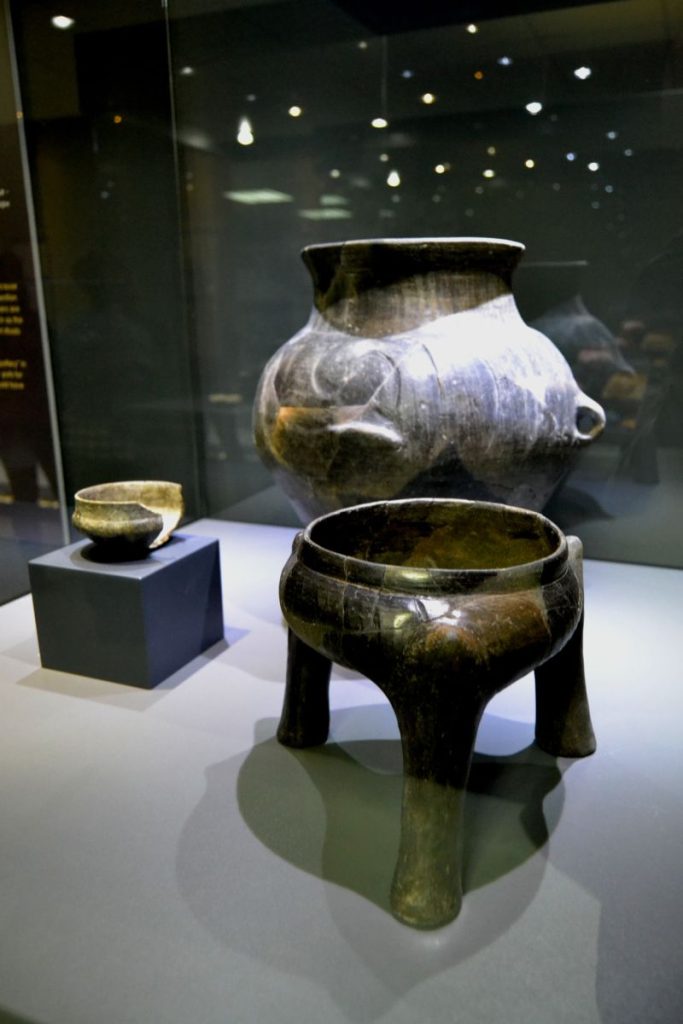
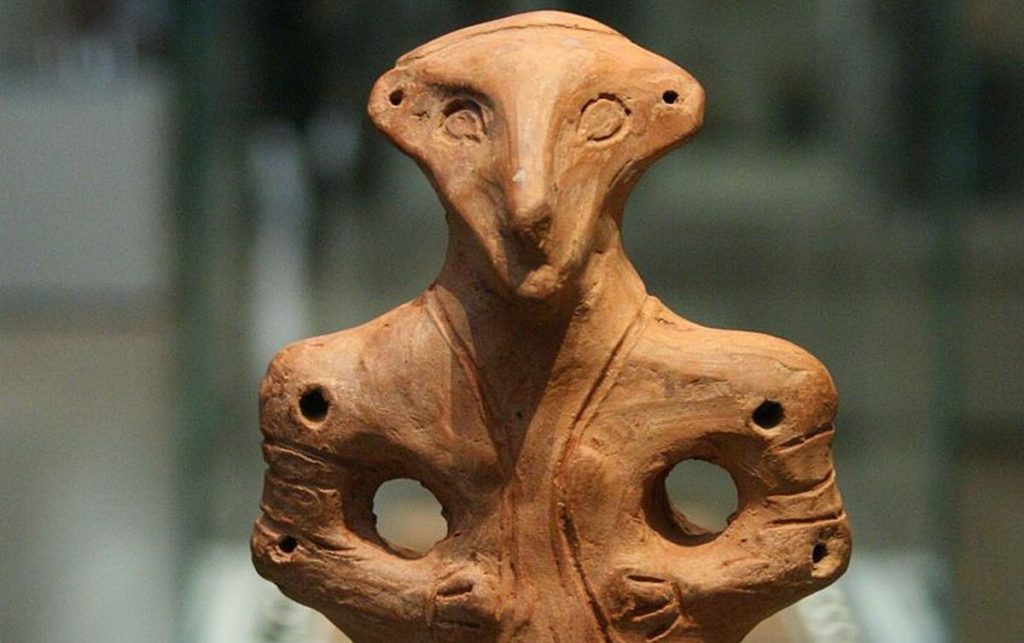
Srejović wrote that each of the layers contains real treasures of the most diverse objects: tools and weapons made of stone and bone, dishes for daily use, lavishly decorated ritual vases, a large number of anthropomorphic and zoomorphic figurines, jewelry made of various types of rare, expensive materials and countless other objects.
Excavations at the Vinča Belo Brdo site were started back in 1908 by the “father” of Serbian archeology, Miloje Vasić, but not all questions about this developed civilization have been answered yet.
Their life is very different from how modern man imagines a prehistoric Stone Age ancestor – as a nomad, who gathers food, hunts and fights.
They lived like people today in skyscrapers
First, the people of Vinča had permanent and very dense settlements. Sometimes the houses were only a meter apart from each other, and without a yard.
“They lived densely, but they obviously respected the rules – the freedom of one was limited by the freedom of another.
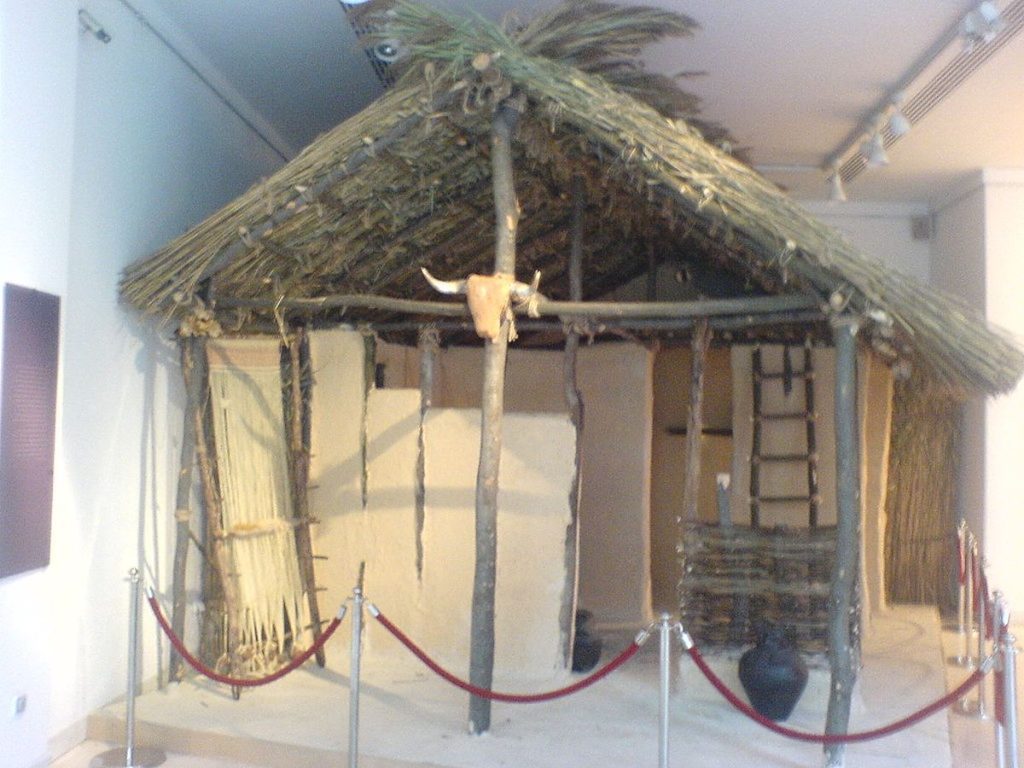
“They had an organized life, lived neatly, used thinly polished dishes. Fine people, with fine manners,” is how archaeologist Tasić describes the people of Vinča.
The people of Vinča are considered pioneers of urbanism.
They built houses with a square, almost rectangular base of clay, chaff and sand, but they also knew some basics of thermal insulation.
The roofs were gabled from wicker, and sometimes their houses had two floors.
Miroslav Kočić believes that their way of life can be compared to modern living in skyscrapers.
“Simply put, the rules of behavior are very different when you see your neighbor every hour of every day, and this indicates a very developed culture of housing and community,” he states.
Fortifications and trenches were also discovered around their settlements.

They did not have a script
“Although there is undoubtedly some system of symbols that is used in Vinča, it is wrong to call it a script,” Kočić warns.
However, this does not diminish the importance of their development, because some of the most brilliant civilizations were created on the verbal tradition of information transfer.
“One of the favorite topics of pseudoscientific discussions is precisely the ‘Vinča script’. A script as such mostly arises from the administrative needs of state systems, where the need to record resources begins to appear,” the archaeologist explains.

A society of equality?
Another great specificity of the Vinča culture is that they allegedly did not have a social hierarchy. If they did have a chief or leader, he was simply not richer than the others, experts say.
From a scientific point of view, this is precisely the biggest mystery of the Vinča culture, Kočić claims.
“Although the findings of material culture are mostly presented to the public as a top achievement, in fact, the social organization is the most interesting aspect of Vinča and what sets it apart on a global level,” Kočić points out.
Tasić also says that there is not much difference between their houses, which is why it is believed that their society was based on equality.
“In general, all households have the same content. Only a few centuries after the end of the Vinča culture, class stratification began,” says Tasić.
They were the first to melt metal and immediately make jewelry
It has been scientifically confirmed that the first melting of metal occurred in Vinča 7,500 years ago and 2,500 years before the construction of the great pyramids in Giza.
“The beginning of metal exploitation is as revolutionary in human history as splitting the atom.
“The amount of creativity needed to first cognitively transform an ordinary stone in your head into something completely different is as incredible as if you were now sitting looking at a piece of paper and figured out how to turn it into a diamond,” says Kočić.
At the most famous sites of the Vinča culture, the oldest found metal objects were jewelry – massive copper bracelets, as well as hundreds of ceramic bowls and vessels.
They were excellent sculptors, and they knew how to color ceramics as they wished by firing clay at different temperatures.
Kočić highlights the level of knowledge of pyrotechnics and production technology as one of the most fascinating parts of the Vinča culture, without confirmed existence of specialists.
“Previous research shows that almost all households were involved in the production and exchange of knowledge, which is simply fascinating,” he states.

They traveled and traded a lot
Thus, the people of Vinča abandoned a simple form of economy and became producers, traders and artists.
The trade network stretched for hundreds of kilometers.
“At the Vinča Belo Brdo site, finds of obsidian, volcanic glass, which is available in Europe in the Carpathians and on the island of Melos, as well as bracelets made of spondylus shells that come from the eastern Aegean, are frequent.
“So, these materials had to either come directly from the source, or they were traded through a large number of settlements on the way to Vinča,” says Kočić.
Obsidian is also known as the so-called dragon glass from the TV series Game of Thrones and is considered an excellent blade.
Sudden disappearance
The third great mystery related to Vinča is their sudden disappearance from the historical stage.
Some believe that the civilization disappeared under the onslaught of nomadic herders from the East, while others believe that it was a matter of depopulation or a search for better conditions.
“We do not know if they transformed into another culture and adopted their patterns or if they moved out,” notes Tasić and adds that this is one of the main questions of several currently active projects.
“Some of the hypotheses are possible transmissible diseases, as during the Vinča period we have the first longer periods where a large number of people live in close contact with a large number of animals.
“Our own reality shows how profound consequences such events can leave on the population, even in cases with a relatively low mortality rate,” said Kočić.
Perhaps, he adds, there was social fatigue, where for various reasons the community can simply give up the established cultural pattern, or their economic system collapsed.
Perhaps the change was external – climatic instability or explosions of violence and wars.
“And it’s not uncommon for several such things to happen at once,” said Kočić.
MORE TOPICS:
NOLE MOTIVATED BEFORE US OPEN SEMIFINALS: I will try to spoil the plans of Sinner and Alcaraz!
Source: BBC; Photo: Wikimedia Creative Commons