




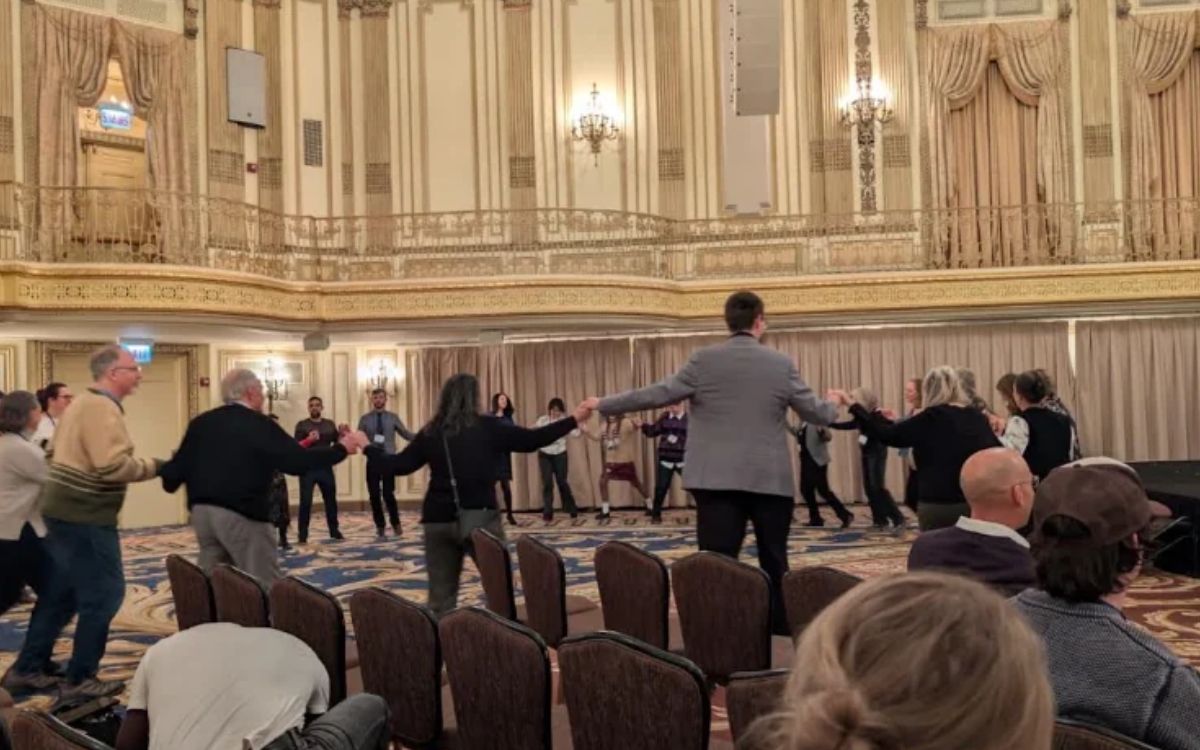
From the Trepča mining complex and the Yugoslav government-in-exile to Bishop Nikolaj Velimirović’s international activities and contemporary European integration, key issues in Serbian and regional history took center stage at an international academic conference held in Chicago.
As part of the 58th annual convention of the Association for Slavic, East European, and Eurasian Studies (ASEEES), a panel entitled “Yugoslavia Between States and Empires” was held on November 14, 2026, bringing together researchers from Serbia, Australia, New Zealand, and the United States.
The conference provided an opportunity to exchange academic insights on state sovereignty, international diplomacy, the economic interests of major powers, and the position of smaller nations in complex international circumstances. The four research papers covered different historical periods but were united by the question of preserving national identity and the right to independent decision-making.
ASEEES – More Than Seven Decades of International Academic Cooperation
The Association for Slavic, East European, and Eurasian Studies (ASEEES) was founded in 1948 and is now one of the leading international academic organizations dedicated to the study of the history, culture, literature, politics, and social developments of this region.
Headquartered at the University of Pittsburgh in Pennsylvania, the organization brings together more than 3,500 scholars, professors, students, and experts from different parts of the world. Its mission includes advancing academic research, preserving cultural and intellectual heritage, and encouraging international academic dialogue.
A particularly important part of its work is its annual international convention, held in various cities across the United States, which brings researchers together to present new papers and exchange academic findings.
For the Serbian academic community and diaspora, events of this kind provide an opportunity to introduce research on Serbian history and cultural heritage to the international academic public.
The Chicago panel was chaired by Dr. Nina Marković-Khaze of Macquarie University in Sydney, who also served as discussant.
Trepča – Between Natural Resources and the Interests of Major Powers
Dr. Miomir Gatalović of the Institute for Contemporary History in Belgrade presented research on the Trepča mining complex, one of the most important industrial and strategic resources in the former Yugoslav region.
His presentation focused particularly on the links between British capital, strategic raw materials, and political interests, as well as changes in the management of the mine during different historical periods.
The example of Trepča also raised the broader question of control over natural resources and its impact on a state’s economic and political independence.
The Yugoslav Government-in-Exile – Between Alliance and Sovereignty
Dr. Ratomir Milikić of the Institute for Contemporary History in Belgrade and Bojan Pajić, a military historian from Australia, presented their joint research on the royal Yugoslav government-in-exile during World War II.
The paper focused on the position of the Yugoslav government in London, its relations with British authorities and other Allied countries, as well as internal political divisions during one of the most difficult periods in the nation’s history.
By comparing its experience with that of other European governments-in-exile, the authors examined the limits of political independence under circumstances in which the survival of a state and its institutions depends on the support of more powerful allies.
Bishop Nikolaj Velimirović – Spiritual Diplomacy and Assistance to Serbian Refugees
Particular attention was drawn to research by Dr. Ljupka Katana of Webster University, focusing on the spiritual diplomacy and international activities of Bishop Nikolaj Velimirović.
Drawing on documents and photographs she discovered during her research in American and British archives and libraries, Dr. Katana presented a lesser-known aspect of the Serbian cleric’s work – his role in connecting people and international networks in the postwar years.
According to the research findings, Bishop Nikolaj acted not only as a spiritual leader but also as an unofficial diplomat and intermediary. Using his international contacts, he advocated assistance for Serbian refugees and displaced persons following World War II.
One particularly significant finding was that his connections and efforts helped several thousand Serbs find new homes in the United Kingdom and the United States.
This subject holds particular significance for the Serbian diaspora, as many of its members and families trace their roots in America to precisely these postwar migrations. Behind the major historical events were the individual stories of people who left their homes and began new lives on another continent.
The research also highlighted the importance of spiritual leaders and networks of solidarity during periods when official diplomacy could not fully respond to the needs of the people.
Yugoslavia, the West, and European Integration – Challenges Facing the Modern Balkans
The contemporary dimension of the conference was presented by Dr. Milenko Petrović of the University of Canterbury in Christchurch, New Zealand, who spoke about relations between Yugoslavia and the post-Yugoslav states and the West, with particular emphasis on the European integration process.
His research examined political conditionality, different paths toward European Union membership, and the impact of stalled enlargement on democratic changes in the Western Balkan countries.
In this way, historical issues were linked to the challenges that countries across the region continue to face in international relations today.
Four Research Papers, Shared Questions
Although they addressed different subjects, the papers presented at the panel highlighted several common historical patterns. The influence of major powers is exercised not only through military and political strength but also through economic interests, control of strategic resources, diplomatic ties, and social and religious networks.
For this reason, the conference in Chicago was not simply a look back at the past. Questions of sovereignty, international relations, and the position of smaller states and nations remain important in today’s international environment.
The participation of researchers from Serbia and the Serbian diaspora at the ASEEES convention represents a contribution to the international presentation of Serbian history and academic heritage. For the Serbian community in Chicago, a city with a long tradition of Serbian organization and the preservation of language, faith, and culture, such gatherings carry additional significance.
They create opportunities for researchers to connect, exchange knowledge, and introduce the international public to subjects that are important for understanding Serbia’s past as well as the country’s and the region’s contemporary position.
The conference’s message was that historical heritage is preserved not only through archives and books but also through new research, international cooperation, and informed dialogue about the past.
MORE TOPICS:
Source: Serbian Times, Foto: Privatna arhiva
 Add Serbian Times as your Google source