




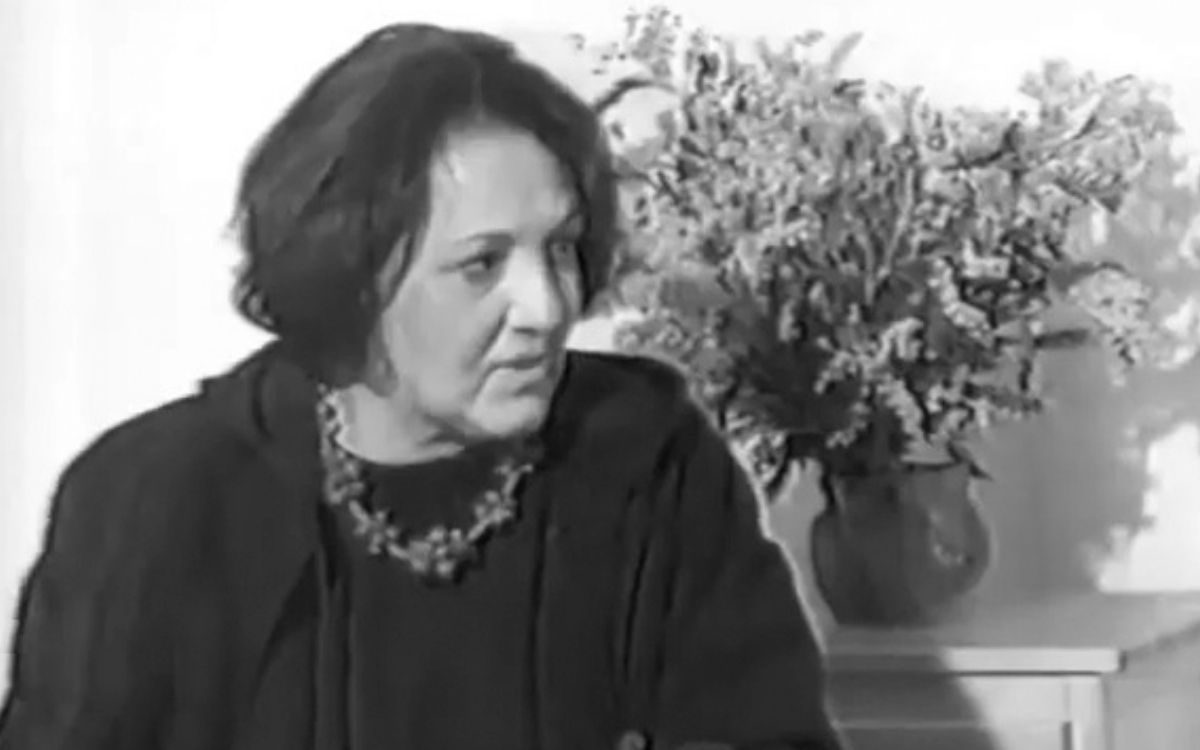
Dobrila Smiljanić, a Serbian textile worker best known for the Sirogojno sweaters, which gained significance and popularity thanks to her, passed away today in Sirogojno.
Mića Nikolić, photographer of the newspaper Bazar and her former colleague, said goodbye to Dobrila on social media.
“Into eternal memory has moved Dobrila Smiljanić, the woman who created the fashion of Serbia through the Sirogojno knitters. She lived modestly, worked hard and honestly. Our dear Dobrila, rest in peace and may the earth lie lightly upon you,” wrote Nikolić and informed that the funeral will take place in Sirogojno.
Dobrila Smiljanić was born in Radobuđa near Arilje on September 5, 1935.
In November 1962 she came to Zlatibor, where she met her school friend Bora Krejović, a doctor, who invited her to go with him (and along the way visit the Smiljanić family) to an exhibition of women’s handicrafts in Sirogojno.
At the invitation of priest Smiljanić and other prominent locals, she immediately joined the organization of women’s handicrafts, turning the Great Hall of the Agricultural Cooperative into the ambience of an old Serbian house with more than 2,000 handmade works by women from Sirogojno and the surrounding area.
Following the model of Rajka Borojević, who organized a weaving cooperative of women from the villages of Dragačevo, Dobrila came up with the idea to organize knitters from Zlatibor into the Zlatiborka cooperative.
Sirogojno sweaters were created in such a way that Smiljanić would first draw the motif on paper, choosing them by stylizing elements of the panorama of the Zlatibor landscapes. After that, a full-size sweater would be sewn on a machine and the motifs on it would be embroidered. Such a sweater would then be distributed to groups of women (women from the same hamlet) as a pattern (sample).
Smiljanić changed the raw materials, meaning that instead of the rough Zlatibor wool, softer imported wool from Iceland and Australia began to be used. The change of wool enabled the expansion of the production assortment to vests, jackets and coats.
During the 1970s and 1980s, the catalogs of her collections were produced by the renowned magazine Vogue as well as the fashion company Prada.
MORE TOPICS:
Source: B92, Foto: Printscreen YouTube