



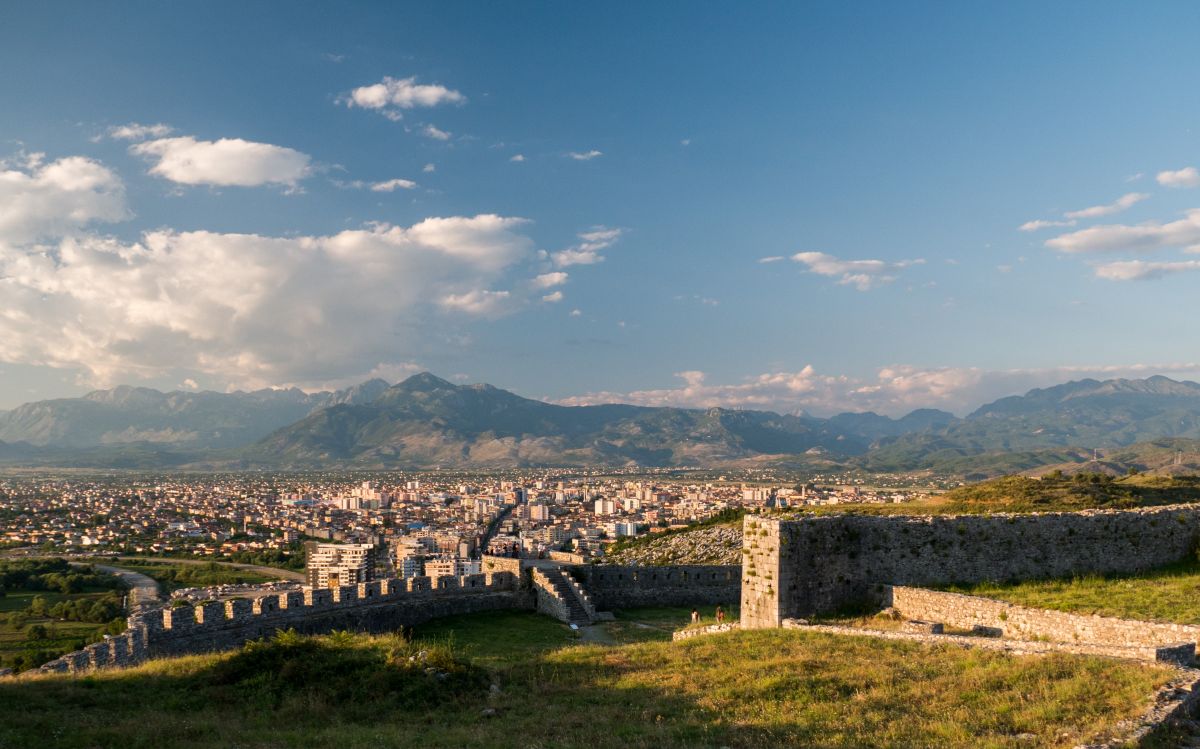
Thanks to the famous Serbian epic poem, there is hardly a citizen in Serbia who hasn’t at least once used the phrase “like Shkodër on the Bojana” to describe something built with great difficulty. The question of who truly owns this ancient city has long been debated, but one lesser-known chapter of its history reveals that Shkodër was part of Montenegro for less than a month.
“Building the town, Shkodër on the Bojana,
Building it for three long years,
Three hundred craftsmen, working each day;
They could not raise the foundations,
Let alone complete the town.”
These lines from the epic poem The Building of Shkodër on the Bojana are well-known to anyone who attended elementary school in Serbia. They reflect both the symbolic and historical weight the city has carried for centuries.
In history classes, students in Serbia learn that Shkodër was once the capital of the medieval state of Duklja under Prince Saint Jovan Vladimir, and later fell under the control of Grand Župan Stefan Nemanja along with the Zeta region.
However, Shkodër’s later history receives less attention—perhaps because much of it unfolded under Ottoman rule. Despite this, a Serbian presence persisted in the city. By the early 20th century, the Serbian Orthodox Church community in Shkodër included 120 families.
FIND OUT MORE:
The Balkan Wars marked a turning point as Serbia and Montenegro sought to reclaim lands held by the waning Ottoman Empire. In the First Balkan War, both countries set their sights on Shkodër. After fierce fighting, the Ottoman forces surrendered the city to Montenegro on April 23, 1913.
Yet, despite this hard-fought military victory, the tides of diplomacy turned swiftly. On May 14, barely three weeks after taking control, Montenegro was forced by the Great Powers to withdraw from Shkodër. The city was handed over to the newly forming Albanian state.
The London Peace Treaty, signed on May 30, 1913, with the mediation of the Great Powers, officially ended hostilities and resulted in the Ottoman Empire ceding several territories to the Balkan states. Initially, Albania was to be divided among Serbia, Greece, and Montenegro. However, by late August of the same year, the Great Powers reversed course and recognized Albania as an independent constitutional monarchy.
Thus, Shkodër—conquered through sacrifice and blood—was ultimately lost not on the battlefield, but through the stroke of a diplomat’s pen.
MORE TOPICS:
BLOODY EASTER 1944: How the Allied Bombing Shrouded Belgrade in Mourning! (PHOTO, VIDEO)
Source: N1, Foto: Wikimedia Creative Commons