





After the tragic loss of his wife Katarina Sara, the renowned scientist Mihajlo Pupin spent some time in a New York hospital due to pneumonia, depression, and severe apathy. After this difficult period, Pupin purchased an estate in the state of Connecticut, which irresistibly reminded him of his native Idvor and which he himself called “my American Idvor.”
At the invitation of his friend, Dr. Frederik S. Denis, Pupin spent some time recovering at his weekend cottage in Norfolk. Day by day, thanks to the clean mountain air and long walks, improvement became noticeable. The wise doctor also gave Pupin his two horses to train, and this task, which required constant attention, significantly contributed to his recovery.
Pupin was enchanted by Norfolk, its pleasant climate and nature, as well as the multitude of cows grazing in the meadows, which irresistibly reminded him of Idvor. When he became wealthy, thanks to the sale of patent rights for increasing the range of telephone connections, Pupin there, on the top of a hill, bought his first summer residence, which was renovated by the famous architect Henry Hornbostel, whom Pupin knew from Columbia College.
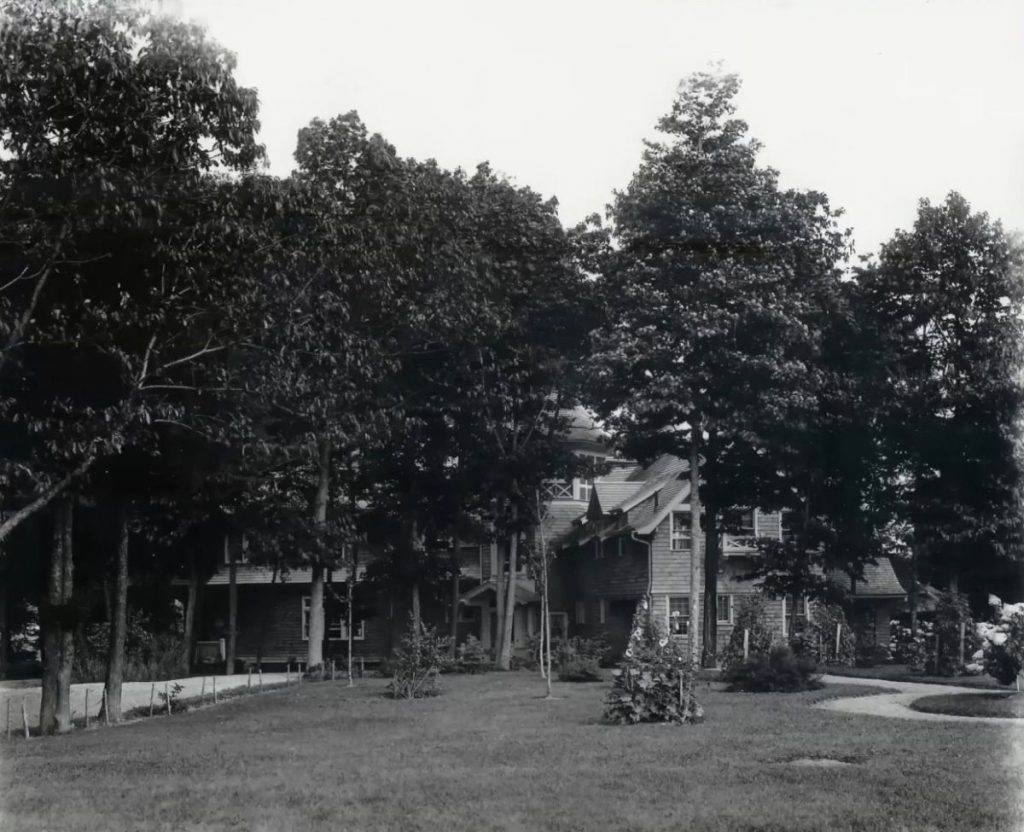
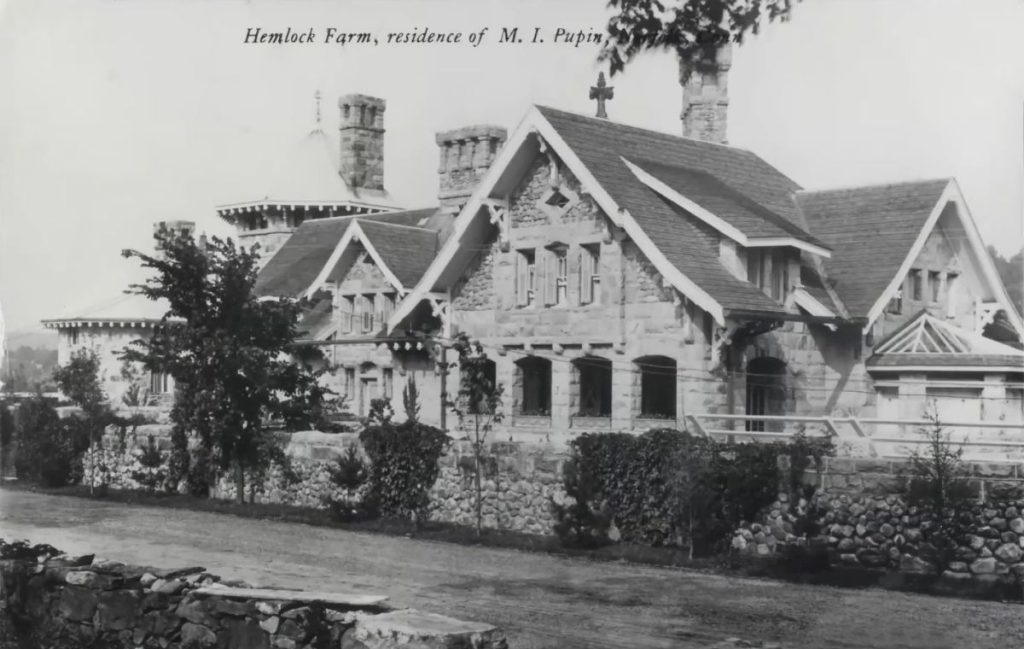
However, Pupin constantly looked at the estate across from his own, and later bought it as well. He decided to build his dream castle there. The construction of the second house – more precisely, a castle – was entrusted to the same architect, while a team of Serbian workers and craftsmen carried out the work. This job lasted about three years. Mosaics with Banat motifs were made on the exterior walls, and the luxurious interior was painted with compositions from Serbian tradition. In the central part of the living room there was a large fireplace, icons of Saint Sava and the Nativity of the Virgin Mary, Pupin’s slava.
On the large estate, a magnificent garden and fountains sprang up, and in the part of the house that looked like a tower there were offices for managing the farm. Stables for cows and horses were built, a greenhouse for vegetables, a vineyard was planted… They had about a hundred cows, and Pupin’s favorite horse was named Clipper.
The scene was so idyllic that postcards soon began to be printed and sold featuring Pupin’s new house, estate, and impressive gravel access road. A local newspaper reported: “The house is reached by a finely built approach that is unrivaled in the entire county and winds from West Road to the tastefully landscaped grounds around Professor Pupin’s house.”
With the desire to actively contribute to improving life in Norfolk, Pupin began attending community meetings. However, at first he did not receive a good reception from the farmers, and his ideas to improve the roads were rejected. Over time, as the locals got to know him better, relations improved. Pupin selflessly helped the town. For example, he bought an old school, as it needed renovation. He then made a large donation for its refurbishment. He became a member of the school board, and also gave his lecture there in 1925.
Pupin often said: “I would rather risk losing a good reputation at Columbia University than among these good people of Norfolk, my American Idvor.”
In Norfolk he organized a lavish wedding for his adopted son Frederik Agate on June 22, 1905. During his regular professorship, Pupin spent summer vacations, holidays, and weekends on the estate, and after retirement, he enjoyed life in the countryside and writing books.
Unfortunately, after his death, his daughter Varvara Pupin, due to her husband’s large unpaid debts (a lawyer and gambler), sold her father’s entire estate, together with the pastures and farm in Norfolk. She sold his “American Idvor” on June 15, 1939. Newspapers reported that “the national headquarters of the Catholic Boys’ Brigade purchased the 63-hectare estate of the late Prof. Pupin.” Since then, the house has changed numerous colorful residents and owners, and today Pupin’s house houses the Asian Cultural Center.
To remind, Pupin was born in Idvor back in 1854. He is known to have been an inventor, scientist, university professor, benefactor, and patriot… but also a caring husband, father, and stepfather. When his wife Katarina Sara, née Jackson, suddenly passed away after eight years of marriage (1896), he took over the care of their daughter Varvara, who at that time was not yet 7 years old, as well as the adopted children that Katarina had from a previous marriage. When she met Pupin, Katarina was a widow; her first husband was Frederik Agate (1879–1887), and with him she had a son and a daughter – Frederik and Mary.
MORE TOPICS:
HILANDAR TURNED WHITE: Snow delighted Serbian monks after almost a decade! (PHOTO)
Source: Marina Bulatović, “Politiku”, rubrika Svet; Foto: Wikimedia Creative Commons
 Add Serbian Times as your Google source