




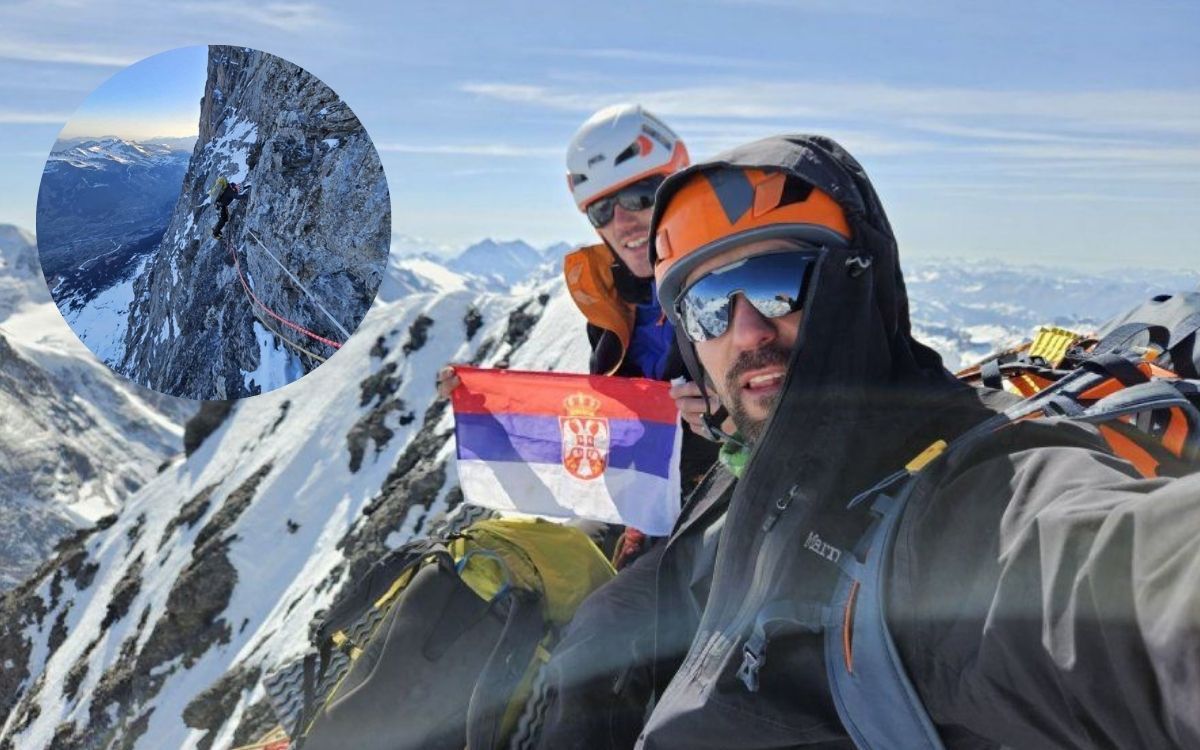
Members of the mountaineering team of the Mountaineering Association of Serbia—Igor Milošev, Miloš Milanović, Nikola Đurić, and Dušan Starinac—have made history in Serbian alpinism by climbing the north face of the Eiger peak via the “1938” route, it was announced today.
Under the close supervision of team selector Predrag Zagorac, the members of the national alpinist team of the Mountaineering Association of Serbia achieved a remarkable feat and top-level sporting result, which will be recorded in golden letters in the annals of Serbian mountaineering and will have great significance for Serbian alpinism. They conquered one of the “three problems of the Alps,” a term referring to the most difficult north faces in the Alps—along with the Eiger, the other two are the Matterhorn (Schmidt route) and the Grandes Jorasses (Walker Spur).
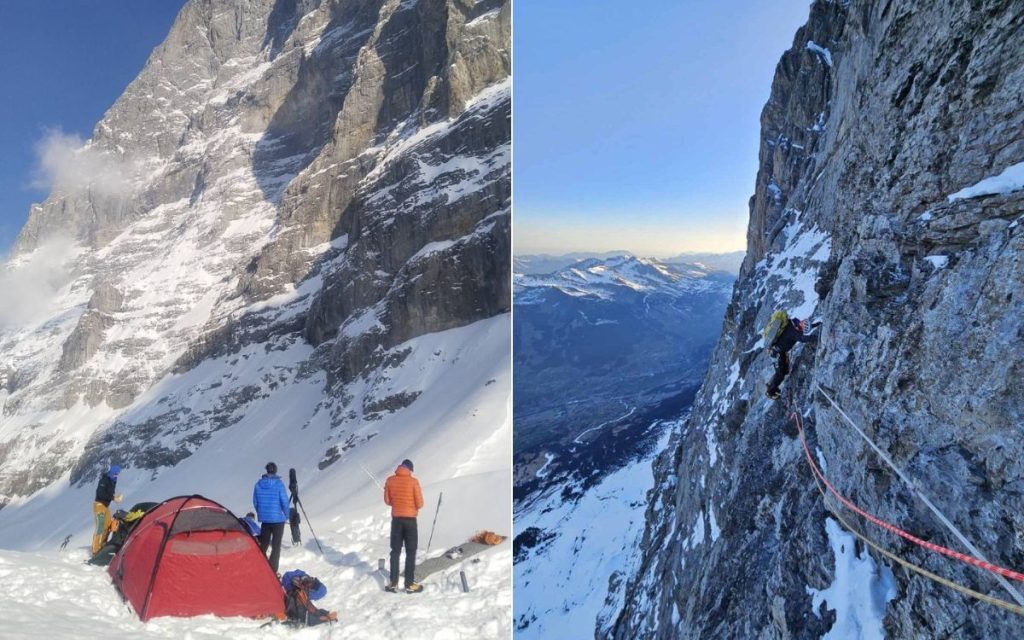
Climbing each of these peaks requires a combination of physical strength, top technical skills, and persistence.
The Eiger rises to 3,967 meters above sea level, and this peak in the Bernese Alps has the tallest and most famous north face in the Alps. The north face of the Eiger is a 1,800-meter wall of rock and ice, considered one of the most difficult ascents in the world.
FIND OUT MORE:
After the other major Alpine faces were conquered in the 1930s, the Eiger’s north face remained out of reach for climbers.
Dubbed “the last problem of the Alps,” it was finally conquered in 1938, when a group of German-Austrian climbers reached the summit. Since 1935, more than 60 people have tragically lost their lives attempting to scale the Eiger’s daring north face.
Two more challenges now lie ahead for the Serbian alpinist team, and after this success, there is no doubt that Đurić, Milošev, Milanović, and Starinac will successfully “solve” the Matterhorn and Grandes Jorasses as well.
MORE TOPICS:
VUČIĆ CHOSE: The candidate for the composition of the new Government is Đuro Macut (VIDEO)
Source: N1, Foto: Planinarski savez Srbije