




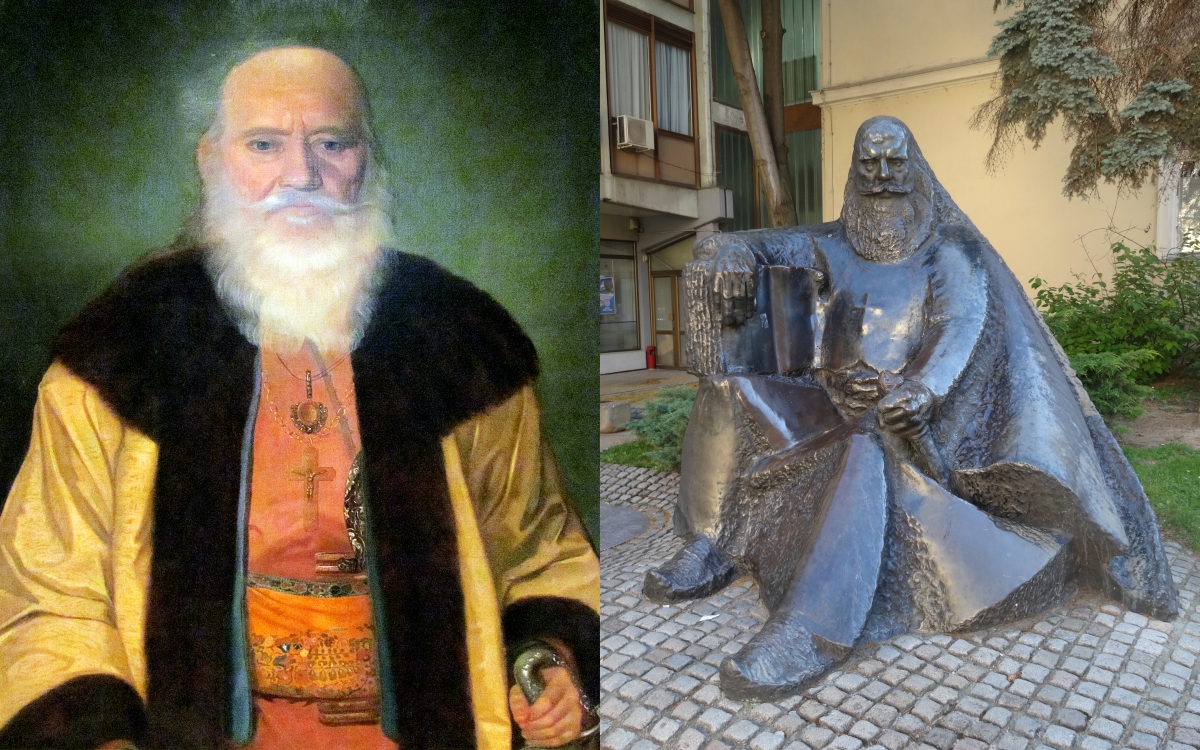
Nearly two and a half centuries ago, Prota Mateja Nenadović was born. He was both a priest and a voivode (military commander) in what was then known as Karađorđe’s War, more commonly referred to as the First Serbian Uprising.
Mateja was one of the few literate people of his time, having learned to write from a priest. He himself became a priest in 1793. Two years later, the Orthodox Church bestowed upon him the honorary title of Prota, meaning the first priest.
However, his life changed when he decided to join the rebellion against the Ottoman authorities. This decision was made in agreement with 12 noblemen from the Valjevo nahija (district), including Mateja’s father, Prince Aleksa Nenadović.
When news of the uprising reached the Ottoman authorities, the Slaughter of Princes occurred in 1804.

The following year, to sustain the uprising, the Ruling Council of Serbia was established with Nenadović as its first president.
“We found a peasant and had him make us a table and two benches out of linden wood. We placed them in a small room, spread a cloth on the table, and put the Holy Gospel and a monastery cross on it. Around this, we held our sessions.”
Not long after, the Second Serbian Uprising began. Mateja patiently waited to return to his homeland and once more lead Serbian troops into battle, this time as a prince.
During the period between the uprisings, he spent time in Austria, trying to persuade the great powers to help Serbia fight against the Ottomans. He appealed to Russia in particular, requesting annexation or a protectorate.
“This, children, is the eternal changeability of fate, which I recognized early on and never complained about. From this changeability, learn: one should not be proud in happiness nor despair in misfortune.”
The memories and recollections from his life, filled with suffering, were forever recorded as a guide for future generations in his work “Memoirs,” published in parts by Mateja’s son, Ljubomir Nenadović, a year after his death. The first complete edition was published in 1867.
He died in 1854 as a free man in the Principality of Serbia. Although he had traveled widely, he returned to his homeland for his final resting place, the land for which he was willing to give his life. However, he wanted his descendants to know that they had relatives in Russia, where his uncle Jakov, who had helped him start the first uprising, had remained to live.
MORE TOPICS:
Source: Danas Photo: Wikimedia Creative Commons