




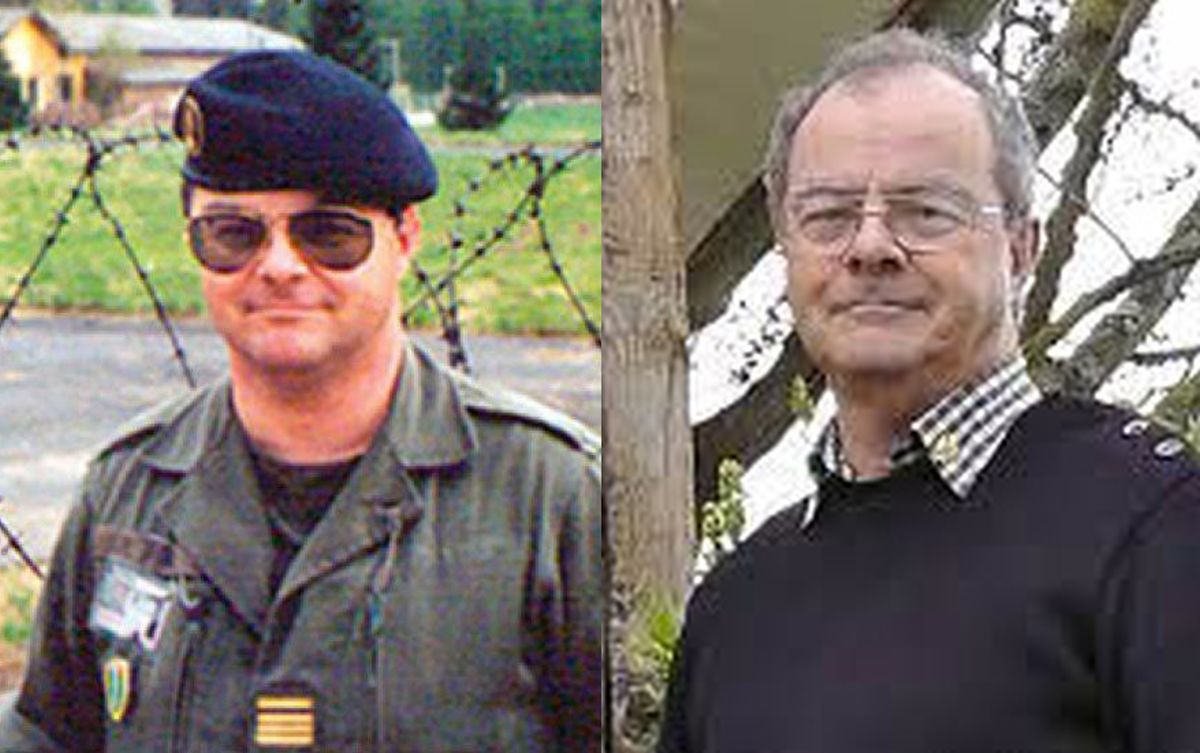
Former French Major Pierre-Henri Bunel, known for providing our army with NATO bombing plans and thereby delaying the start of the aggression, sent an open letter to the Serbian people.
Due to his support for the Serbs, he also lost the Legion of Honor. Bunel was sentenced by the court to 5 years in prison, and he stated that he has no regrets and would do it again.
See what the Frenchman told the citizens of Serbia regarding Serbia’s rapprochement with the criminal NATO pact.
Seventeen years ago, NATO aggression began against a proud and free people, the Serbian people. Accomplices in this drama were also found in a large part of public opinion, abused by the propaganda of NATO and its satellites.
Since I participated in an attempt to prevent this evil, all those events that would seal the guilt for the future and history, I was forced to follow from my French prison. And when that crime was announced, I felt shame mixed with pride and honor.
First, shame because I saw my country voluntarily enter into betrayal. It was, in fact, a betrayal of itself, because there were no reasons for the bombing, because participation in such dishonor could not serve the French people, and, finally, worst of all, our politicians thereby betrayed traditional friendship forged by historical heritage.
Thus, by bombing Belgrade, as the Nazis once did in World War II, the “allies” sullied themselves for the future.
But I also felt pride. Even during my engagement in Bosnia and Herzegovina, I began to get to know the Serbian people. Although the situation of Serbs in Bosnia and Herzegovina was very difficult, Serbs always kept their word when they said something, even towards those occupation forces.
It was not cooperation, but simply respect for the given word of what was signed by the Dayton dictate.
In this infamous time of NATO and its accomplices, only the Serbs showed courage and honor.
Serving my sentence in a Parisian prison, I constantly felt friendship towards the unjustly bombed Serbs. You were bombed because you wanted to defend your existence, your culture, and your freedom.
Basically, because you defended your basic rights. I was proud watching your patriots gather on bridges under bombs, like living targets wanting to save the homeland they love.
During my imprisonment, I received many greetings from Serbs from France, but also from Serbia. In my study, I keep a postcard with Serbian and French soldiers from the time of the Balkan Wars in 1918.
On it, in Serbian, it says: Serbian and French officers in the First World War, and in French, it is added: “Thank you my commander Pierre-Henri Bunel! Serbia prays for you this March 1999.” It is postcard number 188, Francophile edition 1999, signed by Prof. Branko Vasiljević. Wherever I moved, I carried that postcard with me.
When I finally got out of prison on August 29, 1999, you had already achieved victory. The blows of your enemies did not break your resistance, neither the American Secretary nor the talkative Holbrooke were heard anymore.
All those chatterboxes then gave way to a Finnish negotiator. Of course, enormous damage was inflicted on my dear Serbia, but you did not flinch then and still kept your president.
When my friends Mila Alečković and Yves Bataille invited me in 2003, and then the publishing house “Gutembergova Galaksija” (and its director Mile Bavrlić) which agreed to print my book “Crimes of NATO” in Serbian, I finally had the opportunity to visit the country I loved so much and to meet the heroes who endured under the murderous bombs.
I crossed the Ibar in Kosovska Mitrovica under the almost hateful gaze of Albanians, but also under the protection of Serbs from the northern bank. It was then that I realized how similar my homeland Ariège, in the mountains of southern France, is to that southern Serbian province.
Similar in mountains, similar in people who are equally accustomed to hard work on mountainous land and harsh winters.
And the people from my homeland also had to fight against invaders who came from the north, and for us, originally from the Pyrenees, high Montségur is the same as Kosovo Polje for the Serbian people.
But the political abuse continued, as did the recognition of the independence of Serbian Kosovo and Metohija by Washington’s satellites.
France also went through dark periods in its history. Alsace and Moselle were also taken from it by German hordes. From 1940 to 1945, it was also enslaved. In the end, we still emerged from it.
Of course, even today it can be said that we are facing danger. But, both France and Serbia still have hope. The same forces that led to the mutilation of Serbia and that led to the mutilation of France will also lead to the uprising of our two peoples.
That is why Serbian and French youth need to resist the cunning and charms of consumer society.
Nations that have no history have no future. In contrast, those who know how to preserve their tradition, taking what is good from modernism, those who know how to preserve the awareness of who they are, of how their fathers created them, those nations have a future.
The development of our humanity shows that the ideals spread by our enemies are in fact fragile, because they rest on flaccidity and laziness. In the emerging world, the future belongs to those who are accustomed to difficulties and who do not ask for much.
It is our duty as adults to show our children the right path. Guided by our holy fathers and our personal strength, it is up to us, therefore, to take the reins of our own destiny.
Serbs are brave.
They have shown this throughout history, at least since the Battle of Kosovo, onwards. And, finally, you are not alone, even if your future brothers in struggle are currently still condemned to silence. Faith in God, faith in your country and in your tradition is the source of your glory in the future.
On this seventeenth anniversary of the misfortune that will one day end, I wanted to tell all of you that for you, I carry friendship and love within me. Glory and long life to the Serbian people! Your friend and your brother.