





In the gorge of the Moravica river, at an altitude of 660 meters and on a steep rock, lies one of the smallest little churches in Serbia, dedicated to Saint Elijah. Only one narrow and stony path leads to this sanctuary, from which half of western Serbia can be seen as if on the palm of a hand; however, despite this, the church of Elijah the Thunderer on Gradina is visited by several thousand believers annually. It was built several centuries ago, and during the Turkish rule, it represented the only place in that region where Serbianhood and faith in God were preserved.
“Serbia was enslaved under the Turks for five centuries, and during all that time our people managed to preserve Christianity precisely by praying in inaccessible churches, which resisted the enemy’s hand. It often happened that haiduks, before the onslaughts of the Turks, carried the remains of a church on their hands and horses from one hill to another, and it is precisely thanks to their resourcefulness that the faith was preserved,” ethnologist Snežana Ašanin stated for RINA.

The little church of Saint Elijah is of small dimensions, the walls are painted white, and on the roof made of hewn stone, a tilted cross still stands in place despite all the winds and thunder. Massive oak doors lead to the interior, and only two believers can enter this spiritual house at the same time because there is no more room.
“The fact that this church is exceptionally small does not diminish its value. Its symbolism and significance are exceptionally great and the same as those of larger religious buildings. People prayed to God there for the health and happiness of their families under exceptionally difficult conditions,” Snežana emphasized.
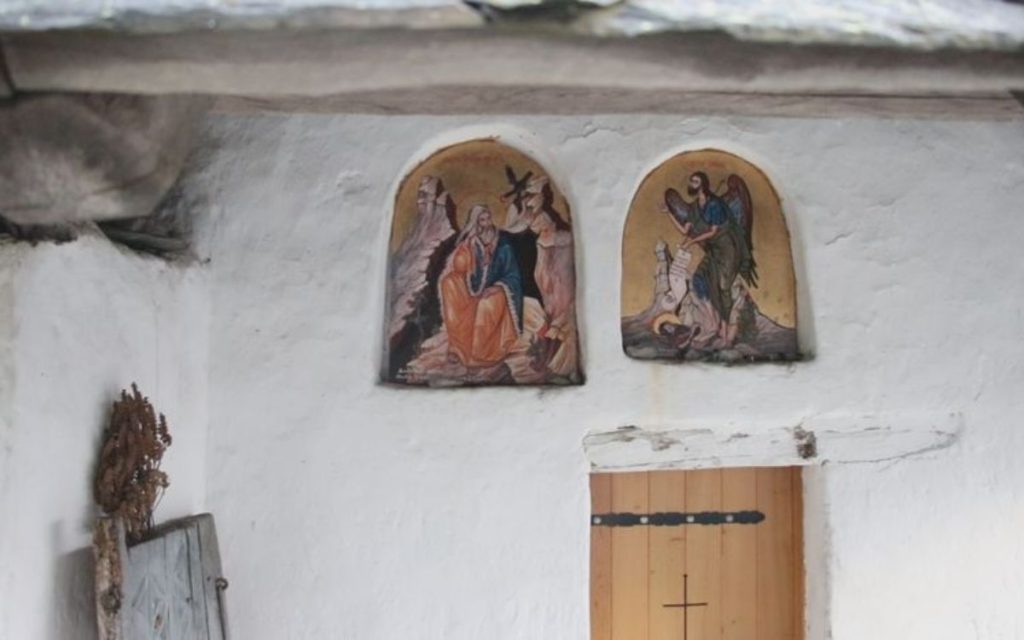
Service is held in it three times a year on White Shrovetide, Saint Elijah’s Day, and the Resurrection of King the Baptist. When the sanctuary is reached by the steep path, believers should walk around the church three times, and according to folk beliefs, one who is sinful should not embark on this adventure, as they might fall into the abyss.
At the very foot of the little church lies the archaeological excavation Gradina Tower, which dates back to the 13th century and also represented a military fortification because, due to its geographical position, it was not an easy prey for the enemy.
MORE TOPICS:
Source: RINA; Photo: RINA