




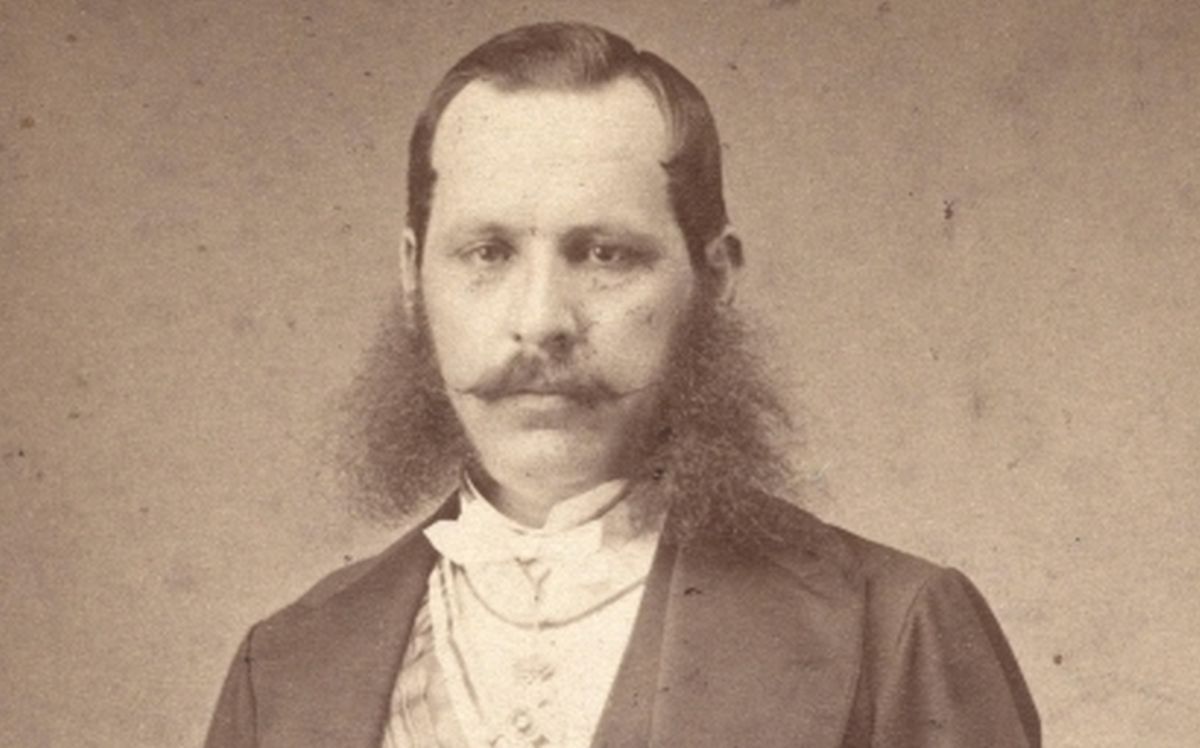
“There, Your Excellency! When the Russians make another Skull Tower like this, from Serbian heads, and place mine on top of them, only then will the Bulgarians get Niš!”
With these heavy words, Serbian Prince Milan Obrenović addressed the Russian consul after the Second Serbo-Turkish War in 1878. During those pivotal days and weeks for the future of our young principality, a great diplomatic battle was fought over the southern Serbian territories, which had just been liberated from centuries of Turkish rule. The Treaty of San Stefano provided for significantly smaller territorial gains for Serbia than those won by its army. To the detriment of our principality, a Greater Bulgaria was being created, which was supposed to include even the city of Niš. For Prince Milan and the Serbian government, such an outcome was out of the question. Fearing they might find themselves in the newly created Bulgarian state, Serbs from Vranje, Pirot, Trn, Breznik, and Niš sent dispatches to Prince Milan, thanking him for the liberation and begging him not to allow their homes to remain outside the borders of Serbia.
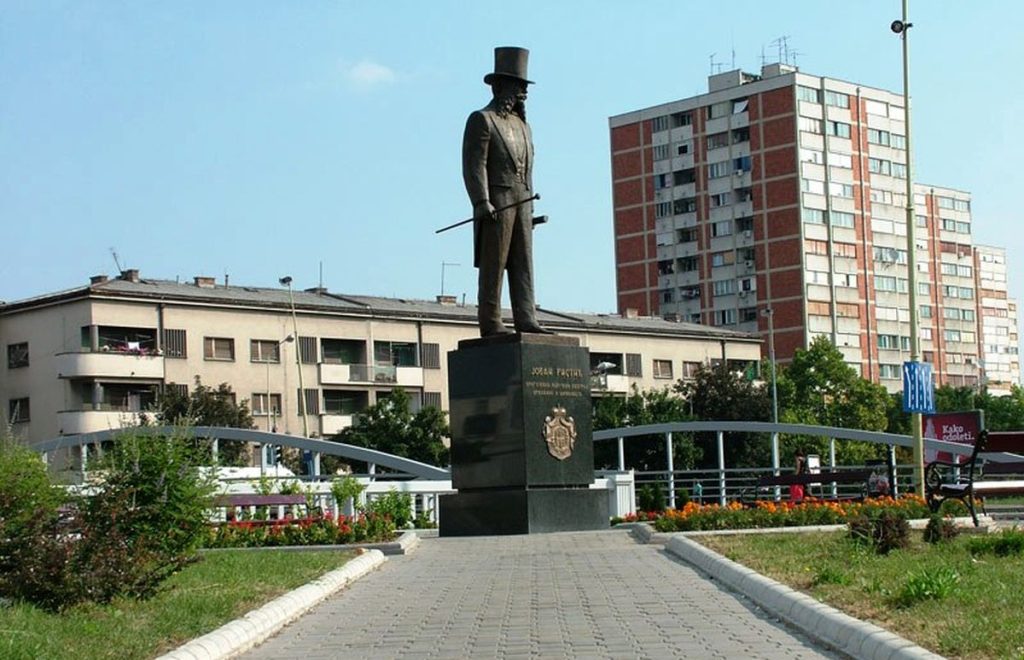
In the summer of 1878, however, the Treaty of San Stefano was revised at a great congress in the old German city on the Spree river. The powerful German Chancellor, Otto von Bismarck, led the discussions, while Serbia in this diplomatic arena was represented by the hero of our story, a seasoned diplomat and a top intellectual—Jovan Ristić. On the stage of the Congress of Berlin, he masterfully played the role of a lifetime. When it was most difficult and, at the same time, most important, his diplomatic gift came to the fore. Thanks to Ristić’s political tact and patience, his negotiation skills, as well as the influence and respect he enjoyed in high European circles, Serbia secured the most it could possibly get at the time!
More than 140 years have passed since the largest international congress of the 19th century, and more than 120 since the death of this great figure of our diplomacy. However, his legacy to his people has not faded at all; on the contrary, it still forms the foundation of modern and independent Serbia.
Jovan Ristić was born in Kragujevac on January 16, 1831, into a poor family. His father, Rista, died early, so he lived with his mother, Marija. From a young age, he strived to overcome poverty, achieving excellent results in elementary school. Even in his early youth, Ristić was distinguished by exceptional intelligence and wit. Recognizing his great potential, a family friend sent him to Belgrade for further education, where Ristić equally successfully finished high school. In the principality’s capital, he soon became a member of the “Družina mladeži srpske” (Society of Serbian Youth), an organization founded at the Belgrade Lyceum that immediately established close ties with Serbian students in the Habsburg Monarchy. As a scholarship student of the Principality of Serbia, Ristić earned his Lyceum diploma and then continued his studies in Berlin, where he fit in exceptionally well with the social environment of this European metropolis, where he would have the opportunity to gain valuable experience and important acquaintances.
Ristić would earn a doctorate in philosophy at the prestigious University of Heidelberg. During his studies in Germany, he also met the famous historian Leopold von Ranke. First as a professor and mentor, and later as a sincere friend and reliable ally, Ranke would play a very important role in the life of this Serbian diplomat. He was also a great admirer of our people and their heroic struggle for freedom and independence, and he wrote the work “The Serbian Revolution.” It should be noted that Jovan Ristić also continued his successful studies at one of the world’s most reputable universities, the Sorbonne in Paris. It is interesting that throughout his studies, the young Ristić imagined himself as a historian, while fate would assign him other, much more significant roles in his life’s odyssey.
A Diplomat’s Rise to Power
Upon his return home, Ristić quickly entered state service at the Ministry of Internal Affairs in 1854. His potential and high education were recognized by the then Prime Minister, the experienced Serbian politician Ilija Garašanin. Not long after, he met young Sofia, his future wife and the daughter of the respected merchant Hadži Toma. Her family was highly respected and influential in our society, and this marriage, in addition to wealth, brought him the affinity of many powerful Serbs of that time, especially the Obrenović dynasty. Jovan Ristić’s political and diplomatic career practically began with the return of this nation-building Serbian dynasty to the throne. Due to the strained relations between the Principality of Serbia and the Ottoman Empire, Garašanin sent Ristić to Constantinople in 1861. This mission would prove to be just the beginning of his successful and fruitful career, in which he would win numerous state successes for his country.
One of the first was certainly the withdrawal of the Turkish garrison from Belgrade in 1867. The brilliant Ristić, by then a respected Serbian ambassador, made a great contribution to that historical moment for our state. As a reward for his successful diplomatic service on the Bosphorus, Jovan Ristić was given the title of Minister of Foreign Affairs. Soon after, Prince Mihailo offered Ristić the position of Serbian Prime Minister, but given his liberal principles, he could not accept being the head of a government full of conservative politicians. At this point, the prince and his excellent official diverged, and Nikola Hristić was appointed to the position offered to Ristić. Although skilled and pragmatic in foreign policy matters, Jovan Ristić did not have enough tact and patience to curry favor with his rulers, first Mihailo and later Milan Obrenović.
The following year, 1868, a brutal assassination took place in Košutnjak, which shook both Serbia and the entire Balkans. After the murder of Prince Mihailo, almost all power in the country was taken over by Colonel Milivoje Petrović Blaznavac. The situation threatened to escalate into a very dangerous security and political crisis, which was prevented by Blaznavac, a controversial but very capable Serbian officer. At that time, a question arose among the ministers in session about Mihailo’s successor, as well as the future of the country itself: “The late Prince Mihailo, unfortunately, had no heir,” Ilija Garašanin told the assembled ministers. “Mihailo didn’t have one, but the dynasty does!” the resolute Blaznavac sharply replied. He then brought in the late ruler’s young nephew, Milan Obrenović, who was also the grandson of the famous Gospodar Jevrem, as the new Prince of Serbia. The government and ministers had no choice but to submit to the forceful Blaznavac. The colonel then mounted his horse and galloped toward the units stationed on the main city streets: “Long live Serbian Prince Milan Obrenović IV!”
The colonel shouted at the top of his lungs, galloping through the town. Soon, the army thunderously accepted it, and the entire capital echoed: “Long live! Long live! Long live!” However, the new prince was at that moment in Paris, where he was attending the Lyceum. Blaznavac sent Jovan Ristić to bring Milan back to the country. Upon their return, the National Assembly formed a three-member Regency, of which Ristić was also a member. In the coming period, he would practically compete with the quick-tempered colonel for influence over the young, inexperienced prince. His appointment as regent led to a strengthening of the liberal current in the country.
FIND OUT MORE IN ENGLISH:
A Visionary Constitutionalist
Ristić immediately began working on a reorganization of the state administration. At his initiative, a debate on the need for a new Constitution began, and in June of the following year, 1869, the Regency Constitution was passed, the draft of which was written by Jovan Ristić himself. With it, he also wanted to introduce another progressive achievement of European monarchies of that time, modeled after the Prussian state apparatus. This was a bicameral parliamentary system. This would have largely prevented party machinations and given people the opportunity to vote directly for their representatives.
Unfortunately, in Serbia at that time, which was still not politically aware and emancipated enough, there was no understanding for his aspirations. It is interesting, however, that this concept of Ristić’s was only accepted by the future King Aleksandar Obrenović, who actually introduced it into our parliamentary practice with the April Constitution of 1901. With that state act, the Senate was formed as the upper house of parliament, alongside the National Assembly. This was the only time in Serbian history that such a legislative arrangement existed.
On foreign policy matters, Ristić advocated for Serbian national interests in the second half of the 19th century, and he saw Russia as the main ally and collaborator on that path. The most difficult challenge in Jovan Ristić’s life and career would come, as we saw at the beginning, after the Serbo-Russian victory in 1878. Although Serbia’s ally in that war, Russia’s Treaty of San Stefano largely disappointed the Serbian public. It was then that the ingenious Ristić stepped onto the political scene of the Old Continent, whom Prince Milan, as a proven fighter for Serbian national interests, appointed as the main envoy of the Principality to the Congress of Berlin. In the following weeks and months, he would tirelessly travel through European capitals, from legation to legation, in an effort to win as much as possible for Serbia. From his diplomatic activities at that time, the motto “Think what you think, but take what you can!” emerged.
He worked patiently and diligently, persistently insisting on being received and heard by the influential politicians and statesmen of the era. Among others, he was received by the German Chancellor Otto von Bismarck, to whom Ristić presented Serbian aspirations and requests. Although Serbia did not have the official right to participate in the congress, thanks to Ristić’s acquaintances and skillful diplomacy, its voice was heard in distant Berlin during those days. After numerous conversations and negotiations, the tireless Ristić finally concluded an economic agreement with the Austro-Hungarian Count Andrássy. It was decided that Serbia would annex four liberated districts: Niš, Pirot, Vranje, and Toplica, while the Principality itself was granted international independence. Serbia thus regained a part of its subjugated people, increasing the principality’s territory by 40 percent.
This magnificent triumph of informal Serbian diplomacy completed the decades-long struggle of the Serbs for their independence. The satisfied Ristić then sent a telegram to the National Assembly in Kragujevac, informing the deputies of the outcome of the Berlin negotiations. On July 14, 1878, he would officially appear before the people’s representatives in his hometown and announce the hard-won independence of the Principality of Serbia. Congratulations and sympathies for the “birth” of the 27th independent state in the world came from all sides. Thus, Ristić’s former mentor and professor, Leopold von Ranke, said in a letter to his student:
“Independence is the greatest treasure Serbia could obtain. Independence is the foundation on which states are built and secure their future!” Jovan Ristić thanked him for these words of support and added: “What freedom is to a person, independence is to a state!”
A Lasting Legacy
The European public and the world press did not hide their sympathies for the young Serbian principality and its heroic struggle. The American New York Times in an article titled “The youngest european state” highlighted the great contribution of the Serbian army in the fight against the Ottoman power on European soil. Also, a London newspaper published a text entitled “Serbia, the youngest member of the European family.” Ristić himself, just like Prince Milan, realized after the past events that they had to act more pragmatically. “Do not permanently break with any power, nor permanently bind yourself to any,” he would say.
After Berlin, new political and diplomatic battles in the Balkans awaited Ristić in the years to come. Thanks to his engagement and collaboration with Metropolitan Mihailo, whom he sent for an audience with Patriarch Joachim III, the complete independence of the Serbian Church was soon won. Although subjected to fierce pressure and criticism, especially from Pašić’s radicals, Ristić’s government also successfully resolved the railway issue, which would ultimately represent a grandiose legacy for future generations. Through Ristić’s personal efforts, in collaboration with King Milan, special attention was directed toward the development of Niš and other annexed southern Serbian towns. After the successful and fruitful state-building cooperation of these two great Serbs, but also due to growing animosity and mutual turbulence in their private lives, the inevitable parting of King Milan and Ristić would occur.
The last state function in his rich career would be the position of regent once again, this time for Crown Prince Aleksandar, the last ruler of Serbia from the Obrenović dynasty. The period of the third regency would be characterized by numerous political and party frictions, mainly between the radicals and the liberals. The political crisis gained momentum, and therefore, the seventeen-year-old Aleksandar decided to take power from the Regency a year early, declaring himself of legal age in 1893. In this way, he carried out a coup d’état, which was, however, supported by military circles of the kingdom. The support of the radicals that the new king, an unquestionably intelligent and shrewd young man, had secured before this act was crucial, as the radicals had a strong electoral body and a strong foothold among the masses. In such a constellation of power, and given that the sudden change of regent was not condemned by Europe, Jovan Ristić could only accept the new state of affairs and submit his resignation to the king.
Toward the end of his life, this great Serbian statesman, historian, and diplomat became the president of the Serbian Royal Academy. In addition to his faithful and dedicated service to his homeland, Ristić also studiously engaged in scientific work, leaving valuable historical texts for future generations, such as: “Spoljašnji odnošaji Srbije 1848-1872” (Serbia’s Foreign Relations 1848-1872) and “Diplomatska istorija Srbije 1875-1878” (A Diplomatic History of Serbia 1875-1878).
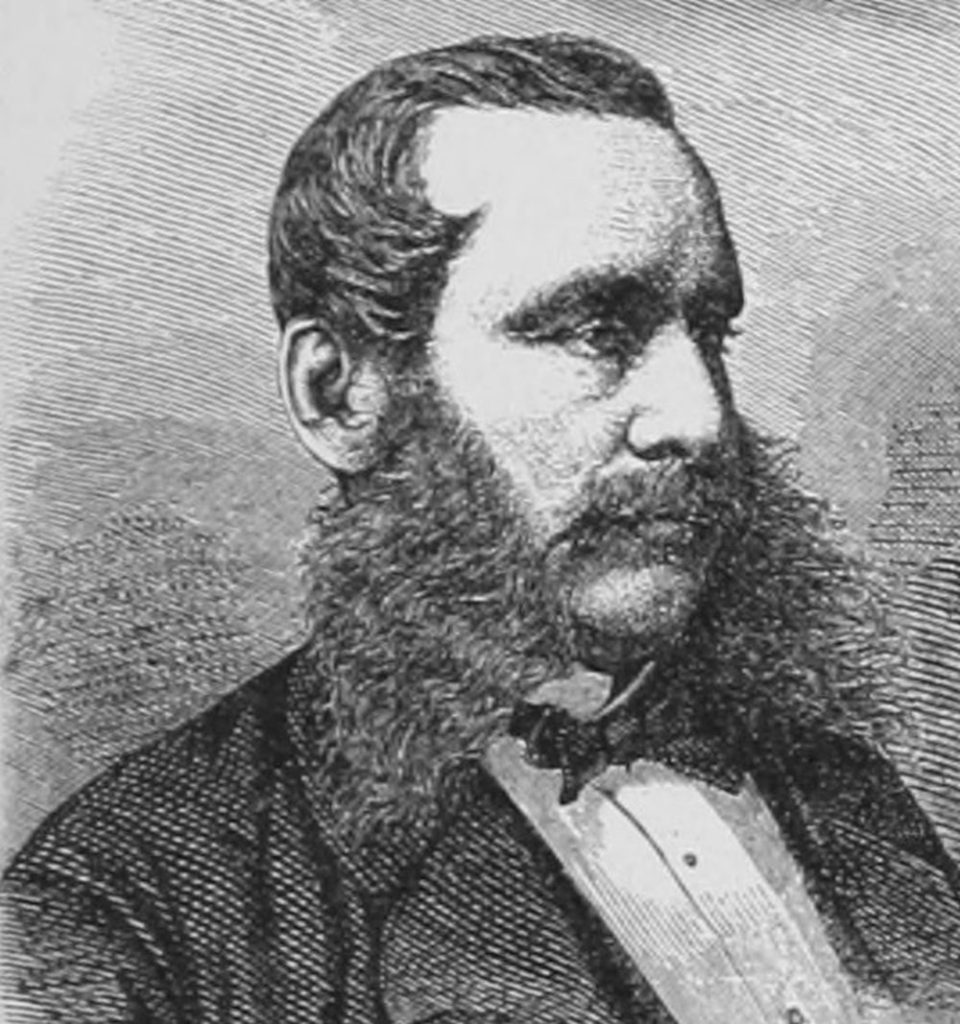
What Thomas Jefferson was to the newly formed American state, Jovan Ristić was to the Principality of Serbia. The parallel between these two statesmen of world rank is truly miraculous. Just 5 years after Jefferson’s death, Ristić was born. Both were diplomatic representatives of their countries in European metropolises and spoke several foreign languages fluently. Both were at the head of influential political parties they personally founded, were at the very top of the state apparatus, and at one point in their political careers were considered the éminence grise in their respective countries. Our Ristić, like Jefferson, was an extremely gifted writer, and just like him concerning the Declaration of Independence, Jovan took the lead in the creation of the Serbian Constitution. Also, both can be credited with the immense merit of increasing state territory. Namely, Jefferson played a key role in the purchase of the land of today’s State of Louisiana from France, while Ristić, as we have already seen, contributed to the expansion of Serbia to its southern and eastern regions.
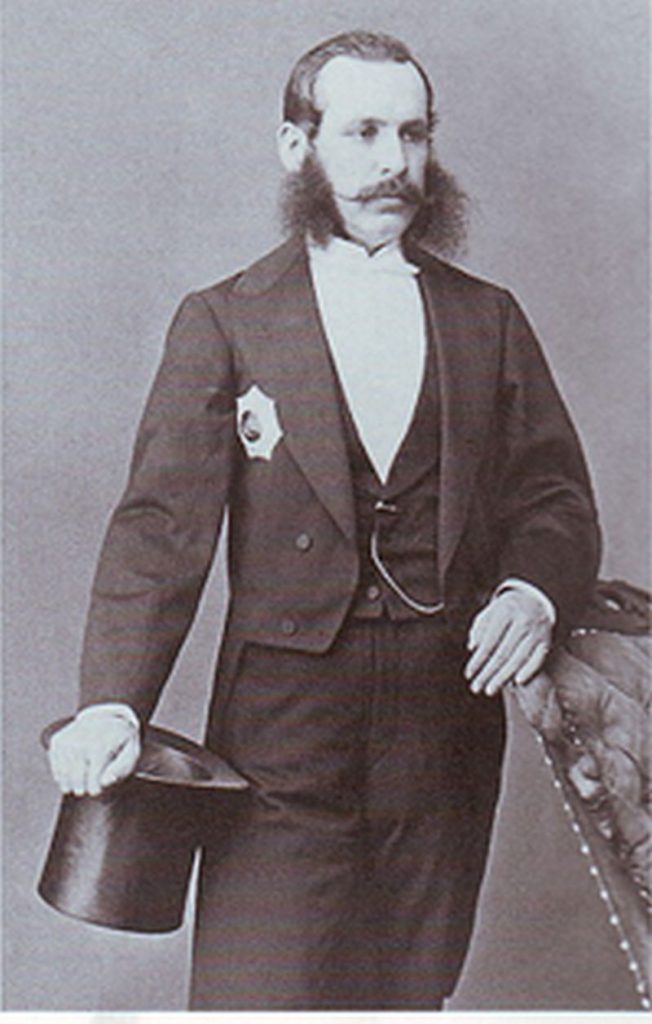
The doyen of Serbian diplomacy and one of the greatest statesmen of our modern history passed away in Belgrade on September 4, 1899. He left an indelible mark on modern Serbian statehood and paved the way for the development of our diplomacy. It is Jovan Ristić, with his magnificent character and work, who would become an inspiration and role model for generations of subsequent Serbian ministers, ambassadors, and consuls in the international political arena.
MORE TOPICS:
BASKETBALL ASSOCIATION SPOKE OUT: Here is the condition of Avramović and Vukčević after injuries!
TEN PEOPLE BEAT UP FOUR: Because of this clip, masked thugs beat up war veterans! (VIDEO)
VICE PRESIDENT OF AMERICA DENIED TRUMP: There are no plans to deploy the national guard in Chicago!
Source: Luka Ugrica za Centar za međunarodnu javnu politiku, Foto: Wikimedia Creative Commons