




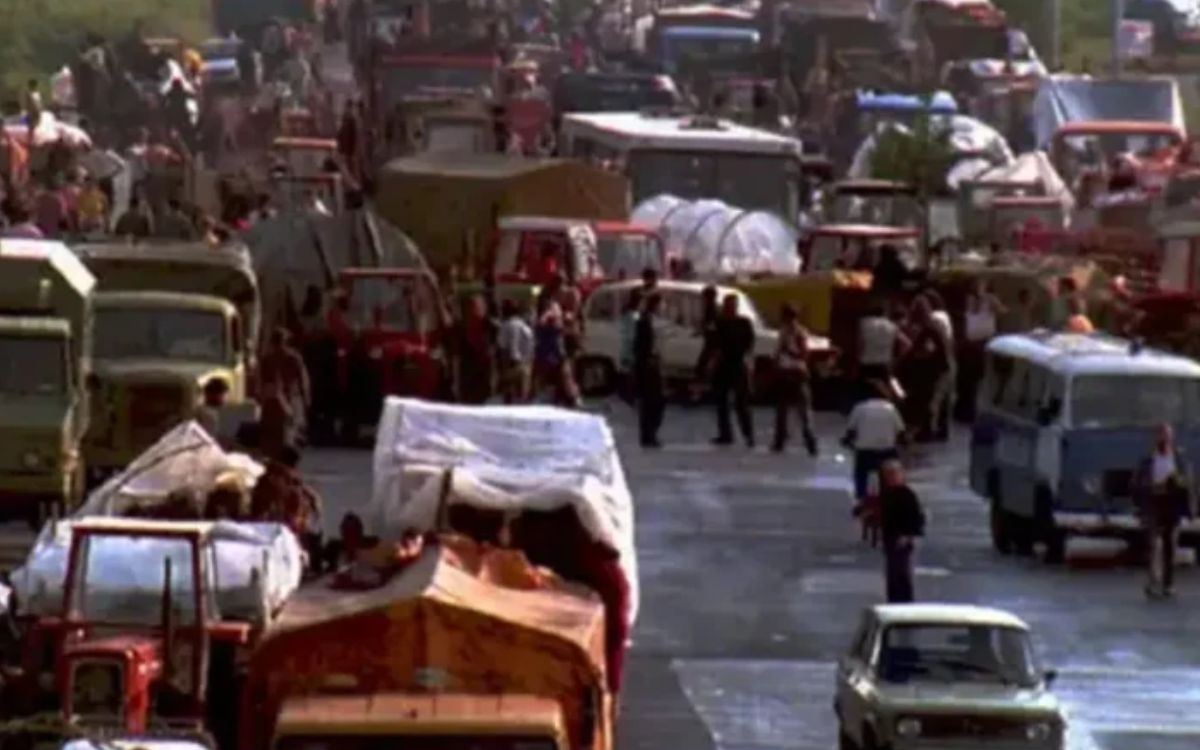
Students in Blockade have issued a statement regarding the European Parliament’s draft resolution marking the 35th anniversary of the fall and destruction of Vukovar, arguing that the document, in its current form, does not contribute to an objective assessment of history, trust, or reconciliation in the former Yugoslavia. They pointed out that the suffering of Serb civilians in Croatia, including during Operations “Flash” and “Storm,” has been almost entirely overlooked in the text, stressing that responsibility for war crimes must be individual and must not be attributed to entire nations.
We are publishing the full statement by the Students in Blockade:
“We disagree with the content of the European Parliament’s draft resolution marking the 35th anniversary of the fall and destruction of Vukovar. We believe that, in its current form, the document does not contribute to an objective assessment of historical events or to building trust and reconciliation among the peoples of the former Yugoslavia.
The suffering of the Serb civilian population in Croatia has been almost entirely overlooked in the draft resolution, including killings, expulsions, destruction of property, and mass displacement. Events such as Operations “Flash” and “Storm,” as well as crimes committed against Serb civilians during the war, cannot be excluded from a comprehensive assessment of this historical period.
It is unacceptable for the complex processes surrounding the breakup of the SFRY, interethnic relations, and armed conflicts to be reduced to a simplified picture of collective responsibility on the part of the Serb people. Responsibility for war crimes must be individual and established on the basis of evidence and final court rulings, rather than attributed to entire nations.
Post shared by 3rd Student List – Students Are Winning (@studenti_u_blokadi)
Issues concerning missing persons, the opening of archives, and the prosecution of war crimes must be addressed through genuine regional cooperation, mutual respect, and the application of equal standards to all countries. Serbia has an obligation to cooperate in clarifying the fate of missing persons and establishing responsibility for crimes committed, but the same approach must also be applied when it comes to Serb victims and crimes committed against them.
European institutions, which advocate reconciliation, tolerance, and shared European values, must be consistent in their treatment of all victims and historical facts. Remembrance of the past must not become a tool of political pressure, nor must it be used to deepen existing divisions in the region.
Serbia and the Serb people have the right to remember their own victims with dignity, just as all other nations have the right to preserve the memory of those who suffered. Genuine reconciliation cannot be achieved by imposing one-sided interpretations of the past, but only through an honest reckoning with all crimes, regardless of who committed them or who their victims were.
For all these reasons, we believe that the draft resolution, in its current form, does not contribute to a balanced culture of remembrance and reconciliation. It misses an opportunity to address the suffering of all nations during the wars of the 1990s in a comprehensive, objective, and non-discriminatory manner.”
MORE TOPICS:
Source: Serbian Times, Foto: Printscreen Instagram
 Add Serbian Times as your Google source