




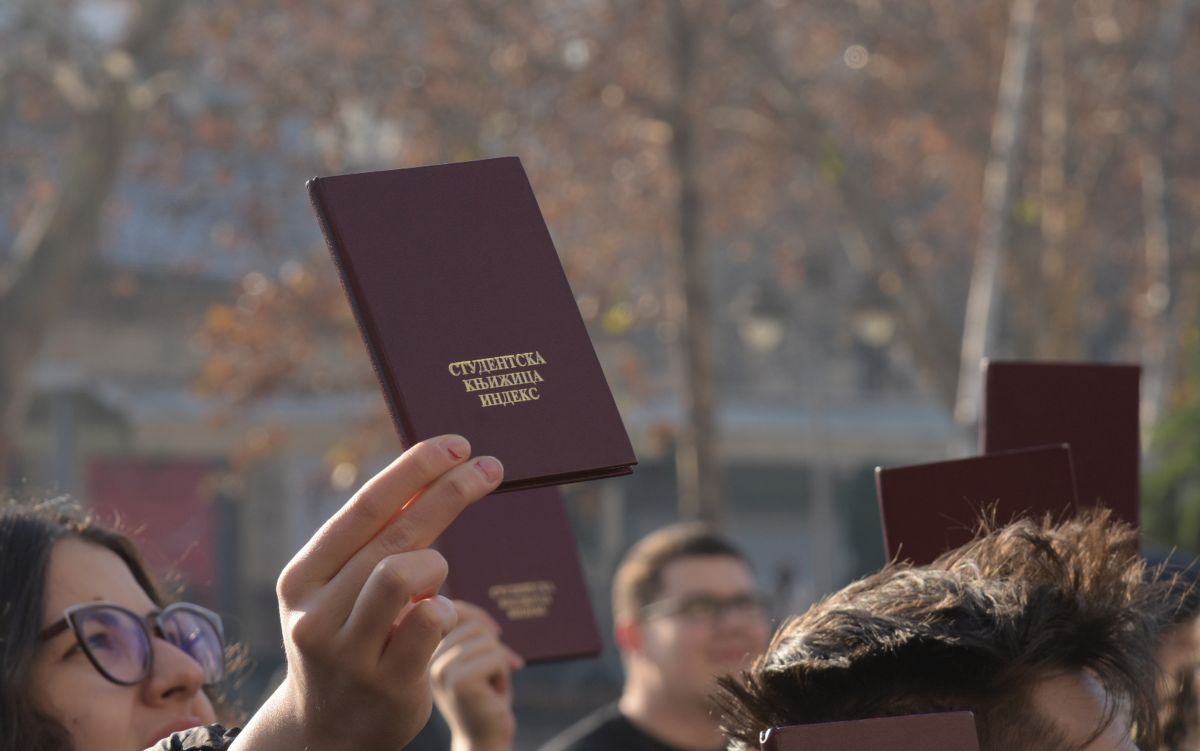
The University of Belgrade Senate has adopted amendments to the UB Statute, expanding the right to use dormancy status to enable more students to utilize this instrument.
The announcement that students unable to complete the academic year due to blockades would be allowed to freeze their year was made recently, and with the amendment of the Statute, it is now specified what students can refer to.
“A student enrolled in the current academic year shall be granted a suspension of rights and obligations at their request in cases where it is impossible to exercise the rights and obligations defined by the study program due to unforeseen, unavoidable, or unresolvable circumstances, as well as other justified cases,” reads the new provision.
Until now, dormancy status was granted due to severe illness, referral for student professional practice lasting at least six months, military service, caring for one’s own child up to one year of age, special care lasting longer than the child’s first year of life, and pregnancy maintenance.
Also, a student may be granted dormancy in cases of inability to pay tuition fees for one academic year, and female students undergoing biomedically assisted fertilization also have this right.
During the approved dormancy, the student cannot take exams or fulfill pre-exam and other obligations from the teaching process.
The Dean of the Faculty of Political Sciences, Maja Kovačević, confirmed to Danas that the University Statute has been amended.
“Some students will be very engaged in protests during the summer and may not have time to dedicate themselves to making up for classes, but there is a legal possibility for them to choose dormancy status. So, what they have achieved in their studies will be recognized, and when they want to return to the standard study regime, they will simply continue where they left off, they will not lose what they have gained,” says the dean.
When asked whether the approval of dormancy status is within the purview of the university, i.e., individual faculties, Kovačević replies that it largely is, but that an agreement will have to be reached with the Government on issues of accommodation in student dormitories, as well as student loans and scholarships.
Deans with whom we spoke say that faculties can independently decide on the number of self-financing students who would be granted dormancy status, while budget-funded students will have to be negotiated with the Government.
At some faculties, dormancy is approved for the entire year, and at others for specific subjects, so there is a possibility that those who have completed the first semester may choose to freeze only the second semester and take it next year.
Minister of Education Dejan Vuk Stanković recently stated that freezing the year would only be possible as an individual status for a student, but not as a collective dormancy for everyone.
At a large number of faculties, compensation for missed classes has begun, and at some higher education institutions, exam schedules have also been published.
How the exams will be conducted is currently unknown, as some faculties have announced that students have entered a total blockade after the teaching-scientific councils made decisions on starting some form of instruction.
By law, exams are taken at the headquarters of the higher education institution, i.e., in the facilities listed in the operating license.
According to data published on the website of the National Accreditation Body as of June 9, 80 higher education institutions have requested and received permission from the Ministry of Education to conduct distance learning.
MORE TOPICS:
BRAVO, ADRIANA! Serbian athlete won silver at the Diamond League meeting in Oslo!
Source: Danas.rs, Photo: ATA Images