




Everyone knows about Tesla and Pupin, but did you know that Serbian scientists are also responsible for the existence of seaplanes, train brakes, and hair clippers? Here’s a list of Serbian inventions that changed the world:
Alternating Current – Nikola Tesla
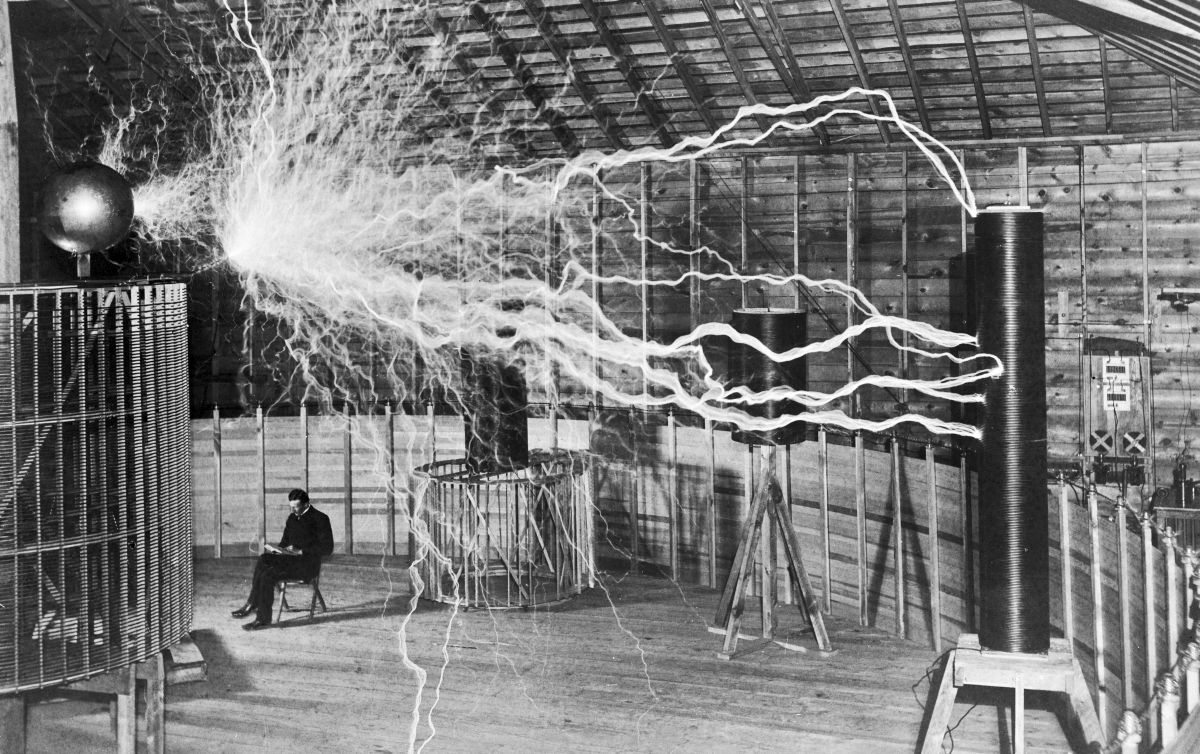
One of the most famous inventors and scientists in the fields of physics, electrical engineering, and radio technology, Tesla is credited with the discovery of alternating current. His system of alternating currents made the transmission of electrical energy over long distances significantly easier and more efficient. This discovery initiated the industrial revolution, and so-called Tesla’s current, due to its high frequency of more than amperes, is not dangerous for the human body; thus, it finds application in medicine (diathermy). Besides alternating current, without Tesla’s scientific discoveries, radio, remote controls for televisions, and other wireless transmission technologies would not be possible.

Pupin’s Coils – Mihajlo Pupin
This scientist introduced Pupin’s theory (1896), which solved the problem of extending the range of telephone transmissions. The discovery eliminated the detrimental effects of the capacitance of wires, which posed a significant obstacle to signal transmission over long distances, manifesting as noise. The problem was solved by placing inductive coils at strictly defined distances along the wires. He developed a new mathematical theory of the transmission of oscillations through wires with distributed masses, and these inductive coils were named Pupin’s coils in his honor. This patent brought him worldwide fame and wealth.

Mathematical Theory of Thermal Phenomena – Milutin Milanković
One of the most cited scientists in the world, Milanković graduated from the Vienna University of Technology. He also earned a doctorate in technical sciences in 1904, becoming the first Serbian doctor of technical sciences. In 1920, he published the monograph “Mathematical Theory of Thermal Phenomena Caused by Solar Radiation.” The results of this work earned him significant reputation in the scientific community. This solar curve was not fully accepted until 1924 when meteorologist and climatologist Vladimir Kepen presented it in his work “Climates of the Geological Past.”

Seaplane – Ognjeslav Kostović Stepanović
A Serbian inventor and scientist, as well as a captain in the Russian army, Kostović Stepanović lived first in Hungary and later moved to Russia. Although born in the same decade as Nikola Tesla and Mihajlo Pupin and being the inventor of many creations, he remained on the margins. One of his most famous inventions is the flying boat, the first seaplane in the world, which he created in 1911. It should also be noted that in 1879, while searching for new materials for constructing airships, he invented arborite, considered by many to be the first artificial synthetic material, a kind of plywood. Many believe that Ognjeslav is responsible for creating the first version of plastic in the world. Stepanović’s arborite was registered as a patent in September 1906.

Home Computer Galaksija – Voja Antonić
Born in Šabac, Antonić was a film editor, inventor, and publicist. He was also a newspaper editor and contributed to numerous radio shows. However, he is best known for being the first to construct and create the Galaksija – a home computer based on self-construction principles in Yugoslavia. In the summer of 1983, while reading literature on microprocessors, Antonić concluded that the primitive processor CDP 1802 could generate a video signal software-wise without auxiliary special circuits. Since computers were still a rarity at that time, as regulations prohibited the import of goods worth over 50 German marks, Antonić offered his instructions to the scientific magazine “Galaksija.” The complete self-construction manual was printed in December 1983, enabling over 8,000 enthusiasts in Yugoslavia to acquire their first home computer.
Deep Well Drilling Machine – Ljubomir Klerić
Of German descent, Klerić was a Serbian scientist and mathematician, professor of mechanics at the Great School, Minister of Education and Economy of Serbia, inventor, and academician of the Serbian Royal Academy since its founding in 1887. He worked in the Mining Department of the Ministry of Finance of the Principality of Serbia, researching iron in Africa and mines in Rudnik and Kosmaj. After the Serbian-Turkish war in 1878, as a member of a team of miner soldiers, he went to liberated areas for geological research. He patented several devices with applications in mining (scale, rock-breaking device, etc.), the most significant of which is the deep well drilling machine.

Unified Law of Force – Ruđer Bošković
The founder of the Milan Observatory, among other things, Bošković created the unified law of force, proposing that there is not only attraction (Newton’s law) but also repulsion in alternating changes at small distances between bodies. He believed that the elementary particle without dimensions is the source of force, and unlike Newton, he considered time and space to be relative, thus rightfully earning the title of a precursor to Albert Einstein.
Hydrogenerator – Mihailo Petrović Alas
A Serbian mathematician, professor at the University of Belgrade, academician of the Serbian Royal Academy, and Alas. Among other things, his most significant invention is the hydrogenerator for which he received an award in 1900 in Paris at the World Exhibition of Scientific Achievements.

Train Brake – Dobrivoje Božić
He registered his railway vehicle brake solution with the International Union of Railways through the railway of the Kingdom of Serbs, Croats, and Slovenes in 1925. After a series of tests on the Zagreb-Rijeka line and following resistance to his solution from the Germans and French, his patent for the braking system was recognized in 1928 as the famous “Božić” brake. He was the first to propose braking passenger trains in relation to speed (brakes with two working pressures). He constructed the most efficient brake device (leading brake device) by which the locomotive controls the train’s brakes. Božić’s brake solutions for railway vehicles remain the basis for all types of air brakes used in railway traffic today.

Hair Clipper – Nikola Bizumić
The inventor of the popular “nularica,” the hair clipper, was born into a poor family in Neradin. After his schooling in his hometown, he went to Irig to learn the barbering trade. While still in Irig, he came up with the idea to construct a machine that would enhance the barbering profession. With almost empty pockets, he left his hometown in 1855, and just a decade later – in 1865 – barbershops across Europe were flooded with hair clippers, the inventive discovery of our compatriot. In London, where he settled, he found financiers for his invention, and several factories for production soon sprang up. He adopted the pseudonym John Smith to succeed more easily in the business world, and when he died, his estate was valued at £22 million.
Vampires
“Vampire” is one of several words that the Serbian language has given to the world. The word vampire was first recorded in a document from 1718, noting that locals had begun an unusual practice of “killing vampires.” The myth spread quickly, and imagination added its own twist. Although today vampires are often associated with the Romanian region of Transylvania and the famous Count Dracula, there are still those who remember the original tales of Sava Savanović, the first recorded Serbian vampire.

Artificial Hand with Five Fingers
The long history of robotics and prosthetics in Serbia dates back to Nikola Tesla, but it was only two decades after the great man’s death that the artificial hand with five fingers was created. Developed in Belgrade, the genius behind this invention was a man named Rajko Tomović. Tomović was a prolific individual who, while working in the laboratory, published novels, constantly drawing inspiration from his deep love for classical music, and the prosthetics industry rapidly grew after Tomović’s invention in 1963.
READ MORE:
GREAT SUCCESS FOR SERBIAN FEMALE DIRECTORS: Sanja and Emilija Win Awards at Vancouver Film Festival!
SERBIAN SURGEONS – FIRST IN THE WORLD TO ACHIEVE THIS: Innovative five-bypass surgery
Source: The Culture Trip, BIZLife
Photo: Wikimedia Creative Commons