




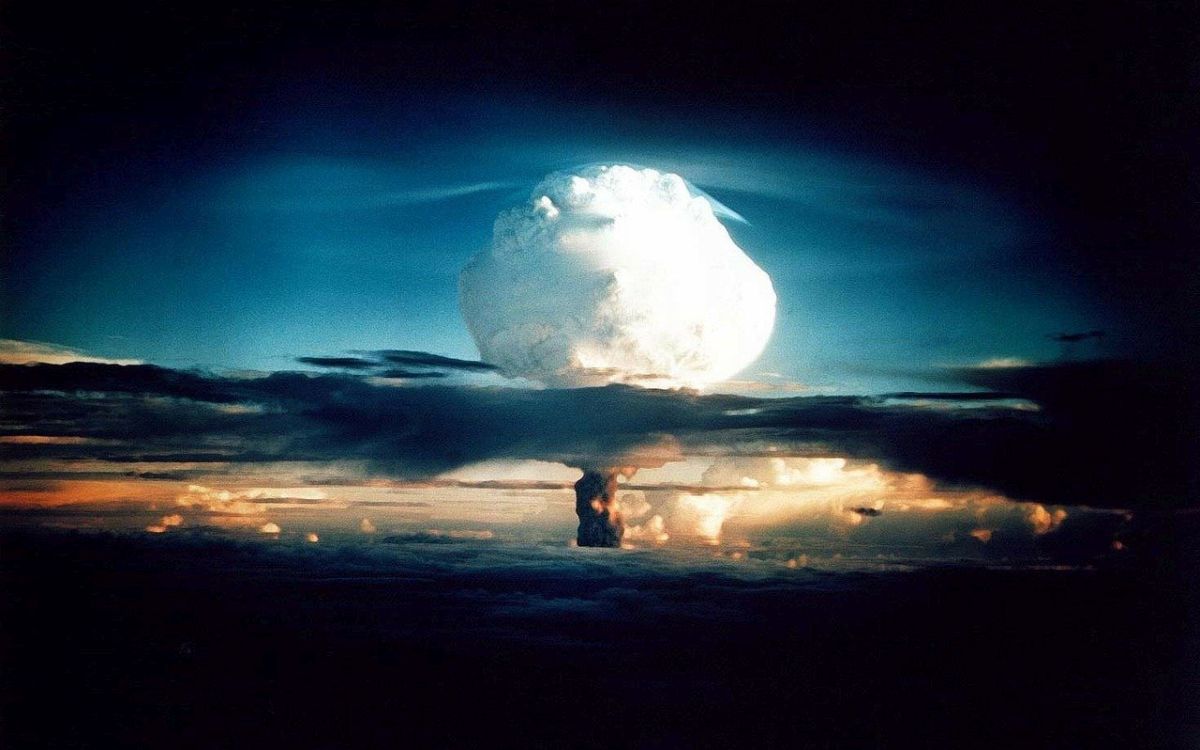
The New START treaty, which expires today, limited the number of strategic nuclear warheads that the United States and Russia can deploy, as well as the deployment of land-based and submarine-launched missiles and bombers intended for their delivery.
Since the collapse of the former Soviet Union, Russia has acted much more modestly on the international stage than it once did.
The collapse in 1991 of what U.S. President Ronald Reagan once called the “evil empire” left the Kremlin with less territory, weaker financial power, and noticeably reduced global influence.
However, Russia retained a crucial trump card, writes CNN in its analysis.
The status of a nuclear superpower, almost equal to that of the United States, secured even a weakened Moscow a place at the main table of international diplomacy.
At nuclear summits, the Russian leader could sit opposite the sitting president in the White House – just as in the famous days of the Cold War – and decide on issues of global security.
That is exactly what happened in 2010, when then-U.S. President Barack Obama and his then temporarily empowered Russian counterpart Dmitry Medvedev reached an agreement on the New START treaty (Strategic Arms Reduction Treaty), which the White House at the time celebrated as “historic.”
New START limited both countries to a maximum of 1,550 deployed strategic nuclear warheads, including intercontinental ballistic missiles, submarine-launched missiles, and strategic bombers.
However, those days – as well as the New START treaty itself, which expires on Thursday – now seem like the past.
“If it expires, let it expire”
The collapse of the last nuclear arms control agreement between the U.S. and Russia, which Washington repeatedly accused Moscow of violating by denying inspections of Russian nuclear facilities, was met by Donald Trump’s administration with visible indifference. The president himself casually dismissed the frightening prospect of a world without any nuclear limits.
“If it expires, let it expire,” Trump said in January, noting that a “better” deal might be reached in the future.
Such a lack of urgency in Washington sharply contrasts with the nervousness in Moscow, where dramatic warnings and open concern about the fate of nuclear disarmament have been heard in recent weeks.
Speaking to journalists in Moscow ahead of the expiration of New START, Medvedev, who remains a prominent figure in the security apparatus, warned of the dangers of allowing the agreement to collapse. He warned that it would accelerate the movement of the so-called “Doomsday Clock,” a symbolic indicator of how close humanity is to self-destruction.
“I don’t want to say that this automatically means catastrophe and the outbreak of nuclear war, but it should certainly worry everyone,” Medvedev added.
READ MORE:
The Kremlin is, evidently, concerned.
According to Kremlin spokesman Dmitry Peskov, Russia’s proposal to extend New START is currently being met with silence from the American side, opening the door to a new era of uncertainty.
“For the first time, the United States and Russia – the two countries with the largest nuclear arsenals in the world – will be left without a basic document that limits and supervises that weaponry,” Peskov told journalists during a recent conference discussion on nuclear issues.
“We believe that this is extremely bad for global and strategic security,” he added, expressing fears shared by much of the world.
However, the Kremlin’s concern may be less altruistic and more strategically motivated than Moscow wants to admit.
In addition to losing a platform for arms control that was one of the last symbols of Soviet power, Russia now faces the possibility of unlimited expansion of the American nuclear arsenal.
A huge gap
Donald Trump’s administration has, for example, already revived the idea of nuclear-armed warships – a Cold War-era concept that was abandoned several decades ago.
The former Soviet Union could have kept pace with such developments. Today’s Russia, with an economy and defense budget that are only a fraction of America’s, almost certainly cannot. This further deepens the already enormous gap in power and political influence between the former rivals.
Of course, the United States also has its own reasons for allowing the collapse of the nuclear arms control regime with Russia – primarily the desire to include China as a rising nuclear power in future agreements.
But the expiration of New START marks the end of an era: not only the era of arms control agreements that were exclusively in the hands of Washington and Moscow, but also the period in which the United States was willing to accept real limitations on its own nuclear power.
MORE TOPICS:
PACT AGAINST SERBIA? Croatia, Albania and so-called Kosovo held a meeting on “defense cooperation”!
Source: Nova.rs; Foto: Pixabay