




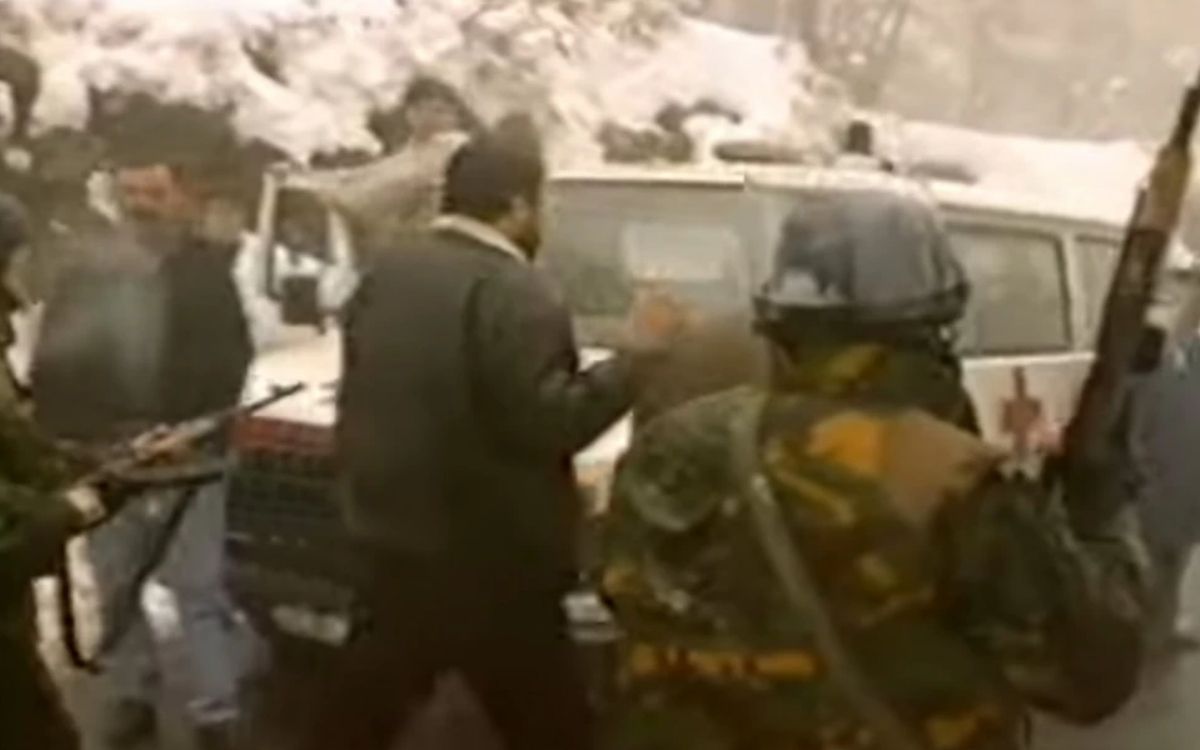
Tomorrow marks 35 years since the attack by Croatian special forces on Krajina Serbs at Plitvice Lakes, in which a member of the Territorial Defense, Rajko Vukadinovic (32) from Korenica, died on the Serbian side.
In the conflict at Plitvice on March 31, 1991, 17 Serbian territorials were captured, and the event known as “bloody Easter” is considered the beginning of the war in Croatia.
We transmit the statement of the documentation center “Veritas” in its entirety:
In February 1991, Croatia passed decisions on the invalidity of federal laws on its territory and on dissociation from the SFRY, after which the SAO (Serbian Autonomous Province) Krajina passed a “Resolution on dissociation from the Republic of Croatia.” In the middle of March of the same year, the JNA asked the Presidency of the SFRY to introduce a state of emergency in the country, which, due to the opposition of representatives of Croatia, BiH, and Macedonia, did not pass.
In the context of such a situation, Krajina Serbs organized a “rally of truth” at Plitvice on March 25 with the demand that the National Park “Plitvice Lakes” remains within the SAO Krajina.
Two days later, Serbian and Yugoslav flags were displayed on masts at the entrances to the national park. The following day, March 29, the “Marticevci” from Knin occupied the administrative buildings of the NP “Plitvice Lakes.”
In the early morning hours of March 31, a column of about 400 Croatian special forces set off from Zagreb toward Plitvice with several buses, vans, private vehicles, and one transporter for the purpose of “introducing the constitutional and legal order in the area of the National Park.”
At that moment, there were about 400 tourists in the Plitvice hotels, among whom was a group of Croatian special forces who, a day earlier, with weapons in suitcases and the intention of overcoming the Krajina territorials and “Marticevci” through a “raid from the inside” in coordination with those outside, mingled with the tourists.
The Serbs also expected an attack by Croatian special forces, so they waited in ambush on the approaches to Plitvice from the direction of Slunj and with barricades made of fallen trees on the road. The morning was foggy, and the snow was knee-deep. Skirmishing began in the morning between six and seven o’clock.
The numerically superior Croatian special forces, with the help of those camouflaged as guests, managed to take over the hotels and establish control over the national park by noon. Further escalation of the conflict was prevented by the JNA, which positioned itself as a “buffer zone” between the opposing sides.
On the Croatian side, “constable” Josip Jovic (22) from Arzano near Makarska was killed, while about twenty were wounded. On the Serbian side, territorial Rajko Vukadinovic (32) from Korenica was killed, while 17 were captured, who were brutally beaten because of the death of the “constable” until their exchange on August 13 of the same year.
Croatia declared the deceased Jovic the first victim of the “Homeland War” and marks the anniversary of his death every year at a very high level, although the then Minister of Police, Josip Boljkovac, spoke publicly several times and wrote in his book “The Truth Must Come Out” that the autopsy showed he was hit by a bullet from a “so-called pump-action, American automatic assault rifle imported from Singapore, such as the Croatian police had.”
After this action, the Croatian police formed a police station at Plitvice, which lasted until the end of August that year, when, due to the inability to function under the control of the JNA, it was disbanded. Control over the NP “Plitvice Lakes” was taken over by the Krajina authorities and maintained until August 1995.
The Plitvice event is, according to many sources, taken as the beginning of the war in Croatia in the 1990s. On that day, Orthodox believers celebrated Palm Sunday, and Catholics celebrated Easter, which is why the media called this event “bloody Easter.”
MORE TOPICS:
Source: Veritas, Photo: Printscreen Youtube / MORH Ministarstvo odbrane Republike Hrvatske