



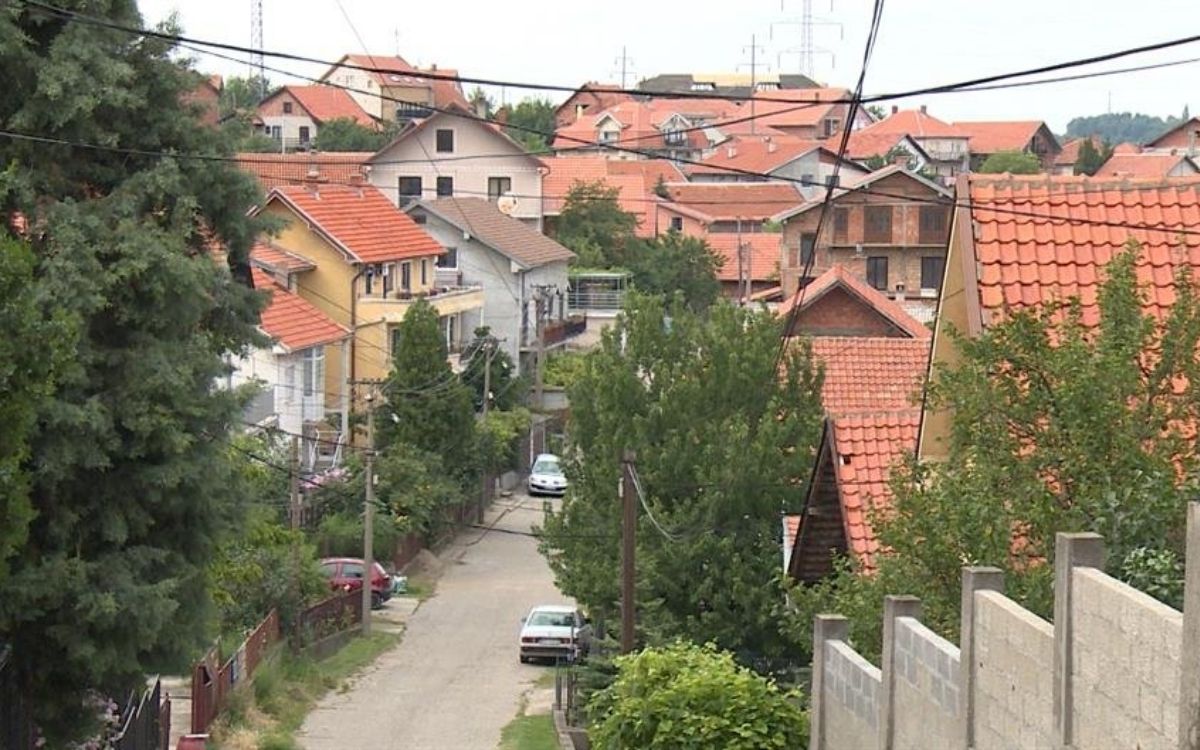
Minister of Construction, Transport, and Infrastructure Aleksandra Sofronijevic stated today that the deadline for submitting applications for the registration of illegal buildings will be extended by three days, which means that applications can be submitted until Sunday, February 8 at midnight.
In a statement to the media, she noted that more than 1.935 million applications have been received so far based on the law titled “Svoj na svome” (On One’s Own).
She clarified that the deadline was extended due to high interest from citizens and a sharp increase in the number of users in the system, as well as the desire to enable all citizens who wish to do so to submit their applications.
Previously, it was said that Serbian citizens who have illegal buildings would be able to report them until tomorrow. Although the number of applications was increasing right before the deadline, the line minister Aleksandra Sofronijevic said that there would be no extension of the deadline.
“There will be no extension of the deadline; it is until February 5 and one month remains, until March 5 for filing objections, but the law has prescribed for citizens and legal entities who for justified reasons did not manage to apply, the application will remain open until October 24,” Sofronijevic stated.
According to her, the law does not exhaustively state what those justified reasons are, but there is established judicial and administrative practice.
“This can be illness, injury, death or illness of an immediate family member, force majeure, some technical reasons, and all other justified reasons for which the party is not at fault and provides evidence of it,” the minister explained.
How many illegal buildings have been reported
According to data from the Republic Geodetic Authority (RGZ), 1,619,273 applications from citizens were received for the registration of illegal buildings under the Law on Special Conditions for the Recording and Registration of Property Rights on Real Estate by February 2 at 7 p.m.
Since 1,462,045 applications had been received according to the previous cross-section done on February 1 at 7 p.m., this means that more than 150,000 applications arrived on February 2.
Until tomorrow, applications are still submitted online via the digital platform svojnasvome.gov.rs established by the Agency for Spatial Planning and Urbanism, then via accounts on the eGovernment portal or through the service center of local self-governments, as well as in 547 post offices across Serbia.
Sofronijevic said that the number of applications is approaching the real number of buildings eligible for registration under this law and stated that a total of 4.8 million objects were recorded, but that among them are containers, canopies, and objects that are not subject to registration under this law.
Sofronijevic expressed hope that by February 5, when the deadline for reporting expires, an approximate number of all objects that can be subject to registration under this law will be reported.
Will the counters work in two shifts
The benefits of such a recording process primarily lie in the fact that citizens will have the possibility of inheriting and transferring rights to real estate, the possibility of legal connection to infrastructure, they will access mortgage loans more simply and favorably, they will be able to submit a request for reconstruction, and the value of their apartments, houses, and other objects will be increased.
The Law on Special Conditions for the Recording and Registration of Rights on Real Estate should enable a fast and cheap procedure for the registration of property rights.
When the process of recording and registration is completed, a fee in the value of 100 to 1,000 euros is paid.
As announced by the City Administration in Sabac, its counters will work in two shifts until the reporting deadline expires due to the great interest of citizens in registering property rights based on the “Svoj na svome” law.
MORE TOPICS:
PACT AGAINST SERBIA? Croatia, Albania and so-called Kosovo held a meeting on “defense cooperation”!
Source: Euronews; Photo: N1