




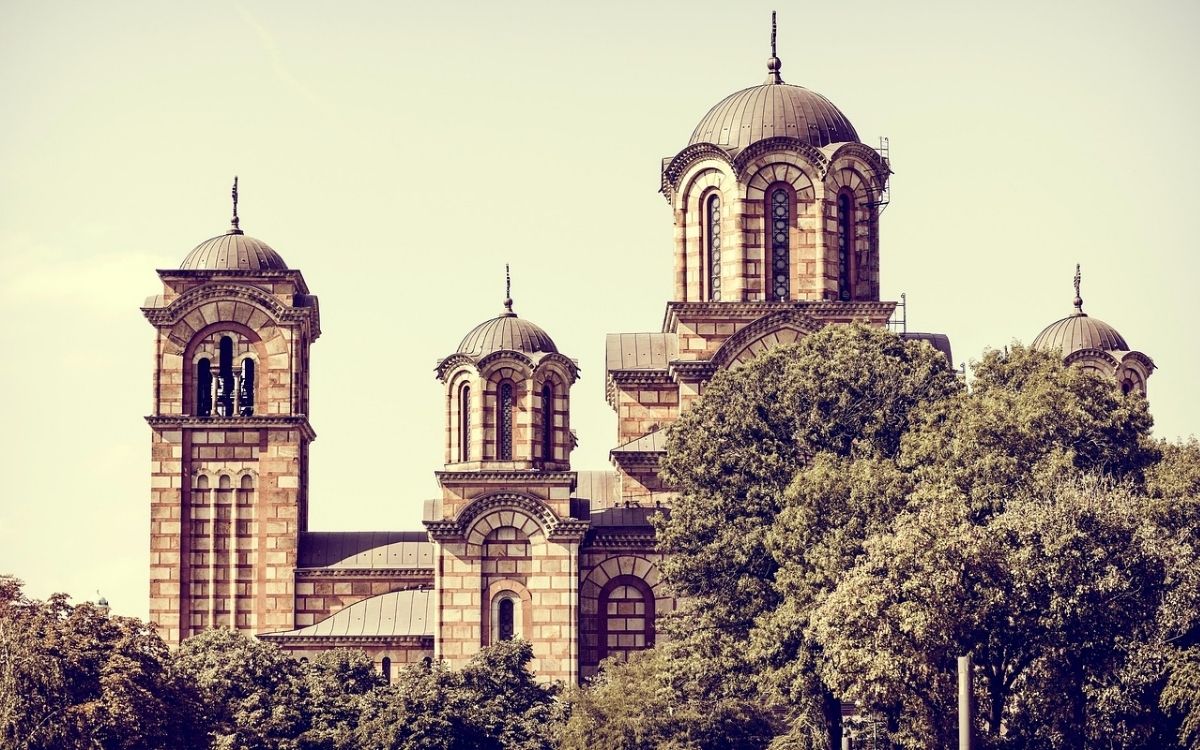
A memorial service was held today in the Church of Saint Mark in Belgrade on the occasion of the Day of Remembrance for all the victims and exiles in the armed action “Oluja” (Storm), and the mayor of the capital, Aleksandar Šapić, attended the memorial service.
Šapić then, on behalf of the delegation of the City of Belgrade, laid a wreath in Tašmajdan Park at the monument to the Serbian victims who died in the wars of 1991-2000 in the former Yugoslavia.
After Šapić, wreaths were also laid by the state secretary in the Ministry of Labor, Mile Rosić, the delegation of the Commissariat for Refugees and Migration of Serbia, led by Dušica Popović, as well as numerous associations of veterans and fighters.
In his address, Šapić said that the City of Belgrade will continue to commemorate the victims and exiles in “Oluja”, but that he will no longer speak at those gatherings because he is not an advocate of “too loud mourning” and that the goal of someone who “mourns too loudly,” as he stated, is advertising.
Šapić assessed that in the nineties of the last century we had too many who “Srbovali” (acted as Serbs) loudly and acted little, while those who acted the most – fared the worst.
-What happened to us in the nineties is no different from what happened to us in the forties. If we don’t come to our senses, it will happen to us again – said Šapić.
If we don’t learn lessons from our own history, it will happen to us again, he added.
-It is Christian to forgive and we should forgive, but it is also Christian not to forget. If you forget the things that happened to you in the past, especially those that were disastrous for your people, then you are leaving the domain of Christianity and entering into stupidity – said Šapić.
He told the citizens to take care of each other.
-Whenever we ‘Srbovali’ too much, not too many Serbs were left in those areas – said Šapić.
The Croatian attack on the then Republic of Srpska Krajina and the expulsion of the Serbian population from the area that Serbs had inhabited for centuries began at dawn on August 4, 1995, and according to the data of the Documentation and Information Center “Veritas”, in “Oluja”, more than 220,000 Serbs were expelled from the area of the Republic of Srpska Krajina, while more than 1,900 were killed, and numerous crimes were committed.
It was the largest exodus of civilians in Europe after the Second World War.
MORE TOPICS:
TODAY IS GENTLE MARY, PROTECTOR OF WOMEN: This is what customs are practiced on this holiday!
Source: Telegraf; Photo: Pixabay