




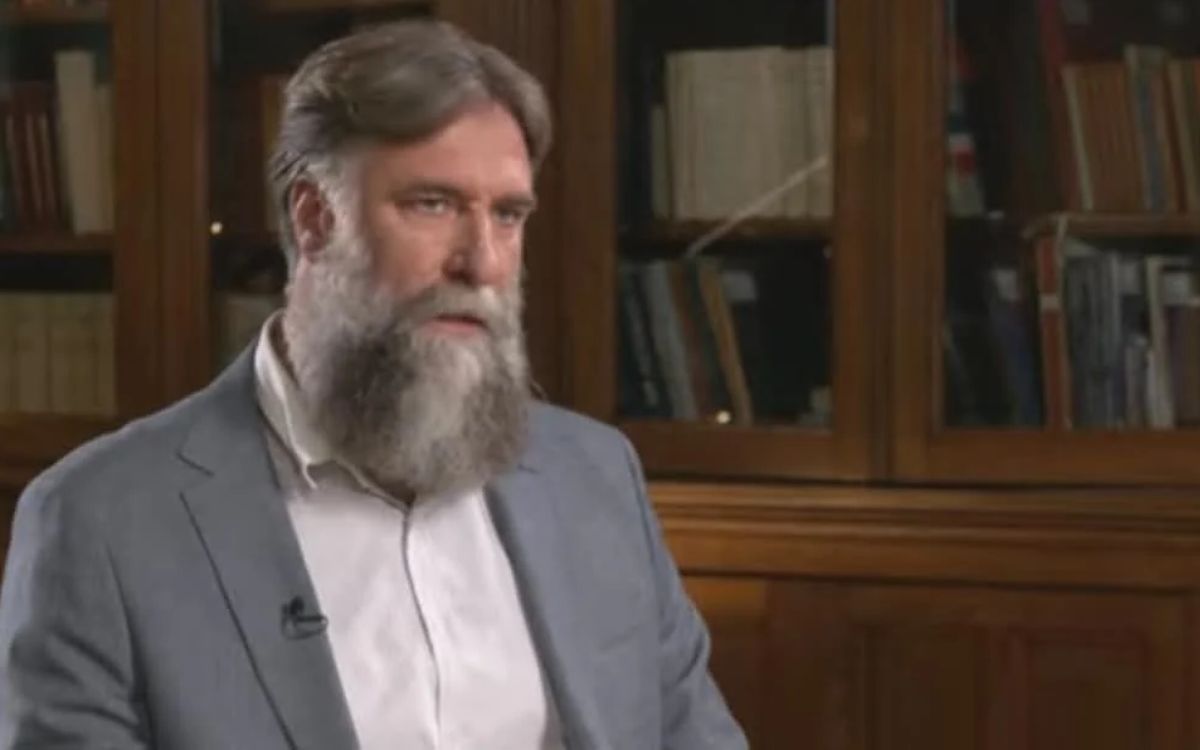
National Assembly Speaker and Acting President of the Republic Aleksandar Čupić said in his first interview with RTS since taking office that presidential elections would be called within the next few days and that amendments to the Law on Ministries were expected, including a reduction in the number of ministries. He stressed that establishing the rule of law and depoliticizing institutions were priorities, adding that his goal was for the current parliamentary composition to set an example for all future assemblies. He also confirmed that he would not attend the upcoming EU–Western Balkans Summit.
Aleksandar Čupić said that the handover of duties from the former Speaker of the National Assembly, as well as from the former Secretary General of Parliament, had not yet taken place. The same applies to the office of the President of the Republic, and he said he did not know why the handover had been delayed.
“We are expecting the handover report to be submitted, and I hope we will have it before us very soon,” Čupić said.
Speaking about the moment he was elected Speaker of Parliament, Čupić said he felt a sense of responsibility rather than triumph, arguing that victory had been achieved even before the parliamentary elections.
“We first defeated fear as a nation, then overcame some of our own insecurities and, as a society, demonstrated initiative. A large part of society showed initiative, and that was already a victory. The elections were merely the formalization of that victory,” Čupić said.
He stressed that he felt deep respect for the history and continuity of the National Assembly, while emphasizing the need to put an end to negative practices in parliamentary political life.
“I Want This Parliament to Set the Standard for All Those That Follow”
Čupić emphasized that, as Speaker of the National Assembly, he was accountable to all members of parliament, regardless of their political affiliation.
“I would genuinely like this parliamentary composition to serve as a benchmark for all those that follow, something they can measure themselves against and strive to surpass by becoming better, more democratic, more respectful, and fostering better dialogue,” Čupić said.
He pointed out that the Speaker must earn the trust not only of the parliamentary group he comes from but also of the opposition.
“People trust you when they see objectivity. It’s like a football referee whom all the players approach at the end of a match to congratulate him on how he officiated. That is how I see my role,” Čupić explained.
He said the current parliamentary composition had a historic opportunity to restore the National Assembly’s role as one of the pillars of government, as well as rebuild the trust of citizens and the Government itself in the legislative institution.
“For Parliament to be that strong, it needs strong members. Strong in terms of their personal integrity and political culture. You cannot compete if you lack political culture, and I firmly believe that. So I think this is a good opportunity for us to restore not only citizens’ trust in Parliament but also the Government’s trust in Parliament,” Čupić stressed.
Parliamentary Rules Define the Line Between Political Debate and Obstruction
Asked where the line lies between the opposition’s right to speak and political obstruction, following the days-long constitutive session and the warnings issued to MPs, Čupić said that the boundary was clearly defined by the Rules of Procedure of the National Assembly.
He believes there is currently no need to amend the rules and that compliance with the existing provisions is sufficient.
“The Rules of Procedure regulate the conduct of MPs inside the National Assembly, not the political culture of our people. That is why they establish high standards. If those high standards were introduced here, they would spill over into the rest of society,” Čupić said.
He emphasized that during the constitutive session he had tried to warn MPs first and issue formal reprimands only when necessary.
“It is perfectly natural for the opposition in any parliamentary composition to use the opportunity to present its political positions, but they must be relevant to the topic at hand. You cannot present political positions randomly and thereby prevent individual decisions from being made,” Čupić said.
He left open the possibility of reviewing the provision that allows the proposer of a motion to speak without a time limit.
“Citizens’ Trust Is Restored Through Personal Example”
Speaking about the public’s considerable interest in live broadcasts of parliamentary sessions, Čupić said that the political culture of Serbian citizens had been underestimated for decades and that a different kind of public dialogue was needed.
“Political reality shows are constantly being staged here, and they have had their audience. But it is obvious that the audience looking for different content is much larger,” Čupić said.
He stressed that newly elected MPs had an opportunity to restore public confidence in Parliament through their personal example, while those who had previously held parliamentary positions would have to decide whether to change their approach.
“I hope I will never have to issue another reprimand. That would mean we had managed to raise the level of political culture very quickly,” Čupić said.
“I Call on Citizens to Take Part in the Changes Themselves”
Čupić called on citizens who were eagerly awaiting change to become actively involved, taking on part of the responsibility in the communities where they live and work.
“To everyone eagerly awaiting change and improvement, I recommend getting involved in those changes, and they will immediately feel better. When you take on part of the responsibility in your company, school, hospital, or wherever you work, do something good and contribute to change yourselves,” Čupić said.
Amendments to the Law on Ministries Expected, Number of Ministries to Be Reduced
Speaking about the first steps of the new parliament, Čupić announced the establishment of parliamentary committees and delegations, after which amendments to the Law on Ministries are expected.
“The Law on Ministries will have to be amended and the number of ministries reduced. I believe there is a genuine need for this. We currently have 25 ministries, five ministers without portfolio, plus the prime minister-designate. That is irrational and unnecessary,” Čupić said.
He added that discussions were already underway within the Students’ List parliamentary group about the number of ministries and aligning their portfolios with the responsibilities of parliamentary committees.
“There are 19 parliamentary committees, plus the Committee on the Rights of the Child. The number of ministries does not have to be identical, but it should be somewhere close, with the idea that the number could be reduced further in some future parliamentary terms,” Čupić said.
“Making the Right Choice Is Far More Important Than Making a Quick One”
The Speaker of Parliament declined to specify when Serbia might get a new Government, stressing that despite strong public expectations, there should be no pressure to form the Cabinet as quickly as possible.
“I believe that this kind of pressure and haste, however understandable and expected it may be, is something we should not give in to. Making the right choice is far more important than making a quick one,” Čupić said.
He rejected the possibility that this approach could be interpreted as an attempt to buy more time for forming the Government.
“We are not asking for any timeout. A good Government, properly balanced in terms of personnel appointments, will make everyone forget whether it took 20, 30 or 15 days to form it. The point is to get something of high quality that can do a good job over the long term,” Čupić stressed.
Rule of Law and Depoliticization of Institutions Among Top Priorities
Asked which decisions by the new Government would demonstrate to citizens that Serbia had entered a new political chapter, Čupić identified the rule of law and the depoliticization of institutions as the main priorities.
“The Public Broadcaster Should Hold Every Government Accountable”
Čupić also highlighted the role of the media, particularly the public broadcaster, in overseeing the authorities and providing citizens with objective information.
“The public broadcaster is there to raise issues, cover topics that matter to our citizens, hold every government accountable and remain objective, just as I will strive to be objective toward both the government and the opposition,” Čupić said.
He believes that establishing such relationships within society could eventually lead students to conclude that there was no longer any need for their political engagement through plenums.
“If we achieve that, I think the plenums might eventually decide and say: ‘Well, this is a healthy society; we no longer need to concern ourselves with these matters at all,'” Čupić said.
“I believe this is at the root of the problem. Once this is put in place properly, other areas will find it much easier to begin reforming and falling into place. Ultimately, everyone is expecting justice,” Čupić stressed.
He noted that reforms would also be pursued in other areas, but that, in his view, citizens’ greatest expectations concerned justice.
Asked whether he had felt unsafe over the previous two years and whether he would check if he had been under surveillance, Čupić said he had not personally felt threatened and would not investigate the matter.
Presidential Elections to Be Called by November 26
Čupić confirmed that he would call presidential elections within the next few days, with the vote scheduled to take place on December 27.
“They will have to be called within the next couple of days, by the 26th. Today is the 22nd. So they will be called very soon,” Čupić said.
Commenting on former President Aleksandar Vučić’s position that participating in presidential elections under the current conditions would be pointless, Čupić questioned what had changed in the electoral conditions since the parliamentary elections.
“What has changed? Were the October 25 elections meaningful, while the December 27 elections are pointless?” Čupić asked.
Regarding the presidential candidate of the Students’ List, whose name has not yet been announced, Čupić said the matter was part of a political strategy and reflected the student movement’s specific organizational and decision-making structure.
On the Relationship Between Plenums and Institutions: Citizens Must Hold the Government Accountable
Speaking about the future relationship between the student movement and elected representatives of state institutions, Čupić emphasized the need to establish mechanisms that would allow citizens to continuously monitor the work of MPs, just as Parliament is supposed to oversee the Government.
“We had a Parliament that simply approved everything proposed by the Government, which that same Parliament had elected. Parliament elects the Government, and then approves everything the Government sends to it. What kind of oversight is that?” Čupić asked.
He said student plenums had demonstrated how decisions could be questioned and elected delegates held accountable, but added that this model could not necessarily be replicated throughout society.
“Those who oppose plenums see them as some kind of threat, while those who support them treat them as something almost divine. Neither is true. We should not turn anything into an idol,” Čupić said.
He stressed that winning an election did not give elected representatives the right to do whatever they wanted until the end of their term.
“Citizens have delegated authority to us, or rather, entrusted us with public office. Now we have to establish some kind of oversight mechanism so that they can continue to exercise control… You cannot do whatever you want. You can never do whatever you want,” Čupić said.
Why Čupić Will Not Attend the EU–Western Balkans Summit
The Speaker of the National Assembly confirmed that he would not attend the upcoming European Union–Western Balkans Summit due to his parliamentary obligations.
“I received an invitation from Mr. Costa on Friday at 9:30 a.m., and I thanked him but declined because we have the continuation of the parliamentary session on Tuesday,” Čupić said.
He noted that European Council President António Costa had understood his reasons for not attending the gathering.
“It would have been irresponsible, and he completely understood and agreed that, at a time when we have not even completed those five items on the agenda, I should not be leaving for that meeting,” Čupić added.
Čupić did not specify whether another representative would attend the summit on Serbia’s behalf, pointing out that the Government was operating in a caretaker capacity and that domestic issues had to remain the priority at this moment.
“I believe it would be highly irresponsible and unserious not to be properly prepared. These are extremely important international issues. I took office on Thursday, and then immediately going to the summit on Wednesday without serious preparation…” Čupić explained.
He emphasized that he distinguished between the powers and responsibilities of an elected President of the Republic and those of an acting president.
“I am the acting president, not the president. In our country, over the past more than 10 years, we have become accustomed to acting officials behaving as though they have a full mandate. I have to demonstrate through my personal example that this is not the case. I will technically cover this period until a new President of the Republic is elected,” Čupić stressed.
On European Integration: Citizens Must Be Presented With Both Advantages and Disadvantages
Speaking about Serbia’s European prospects, Čupić emphasized that European integration was impossible without the participation of the National Assembly and its bodies.
“I believe the composition of this Parliament speaks quite clearly in favor of the fact that we have a completely open approach and a sincere commitment to those values,” Čupić said.
He stressed the need to open an objective public debate about Serbia’s European path and provide citizens with all the relevant information.
“We must present both all the advantages and all the disadvantages of that path, as well as where we want to end up, through objective debate and an objective presentation of the facts. We have a society that is undecided because it does not have all the information. So, once we present that information, it will be up to each of our citizens to decide whether it is in our interest,” Čupić concluded.
MORE TOPICS:
Source: RTS Foto:Printscreen/RTS
 Add Serbian Times as your Google source