




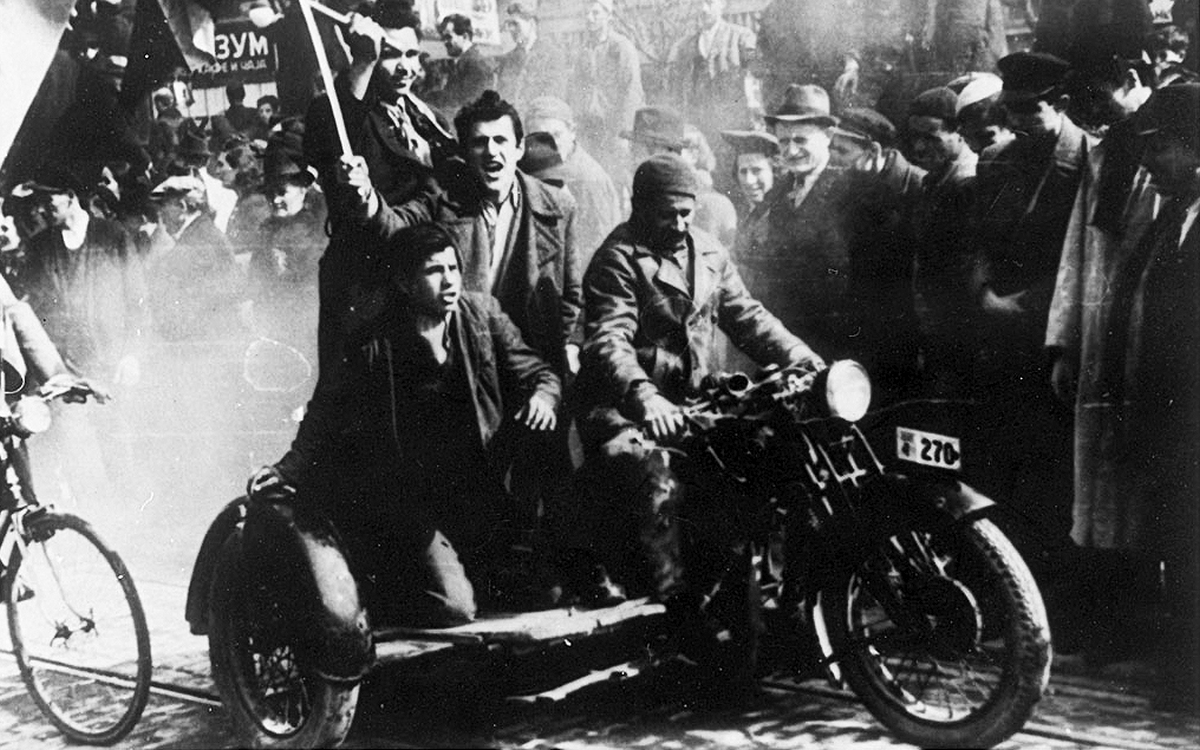
It has been 85 years since the “March coup,” which sealed the fate of the Kingdom of Yugoslavia and gave the Axis powers a pretext to attack our country. In addition to continuing to provoke controversy among historians, it seems that the events of March 27, 1941 also carry a special symbolism in the world we live in today.
“Serbs, Croats and Slovenes! In this difficult moment for our people, I have decided to take royal authority into my own hands. The regents who understood the justification of my motives have immediately resigned. My loyal army and navy have placed themselves at my disposal and are already carrying out my orders. I call on all Serbs, Croats and Slovenes to gather around the throne. This is the surest way, in these difficult circumstances, to maintain internal order and external peace. I have entrusted the mandate to form a government to Army General Dušan T. Simović. With faith in God and the future of Yugoslavia, I call on all citizens and all authorities in the country to perform their duties toward the King and the Fatherland.”
This, among other things, was written in the proclamation which, exactly 85 years ago, on March 28, 1941, was published by almost all Belgrade newspapers, announcing that “His Majesty King Peter II Karađorđević had assumed power.” And the day before, on March 27, as a reaction to the Kingdom of Yugoslavia joining the Tripartite Pact, a coup was carried out which, according to many, sealed the fate of the state and paved the way for the tragic events that followed about ten days later.
It seems that no month is as filled with significant events from our modern history, which to a greater or lesser extent shaped the destiny of the Serbian people, as March. The first protests that shook Slobodan Milošević’s regime took place on March 9, 1991; March 11 marks the 2006 death of Slobodan Milošević in the Scheveningen prison; March 12 is remembered for the tragic assassination of Prime Minister Zoran Đinđić in 2003; the pogrom of Serbs in Kosovo and Metohija on March 17, 2004; the beginning of NATO bombing of Serbia on March 24, 1999; and last year’s major student and citizen protests in Belgrade on March 15, which ended with the use of a “sonic weapon” or similar device… are only some of the dates connected to this month. The last in that series, but first chronologically, is March 27 — a date that has for decades been marked as the day when Yugoslavia (and thus Serbia) “said no to Hitler” in 1941. What exactly happened that day, what preceded it, what followed, and what lessons can be drawn from it today?
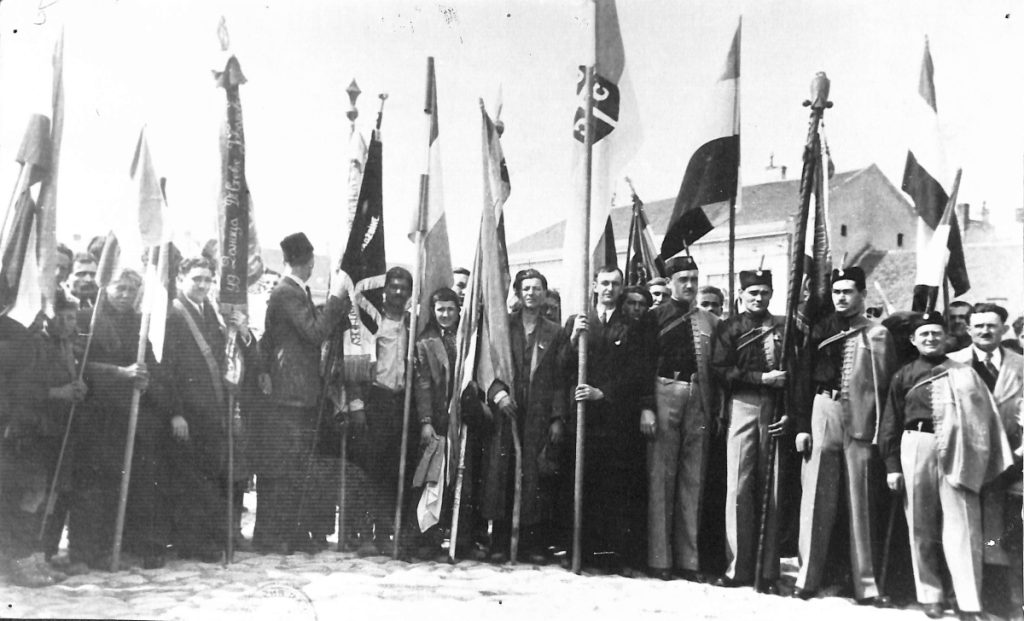
In those tragic days, when Europe was already engulfed in the greatest and most brutal war the world had seen, it became clear that our people would not be spared. Two days before the coup of March 27, the Yugoslav delegation in the Belvedere Palace in Vienna signed a document by which Yugoslavia joined the Tripartite Pact. On the German side, the document was signed by Joachim von Ribbentrop, the Foreign Minister of Nazi Germany, and on the Yugoslav side by Dragiša Cvetković, Prime Minister, and Aleksandar Cincar-Marković, Foreign Minister of the Kingdom of Yugoslavia. Thus, seemingly under pressure from Nazi Germany, after long hesitation and delay, Yugoslavia chose the side of the warring powers.
Prince Paul was an Anglophile and opponent of Hitler and Nazism. He and the government of the Kingdom of Yugoslavia tried from the beginning of the war to pursue a policy of neutrality in order to avoid entering the conflict, but that policy became unsustainable over time. By early 1941, Germany was at the height of its power, and Hitler, having subjugated almost all of Europe except Great Britain, was in a hurry—before the invasion of the Soviet Union—to secure the Balkans and incorporate this part of Europe into his “new order.” Britain and the USA (which had not yet entered the war), on the other hand, sought to create a new “Salonika front” by bringing Yugoslavia and Greece into the war to gain time and relieve pressure on Britain, but they were not prepared to offer concrete military assistance. The Soviet Union, Hitler’s main target, was enjoying its last days of peace, and Stalin, otherwise prone to paranoia, stubbornly refused to believe the real threat of a German attack, so Yugoslavia could not expect help from that side either.
Since Hitler was in a hurry and aware of Serbia’s resistance in World War I, he offered Yugoslavia favorable terms that he had not granted to any other country. The Axis powers committed, in the document offered to Yugoslavia, not to request military assistance from it, nor the passage of German troops through its territory, and to respect its territorial integrity, effectively allowing Yugoslavia to remain outside the war. The document also contained a secret clause promising Yugoslavia the port of Thessaloniki after the German conquest of Greece.
Therefore, in the domestic press, which was mostly supportive of the authorities, Yugoslavia’s accession to the Tripartite Pact was presented as a wise move that ensured peace and the preservation of the state. But before the ink in the Belgrade newspapers had even dried, events unfolded on the morning of March 27 that would determine the fate of these lands. A group of officers led by Generals Dušan Simović, head of the Air Force, and Borivoje Mirković carried out a coup. Under their command, the army took control of the airport, Belgrade bridges, and deployed along the main streets. They soon arrested government members without a shot fired, overthrew the three regents, and declared King Peter II of age. He did not participate in these events, and his “proclamation” to the peoples of Yugoslavia, which caused public enthusiasm in the streets, was read on the radio by naval officer Jakov Jovović, whose voice resembled the King’s.
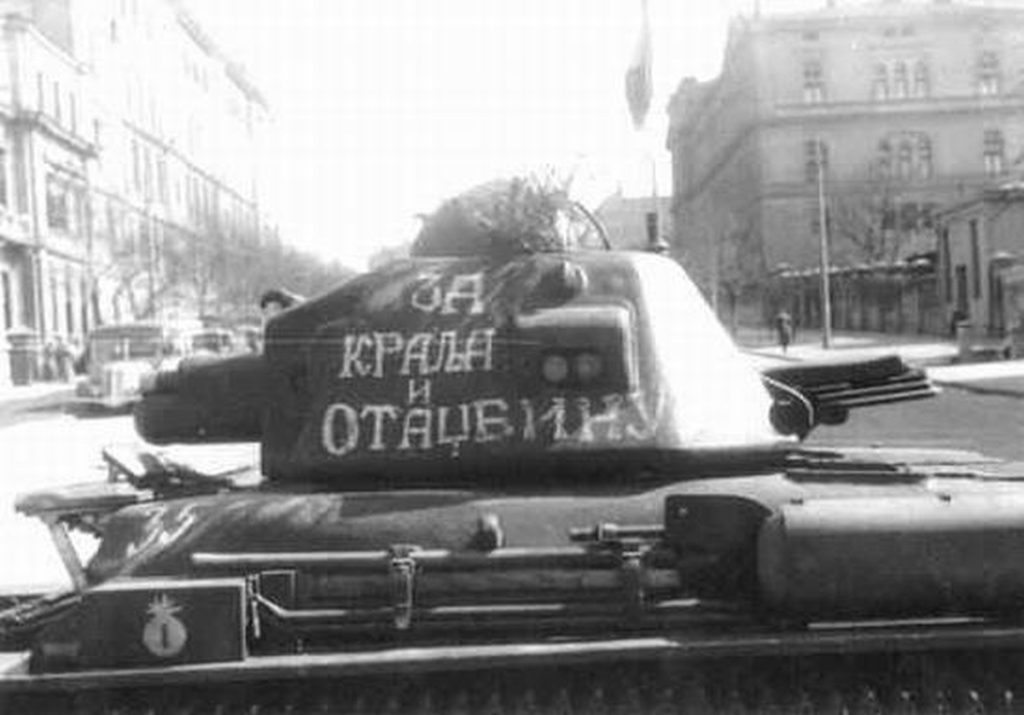
As soon as news of the coup spread in Belgrade, large numbers of people took to the streets, as well as in other cities in Serbia. Mass demonstrations were held, with cheers for King Peter and Yugoslavia, but also open opposition to the warring sides, the Tripartite Pact, and Hitler. Famous slogans were shouted: “Better war than pact” and “Better the grave than slave,” and windows were smashed at the German Cultural Center and some German companies in central Belgrade. The new government, headed by General Dušan Simović, tried to present the events of March 27 as an internal political change unrelated to foreign policy and the signing of the Tripartite Pact, and therefore sought to distance itself from anything that could portray the events differently. “During the public demonstrations in Belgrade on March 27 and 28, elements of foreign propaganda attempted to use this spontaneous gathering for their own purposes. On that occasion, minor incidents occurred, as well as slogans expressing dissatisfaction with certain warring states. Authorities have launched intensive investigations and will deal most strictly with those responsible,” reported almost all Belgrade newspapers at the time.
But Hitler and the Nazi leadership quickly understood what had happened. They perceived these events as an insult and a “finger in the eye,” and already on the afternoon of March 27, at a military meeting, decided to attack Yugoslavia. They identified the “Serbian element in the state” as the main culprit for the March coup and decided to punish the “plotters” and destroy Yugoslavia. Only ten days later, on April 6, without a declaration of war, they attacked Yugoslavia. The assault began with the bombing of Belgrade, in which several thousand people were killed, and within just 11 days the country was occupied and divided… Thus, March 27 became the prelude to Yugoslavia’s entry into World War II.
Among historians, debates continue to this day about the nature and background of the “March coup.” Some see it as part of British intelligence operations that unnecessarily dragged the country into war and all its horrors. They argue that, given Germany’s overwhelming power and the Allies’ inability to provide help, Prince Paul and the government made the most prudent decision at the time, ensuring the country would remain out of the war for at least some time. Another group of historians believes that, despite undeniable foreign intelligence involvement, the March coup was primarily the result of domestic initiative, organized by officers driven mainly by patriotism. Based on the “diary of Count Ciano” from 1940 and other documents, they argue that Yugoslavia would likely have been dismembered even if the government that signed the Tripartite Pact had remained, and that the Nazis repeatedly broke promises and international agreements. They also point out strong anti-fascist sentiment in Yugoslavia, especially among Serbs, which made alliance with the Axis an impossible mission from the start.
The events of March 27 also had undeniable international consequences. They resonated across Europe, especially in countries still resisting Germany. Due to the April War, Hitler postponed the invasion of Greece and, by a month, Operation Barbarossa, the invasion of the Soviet Union, which meant the Russian winter arrived earlier than planned. It is also important to note that the events of March 27 were supported domestically by many intellectuals, students, associations, and individuals of anti-fascist orientation, as well as by the Serbian Orthodox Church. Patriarch Gavrilo Dožić said after the Holy Synod session on March 27: “My children in the Holy Spirit. Let us humble ourselves before God and stand upright before men. If God is with us, what can men do to us. If we are to live, let us live in holiness and freedom; if we are to die, let us die for holiness and freedom, as many millions of our Orthodox ancestors did.”
It seems that the events of March 27 carry special symbolism even today—both because of the situation in Serbia, where most citizens wish to live in a free and democratic state free of corruption and authoritarian rule, and because of global circumstances that, unfortunately, strongly resemble a “seen-before film” preceding major conflicts and upheavals, in which great powers, in pursuit of their interests, trample international law and the freedom of other nations. In such a world, it seems that the ideals of justice and freedom—which, regardless of all (undeniable) external influences, background, and personal ambitions of its participants, were the main driving force of the events of March 27, 1941—today carry special importance and weight.
MORE TOPICS:
LEAKED DETAILS OF PEACE PLAN: Pakistanis reveal what Donald Trump offered to Iran!
DUE TO ALLEGED SUBVERSION OF THE STATE: Novi Pazar students remanded in custody for 30 days!
Source: Jovan Gajić; Foto: Wikimedia Creative Commons