




Serbia’s energy sector is facing serious problems, ranging from outdated infrastructure and declining electricity production to political interference in state-owned companies and rising electricity import costs. At the same time, questions are being raised about the future of EPS, the energy transition, dependence on foreign suppliers and the exploitation of natural resources.
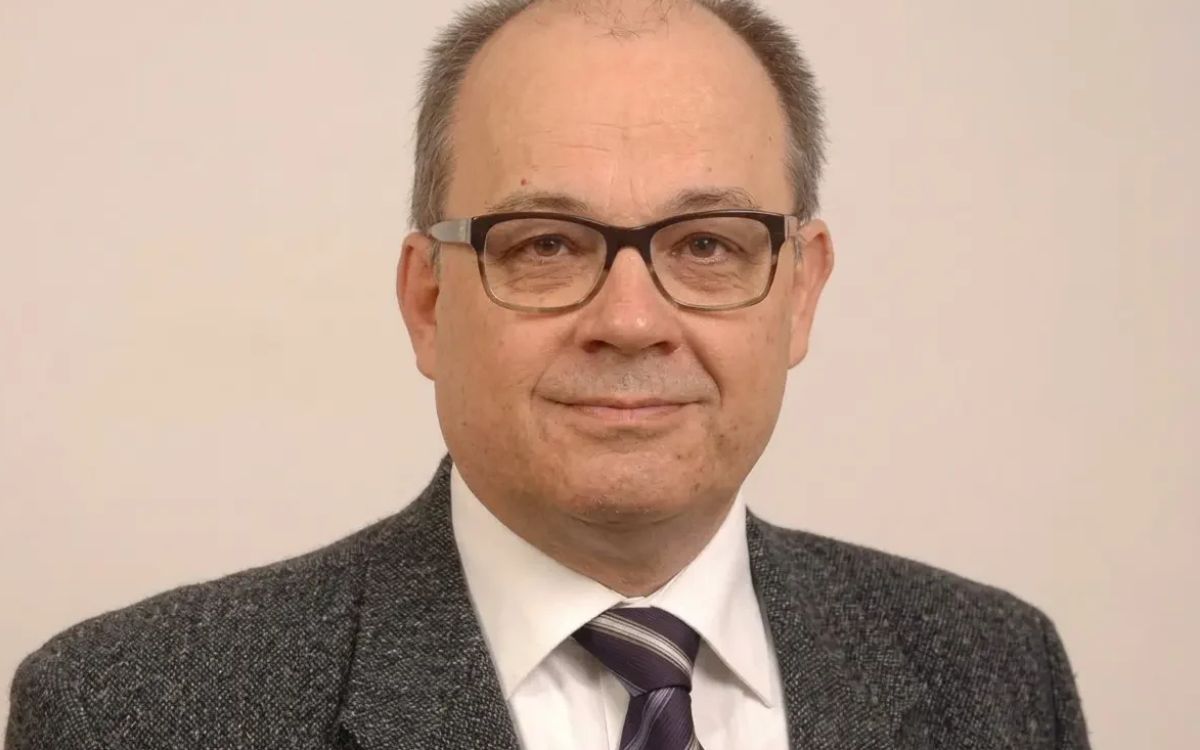
To discuss the current state of Serbia’s energy sector, the causes of problems within the country’s power industry and the measures a new government would need to take, IZLAZ.com spoke with academician Slobodan Vukosavić, a full professor at the University of Belgrade’s School of Electrical Engineering and a member of the Serbian Academy of Sciences and Arts (SANU).
Vukosavić specializes in energy, power electronics, digital control systems and industrial robotics. During his career, he worked at the Nikola Tesla Institute, as well as for international companies Emerson Electric, Vickers-Electric and MOOG. He is the author of more than 250 scientific papers and ten books. He is also the recipient of the Tesla Award for outstanding engineering achievements.
He warns of the consequences of political control over the energy sector, the unsustainability of the current model and the need to put the public interest ahead of private companies’ profits.
What, in your opinion, is the biggest problem in Serbian society that has become apparent following the elections?
For more than a decade, members of the ruling establishment have been untouchable, shielded from all forms of accountability. Membership in a clientelist network has protected numerous beneficiaries of systemic corruption from criminal prosecution. The same protection has been extended to many criminals and violent individuals, media outlets that spread lies in exchange for money, as well as elected representatives of the Republic of Serbia who have promoted their personal interests at the expense of society and the state.
Citizens continue to see perpetrators of the most serious criminal offences, including acts with elements of high treason, walking freely and even threatening the people of Serbia. Those responsible for past wrongdoing have now been joined by individuals who brutally beat students, threatened female students with stripping and rape inside the Serbian Government building, urged citizens to gather beneath the canopy in Novi Sad, claimed that no sound cannon had been used in the streets, rationalized and justified drivers who deliberately accelerated towards students and ran them over with their cars, and referred to Serbian youth using derogatory names.
The most important demand that students and citizens of Serbia have addressed to the MPs from the Student List and the future government is the demand for justice.
Society cannot survive without the rule of law. Winning an election is not the end of the struggle to restore institutions. There can be no genuine democratic change without accountability for abuses of power, corruption and violations of the law. The message from citizens and students is clear: nobody must be above the law, regardless of their position, wealth or political connections.
The list of individuals responsible for undermining institutions, surrendering natural resources, threatening the survival of our people in Kosovo and Metohija, neglecting social and national interests, brutally attacking peaceful university and high school students, sadistically beating political opponents and dragging decent Serbia into the mud of primitivism is extremely long.
Those involved in crime, corruption and abuses of office are expected to face prosecution, and their influence over the country’s governance must come to a permanent end. The demand of an awakened nation is for a change to a system in which unlawful conduct, political loyalty and membership in interest groups serve as a pathway to money, power and social status.
It is particularly important to conduct a thorough examination of all actions, public statements and both known and unknown decisions made by the former President of the Republic of Serbia. These matters require comprehensive investigations, verification of documentation, collection of evidence and independent assessments by the competent authorities. Neither political status nor public office can serve as grounds for exemption from legal scrutiny and accountability.
This demand is crucial for the survival of society and the state. All other objectives will be in vain unless justice is served and lawlessness brought to an end.
What is the current state of Serbia’s energy system? What are its biggest structural problems, and is the system stable?
Electricity supply still relies on solutions that were planned, designed and built before 1990. The existing system was conceived and implemented by domestic engineers and scientists. Key decisions were made by the Electricity Industry Council, a body consisting of leading experts with integrity who were free to determine the direction of the country’s power sector and make decisions without political interference, in the interests of the people and the state.
Over the past 15 years or so, the country and its power industry have been managed in a manner that disregards the national interest. What has prevailed is a political paradigm reminiscent of Nikola Pašić’s opportunism: the ability to place political survival, party dominance and personal interests ahead of long-term public and national priorities. In the case of Serbian energy at the beginning of the 21st century, this approach has taken on a particularly malignant form.
Technological progress, new forms of communication and transactions, and the much faster conclusion of international agreements, loans and borrowing arrangements have given irresponsible politicians the opportunity to damage the public interest much more quickly and on a much larger scale, thereby contributing to the deterioration of Serbia’s energy sector.
Even positive developments, such as the transition to renewable energy, have been implemented in the interests of narrow pressure groups and at the expense of citizens. Wind and solar power plants generate electricity whose output cannot be controlled at will. It depends on the time of day and year, cloud cover and wind speed, and cannot automatically be balanced with electricity consumption.
To preserve the stability, resilience and robustness of the electricity system, substantial investment in the integration of renewable energy sources is necessary.
In developed countries, owners of solar and wind power plants bear a significant share of the responsibility for system stability and the associated costs. This is not the case in Serbia, where the costs of integrating renewable energy sources primarily fall on EPS and Serbian citizens. At the same time, the revenues from generating so-called renewable energy go to private investors.
The current situation is unsustainable and could lead to the financial collapse of EPS, potentially paving the way for privatization, which many people both in Serbia and abroad would welcome.
Serbia occasionally imports electricity despite having significant domestic energy resources. Why does this happen?
The condition of lignite mines, thermal power plants and hydropower facilities is alarming. Many essential overhauls, modernizations and investments in new facilities and equipment are overdue or have been postponed. In numerous cases, the necessary work has been carried out inadequately.
The TENT B2 thermal power plant has been operating at reduced capacity for three years, producing around 520 MW instead of its full 650 MW. The necessary work at the Đerdap 2 hydropower plant also includes the modernization of its generating units, a project that was contracted and completed on the Romanian side some time ago.
Serbia has a surplus of coal extracted from mines near Kostolac. This coal could be blended with low-quality lignite from Kolubara, but that is not being done, allegedly because transportation arrangements have not been agreed upon. Instead, Serbia imports coal from Indonesia, allowing members of certain groups and companies linked to the regime to make substantial profits.
The overhaul of the Kostolac A2 thermal power plant was completed in July, but a fire broke out immediately after the facility was restarted, forcing it offline for several months. The plant only resumed operations in November.
The commissioning of excavators, conveyors and spreaders at the Radljevo mine was also significantly delayed. Because it is obligated to meet consumers’ electricity needs, EPS has been forced to purchase electricity at extremely high prices.
Instead of helping EPS, the caretaker government is planning to provide a budget loan to EMS (Elektromreža Srbije), claiming that the funds will enable the company to repay its outstanding debt to EPS (Electric Power Industry of Serbia).
EMS represents an important channel for state financing of major projects, which frequently involve companies linked to the ruling establishment.
Declining production and electricity imports are pushing EPS into a difficult financial position, increasing both domestic and foreign pressure to hand the country’s power industry over to private capital.
The ousted regime is hoping for electricity blackouts, believing that such a scenario could help it return to power.
How dependent is Serbia’s energy system on coal today, and what would be a realistic alternative over the next five to ten years? Does Serbia have a clear energy transition strategy?
Taking into account the impact of transport decarbonization on electricity consumption, as well as the inevitable increase in demand for data processing, transmission and storage (AI), Serbia’s total gross electricity consumption in 2050 is expected to reach between 65 and 81 TWh, approximately twice the current level.
Due to the gradual depletion of lignite reserves and rising costs associated with CO2 emissions, electricity production from coal will experience a significant decline within the next decade at the latest. Some thermal power plants could potentially be retained as strategic reserves, to be used only in exceptional circumstances.
Since much of Serbia’s domestic hydropower potential has already been exploited, opportunities for building new hydropower generating units are relatively limited. They could, however, help compensate for declining production at existing hydropower facilities as a result of adverse climate change.
Considering the realistically achievable growth in electricity production from solar and wind power plants by 2050, the projected energy balance for that year still leaves a shortfall that could be covered by a Generation III+ nuclear fission power plant with an installed capacity of at least 4,000 MW.
Serbia cannot build nuclear power plants without foreign assistance. Any selected partner must be reliable and geopolitically stable, while the proposed technology must have demonstrated dependable and safe operation in the equipment manufacturer’s home country for a period of at least ten years.
EPS has been exposed to political interference, personnel changes and management problems for years. How much has political control over state-owned energy companies contributed to their poor performance, and what needs to change for the power industry to once again become a professionally managed enterprise?
As part of the deregulation (i.e. liberalization) process, and following recommendations from foreign partners, Serbia’s electricity industry was divided into several companies (EPS, EMS, EDS, etc.). Unlike successful examples in other countries, where deregulation did not sever the natural links between electricity generation, transmission and distribution, Serbia made these companies largely independent of one another.
Professional and financial coordination between the newly established Serbian companies was inadequate, resulting in frequent conflicts of interest and insufficient cooperation.
In addition to organizational problems, the power industry also bears the burden of implementing social policy and maintaining low electricity prices for households, a cost that should instead be covered by the state.
Finally, due to interference by ruling political parties in decision-making, most companies lack the freedom to invest independently and are forced to accommodate politicians’ interests. This frequently results in misguided priorities and excessively high costs.
To restore the power industry to a sustainable and operational state, it is essential to establish unified oversight, professional coordination and a management structure for the companies into which the electricity sector has been divided.
From a formal standpoint, the companies can remain independent, but oversight and coordination must be organized in such a way that decisions are aligned with the public interest. It is also necessary to prevent the management of EPS, EMS and EDS from being driven solely by the narrow profit interests of the individual companies.
In terms of staffing, the key priority is to eliminate party-based appointments and bring qualified domestic experts into senior positions.
What kind of approach can we expect from the new government regarding lithium mining and the numerous other proposals for mining projects and the opening of new mines in different parts of Serbia?
Existing legislation allows multinational mining companies to generate extraordinary profits in Serbia by constructing mines and processing facilities, complete with toxic waste dumps and the discharge of wastewater into the surrounding environment and waterways.
In order to enable borate mining in Serbia, an activity that causes significant environmental pollution and destroys sources and reserves of drinking water, amendments were made to laws and regulations in favor of potential investors. The chemical element boron was removed from the list of pollutants whose concentrations in soil are monitored and restricted.
As a result, global predators can carry out environmentally destructive mining operations while legitimately claiming that they are operating in accordance with the laws of the Republic of Serbia.
To regulate mining in Serbia in a way that ensures the protection and quality of water, air and soil meet and maintain European standards, a comprehensive overhaul of the relevant laws and secondary legislation is essential.
In the meantime, before new legislation is adopted, one of the new government’s first measures should be to suspend all administrative procedures related to opening new mines and expanding existing ones, as well as suspend the relevant permits and approvals.
In addition, all unreclaimed waste dumps must be documented, along with all environmental damage caused to date. Negotiations and agreements on new mining projects should only take place once the state of Serbia’s environment has been brought into compliance with EU standards.
No new projects should be planned in the Bor and Majdanpek areas until it becomes possible to seal an agreement by drinking water taken directly from the Bor River.
What three concrete measures would you recommend as priorities for the new government during its first six months in office?
First and foremost: Break with the decades-long practice of granting immunity and impunity to the highest-ranking state officials and political party leaders. Protection from criminal prosecution for a criminalized elite poses an enormous danger to society and the state. The responsibility of the former President of the Republic must not be overlooked either.
The dominant demand citizens have addressed to candidates on the Student List is the demand for justice. They are calling for respect for the law and the Constitution, and expect those responsible to be removed from leadership positions and denied the opportunity to make decisions about citizens’ lives and thereby endanger the future of the state and the nation.
The second measure is equally urgent: Reform election laws and the accompanying regulations to prevent a repeat of electoral fraud, manipulation of voter registers, extortion, pressure and other irregularities. At the same time, a legal and institutional environment must be created to restore the health of Serbia’s media landscape.
The third measure: Suspend all administrative procedures related to opening new mines and expanding existing ones, and suspend the relevant permits and approvals. Document all unreclaimed waste dumps and record all environmental damage caused so far by mining waste disposal and the improper execution of exploratory drilling operations.
MORE TOPICS:
 Add Serbian Times as your Google source