




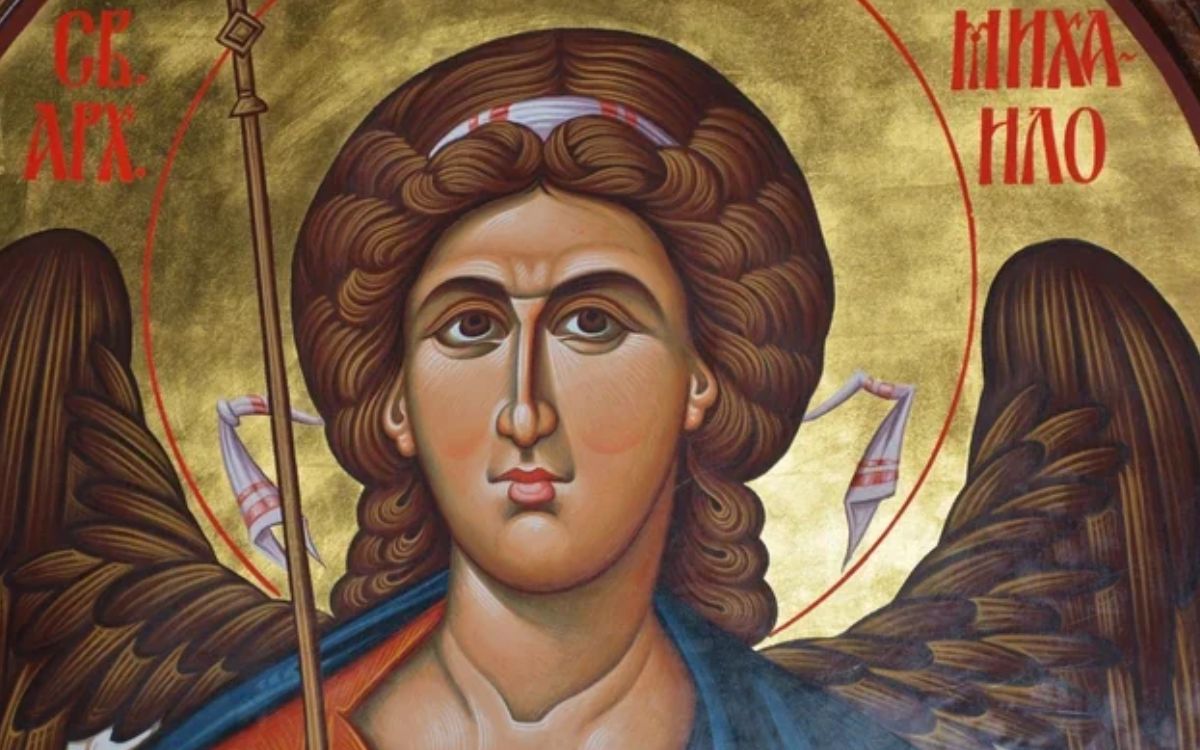
The Serbian Orthodox Church and its faithful celebrate the Synaxis of Saint Archangel Michael on November 21, a feast popularly known as Aranđelovdan.
Aranđelovdan is one of the most widely celebrated family patron saint days in Serbia. The holiday has a long history, and its observance represents a blend of Christian tradition, family customs and cultural heritage passed down through generations.
Aranđelovdan is dedicated to Archangel Michael, one of the most important angels in Christian tradition. His name originates from Hebrew and translates as “Who is like God?”, while church texts describe him as the leader of the heavenly forces. In Christian iconography, he is most often depicted as a warrior carrying a sword or spear, symbolizing the struggle against evil.
The feast celebrated on November 21 is known as the Synaxis of Saint Archangel Michael and the Other Bodiless Heavenly Powers. It is dedicated not only to one archangel but to all the angelic orders. The feast was established in the early Christian period, and its observance is linked to the development of the veneration of Archangel Michael, who is particularly revered in Eastern Christianity.
From a church feast to one of the most widely celebrated family patron saint days.
In Serbia, Aranđelovdan holds particular significance because it is among the most widespread krsna slava celebrations. In terms of popularity, it ranks immediately after Saint Nicholas Day and has been part of family tradition in various parts of the country for centuries.
Krsna slava is a distinctive form of family celebration in the Serbian Orthodox tradition. Unlike other religious holidays, which are celebrated in the same way throughout the entire community, slava is associated with a particular family and passed down from one generation to the next. The family’s patron saint is regarded as the protector of the household, and his name remains part of the family’s identity.
Aranđelovdan in Folk Tradition
Archangel Michael as the Protector of Livestock
In certain parts of Serbia, Aranđelovdan held special significance for livestock farmers. Archangel Michael was associated with the protection of animals, and the feast was marked by special rituals and the preparation of specially shaped bread. This custom represents an interesting blend of the Christian veneration of a saint and traditional rural life.
Why Did Some Families Not Prepare Slava Wheat?
This is probably the best-known distinctive feature of Aranđelovdan. In some families, there was a belief that Archangel Michael was a “living saint,” and for that reason, they considered it unnecessary to prepare slavsko žito (boiled wheat served in honor of the patron saint).
However, this is a folk interpretation rather than a church rule. The Orthodox Church prescribes the preparation of slava wheat for all family patron saint celebrations, including Aranđelovdan.
The Archangel Who Roams the World Disguised as a Traveler
Folk tradition has preserved a legend that Archangel Michael travels around the world disguised as a poor traveler or beggar in order to test people’s kindness and willingness to help others.
For this reason, special emphasis was placed on hospitality on Aranđelovdan. It was believed that no one who asked for food, drink or assistance should ever be turned away.
MORE TOPICS:
Source: Danas Foto: Predrag Lukic / shutterstock
 Add Serbian Times as your Google source