




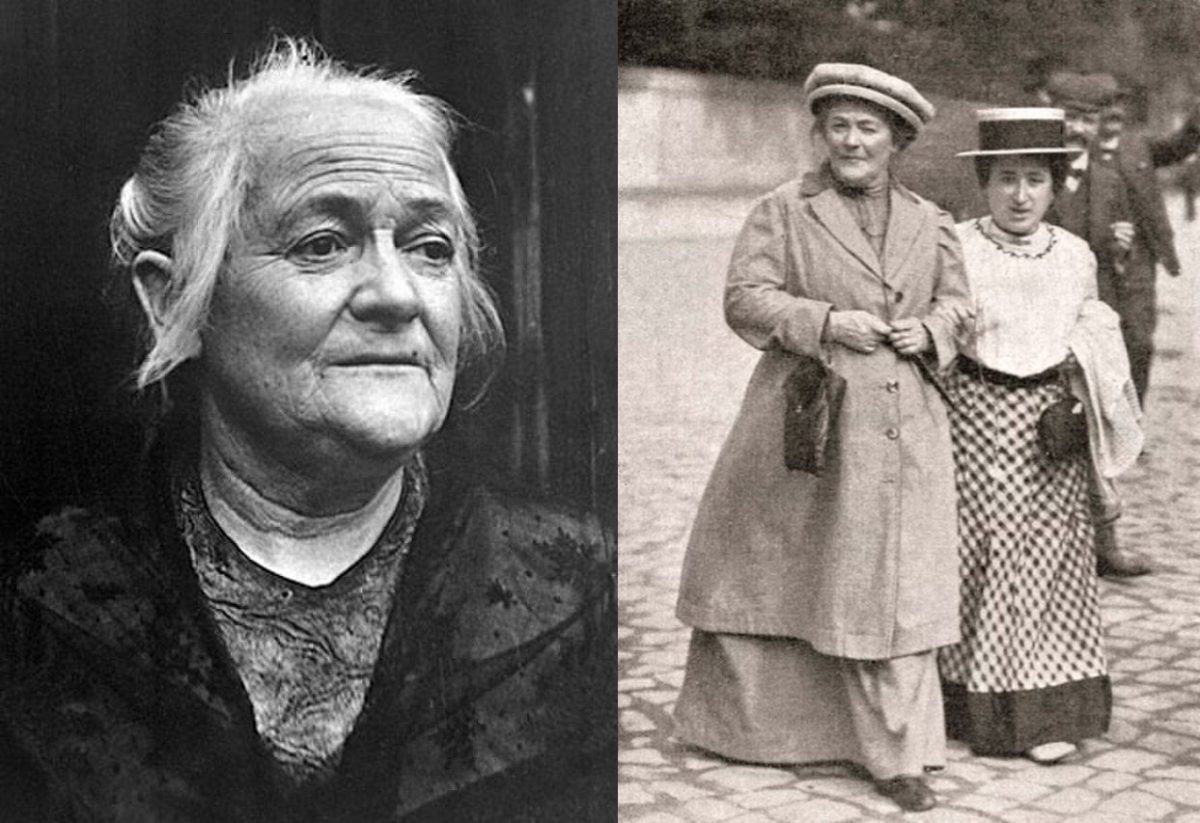
Women employed in the textile industry protested in New York on March 8, 1857, due to poor working conditions and low wages. Today, thanks to them, we observe International Women’s Day.
On that day, American workers marched and demanded better conditions, a working day lasting 10 hours, higher wages, the right to vote, and, in general, equality. Hundreds of women attended the gathering, but the protest was broken up by the police.
However, several months later, textile workers established a labor union.
Protests by dissatisfied women became increasingly frequent from that moment on, and one of the most significant took place in 1908, when 15,000 women marched through New York, demanding the same things as the women in 1857 — the right to vote, higher wages, and shorter working hours.


Two years later, in 1910, the First International Women’s Conference of the Socialist International was held in Copenhagen, and on that occasion Women’s Day was established. The proposal to mark this date was made by Clara Zetkin, the famous German activist for women’s rights. As early as 1911, more than one million women celebrated Women’s Day in Germany, Switzerland, Austria, and Denmark. Soon afterward, Women’s Day became a state holiday in Russia, and during the Soviet era it was celebrated as a holiday of the “Heroism of Working Women.”
Since 1975, which the United Nations proclaimed the Year of Women, this holiday has officially been recognized as International Women’s Day. Today, numerous events are held around the world every March 8 in honor of women, highlighting their achievements in all fields.
According to some sources, the New York protest did not actually take place on March 8. In fact, many believe that nothing related to women’s rights happened on this date. Sociologist Liliane Kandel and feminist Françoise Picq believe that placing Women’s Day on March 8 and recalling the New York workers helped avoid linking the holiday to Soviet history, thereby giving it a stronger international character.
However, the political meaning has gradually been lost, and Women’s Day today is no longer primarily a holiday of social justice and equal opportunities for men and women, but has largely been trivialized and turned into a typical celebration of mass culture and consumerism.
MORE TOPICS:
Source: National Geographic Foto: Wikimedia Creative Commons