



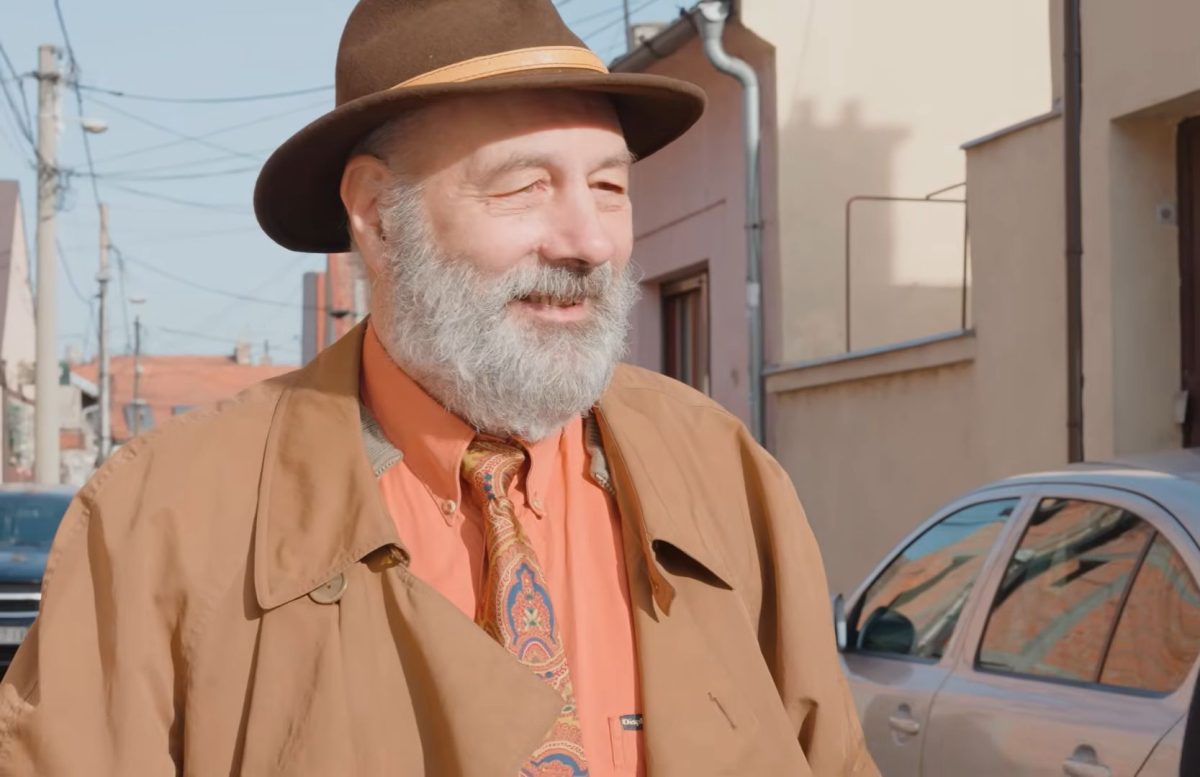
“This country will give you everything you wish for. A rather extravagant statement, but it’s true,” says Alan Fraser, a well-known Canadian pianist who moved to Serbia in 1990, then Yugoslavia, to study piano, but stayed forever because of love.
After his studies, he worked at the Academy of Arts in Novi Sad and later founded an institute where he still teaches his unique piano playing technique. However, as he says, he is most proud of marrying a Serbian woman. In an interview for the YouTube channel “Attic life,” he shared what life in Serbia looks like for a Canadian, how learning Serbian changed his way of thinking, and how he found freedom in our country.
“Serbs see the world differently”
When it comes to language, he admits that only after learning Serbian did he realize how much language can shape a person’s soul.
“Language shapes the soul of a nation so much. The Serbian mentality and way of thinking are not so linear. Plus, there’s that famous ‘inat’—there’s no English word for it, but it’s such a deep concept. Serbs truly see the world differently,” says Alan, explaining that the hardest part of learning Serbian was the frustration he faced, as in larger social gatherings, he initially felt like a small child who couldn’t speak.
“Serbs know how to rest and enjoy life”
As the biggest cultural shock, he admits it was the fact that Serbs know how to truly relax.
“In Canada, we have a small country house, called Kepek, on Prince Edward Island. In Serbian, it’s called ‘Put za Ejvoni.’ A small community of 50 cabins, with 20 of them belonging to my relatives. In the summer, we all have fun together. And that’s it—we go back to work. However, when I came here, after some time, I realized that Serbia is like Kepek, but all year round. This is their life—it’s not just a vacation period. Serbs always have time for coffee, they know how to take a break from work and enjoy life,” he says, adding that for him, as a Canadian with a strong work ethic, this was quite a shock:
“I thought they were lazy, but no, they’re not lazy—they just know there’s a certain rhythm to living a civilized life.”
“I regret not realizing it sooner”
He explains that he found Serbian family traditions particularly interesting, though at first, they weren’t entirely clear to him—especially the moment when a newborn comes home.
“I knew that bathing a baby in the evening meant it would soon go to sleep. However, here in Serbia, that process is part of a ritual. The mother and father gather, enjoy time with their baby, enjoy bathing and playing with it. It’s a true and strong tradition. It’s a moment of bonding. And I was just a dumb Canadian overwhelmed with work, so I would tell my wife, ‘OK, you bathe the baby, I have work to do.’ She accepted it, but today I regret missing out on that. It’s a Serbian tradition that is truly beautiful,” he says.
When asked whether Serbs treat him differently now that he’s also a Serbian son-in-law, he responds:
“Yes, they treat me really well, they love Canadians. But when they hear that I’m also a Serbian son-in-law, that’s when the real excitement starts. They immediately say, ‘Oh, so you’re Serbian,’” he says with a smile.
“I found freedom here”
The most important thing he found in Serbia, besides love, is freedom.
“Freedom. When I came here, many told me that Serbia would give me everything I wished for, and it turned out to be true. I found myself in a unique situation, and I understand why many want to leave—everyone thinks there aren’t many opportunities here. From one perspective, it does seem that way, but as a scholarship student in my youth, when I arrived, I had the freedom to work and create whatever I wanted, and I still have that freedom today. So, yes, maybe salaries here aren’t the best, but there is no country where you have as much time as you do here—and time is the most valuable resource,” he says.
He reveals that he knows many people who have moved from Canada to Serbia, and a large number of them have decided to stay.
“It was horrible being under those bombs”
As a Canadian who was in Serbia during the 1999 bombing, he admits he was under tremendous pressure—which he only realized when he returned to New York during his tour.
“The bombing started on March 24, and by March 29, I was already on a train to Budapest—not because of the bombing, but because I had a concert in New York. However, when I crossed the border by train… I just realized how much pressure and tension I had been under the whole time. It was horrible being under those bombs. You knew you were somewhat safe because they were relatively precise strikes, but the overwhelming tension we all felt was always there. I remember how it all hit me when I crossed the border,” he recalls, adding that he stayed in the U.S. and Canada for the next two months—but now regrets it:
“It’s much worse watching the ones you love from afar than being with them in the middle of whatever is happening. When I said goodbye to my friends, I casually said, ‘See you soon,’ but my friend Igor replied, ‘If we’re able to.’ I thought, ‘Oh, come on, what are you saying?’—and then, the next moment, a bomb exploded. The explosion was so powerful that you couldn’t tell if it was a kilometer away or much farther. That’s when I realized he was right.”
“Man, these people are so repressed”
Today, after nearly 35 years of living in Serbia, when he visits Canada, he has only one thought.
“Man, these people are so repressed, what’s going on? They’re as tense as if they have a cork in their mouths. Spit it out already! But after two or three days, that’s it—I’m home, I’m where I belong,” he says.
“I’m more Serbian than I think”
As someone who, after so many years, holds dual citizenship—Canadian and Serbian—when asked whether he feels more like a Canadian or a Serb, he answers honestly:
“I have to say, I still feel like a Canadian. No doubt, I live in Serbia, you’ll hear me speak Serbian, I have Serbian friends, I understand Serbian culture—but I still feel like a Canadian. However, the people I spend time with always tell me, ‘Alan, you’re more Serbian than you think.’ I don’t see it, but they do. And if that’s true, I’m fine with it, because that means I’ve finally broken free from Canada’s straitjacket,” he concludes.
MORE TOPICS:
TODAY WE CELEBRATE MLADENCI: Many beliefs are associated with the day of the Holy Forty Martyrs!
Source: Blic, Foto: Printscreen YouTube / Attic Life
 Add Serbian Times as your Google source