




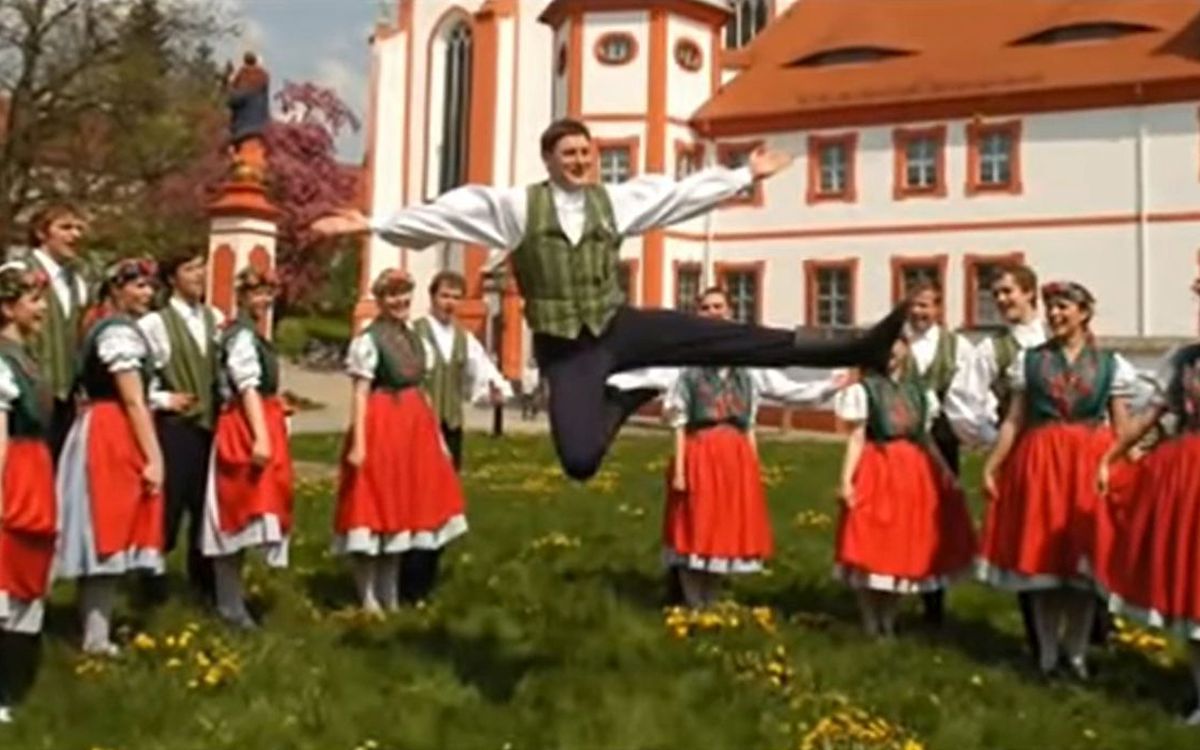
The Lusatian Serbs are the smallest Slavic ethnic group, residing in eastern Germany, in the federal states of Saxony and Brandenburg, in a region historically known as Lusatia.
This area, located southeast of Berlin near the Polish and Czech borders, is divided into Upper and Lower Lusatia.
Today, they are primarily concentrated in the valley of the Spree River, although they once occupied a much larger territory. Some Lusatian Serbs also live in enclaves in eastern Germany outside this region. One such enclave is the Spreewald—known as Blota in Lusatian Serbian (meaning “swamp” in Serbian)—which lies slightly north of Lusatia, in the direction of Berlin.
The cultural center of Upper Lusatia is Bautzen (historically part of Saxony, where conditions for their survival were more favorable), while the center of Lower Lusatia is the town of Cottbus.
It is difficult to determine precisely when they settled around the Oder River, but they were certainly there by the year 500 AD.
Some historians claim that the Lusatian Serbs are the distant ancestors of the Serbs, while others argue that they are merely a German national minority.
One of the most significant pieces of evidence supporting their Serbian roots is their continued celebration of Easter and St. George’s Day in the Serbian Orthodox tradition. This historical fact is documented in the Serbskij Museum, located in a Baroque palace in Cottbus, about a hundred kilometers south of Berlin.
As members of the larger group of Polabian Slavs, who arrived from the territories of the Russian Empire and inhabited vast areas of eastern Germany—from the Elbe River to the Oder and Vistula in Poland—the Lusatian Serbs were divided into numerous Slavic tribes, including the Bodrichi, Ljutichi, Luzhane, Milceni, Pomorani, Glomaci-Daleminci, Rujani, Suselci, and Neletici.
FIND OUT MORE IN ENGLISH:
Even today, ninety percent of the geographical names of rivers, fields, lakes, and settlements in the German regions of Mecklenburg, Saxony, Brandenburg, Pomerania, and others bear Serbian names (e.g., Kamenica, Bela Gora, Bela Voda, Ratibor, Dubravka, Rogozno, Strela, Drenovo, Trnovo, etc.). Though there are no longer Serbs in most of these areas—except in Lusatia—they are still officially recognized as “Northern Serbs,” or “Serbs in Germany and near Berlin.”
Among the local people around Berlin, there are still legends about the Sorben and their rulers, referring to Serbian leaders, cities, temples, and frequent wars. These traditions are also preserved by the assimilated Serbian population. The Lusatian Serbs refer to themselves as Serbja, Serb, Serbonjka, while they call the Serbs from the Balkans “Southern Serbs” (Južni Serbja).
They speak two closely related languages: Upper Lusatian Serbian (influenced by Czech) and Lower Lusatian Serbian (influenced by Polish). Both belong to the Slavic language group.
Lusatian Serbian customs are similar to those of other Slavic nations and date back to the 17th century. Easter is a particularly significant holiday for Lusatian Serbs, celebrated with the traditional decoration of Easter eggs.
Despite centuries of assimilation pressures, the Lusatian Serbs have managed to preserve their language, customs, folklore, literature, and ethnic identity—making them the smallest yet incredibly proud Slavic people.
The Lusatians claim to be the original Serbs and refer to their Balkan counterparts as their southern brothers. They believe that the Serbs who now inhabit the Balkans were part of their people who migrated south in the 4th century to escape the violent spread of Christianity across pagan Europe.
During the NATO bombing of Yugoslavia, Lusatian Serbs continuously collected aid for their southern brothers.
They name their children with traditional Slavic names such as Jagvita, Božena, Ljudmila, Lenka, Aleksandar, Borislav, Stanislav, Amalija, and Kazimir.
They are known for their colorful folk costumes, Slavic mythology, storytelling traditions, fairy tales and riddles, Easter egg decorations, wedding soups, sauerkraut feasts, and Slava (Serbian Orthodox feast day) traditions.
MORE TOPICS:
Source: Šajkača, Foto: Printscreen YouTube / Орле Орловић