




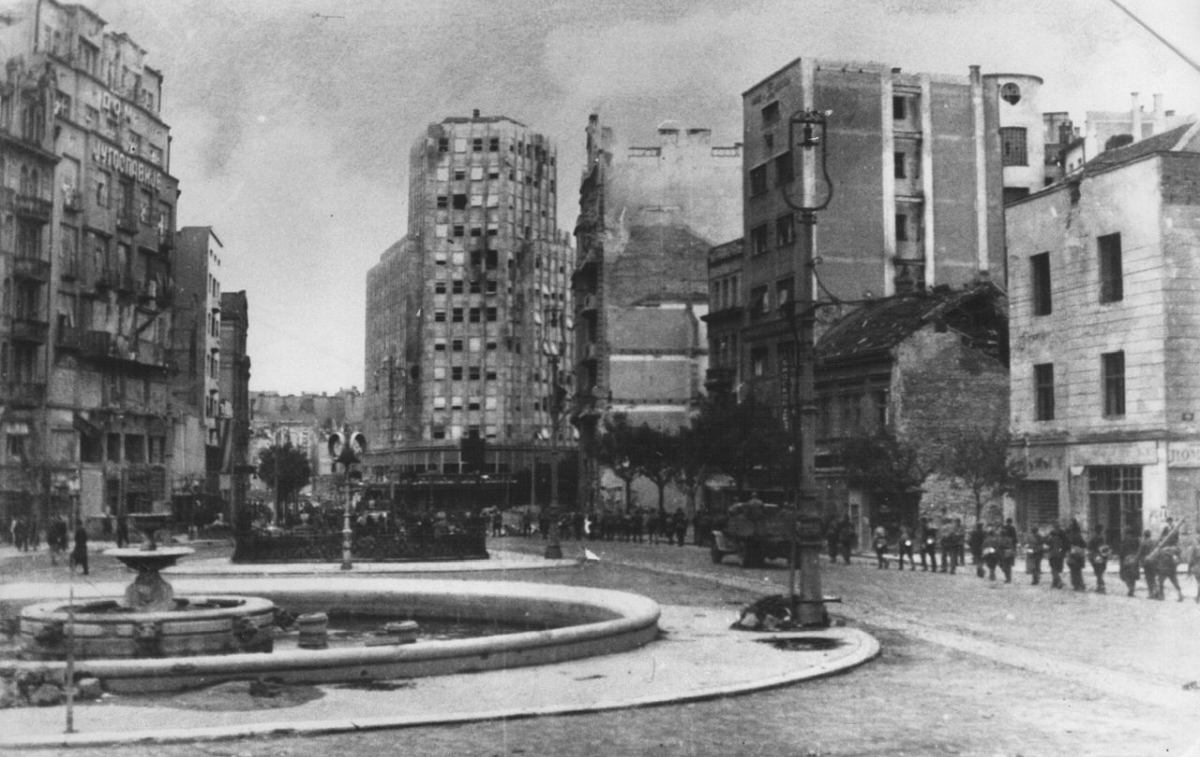
Seven days after October 20, 1944, and the liberation of Belgrade from German occupation, several dozen Yugoslav partisans began a spectacular, but still poorly scientifically researched, operation to “cleanse” the enemy army. In the underground.
Hidden Nazis, as well as enemies from the civil war – members of the Chetnik movement and their collaborators – had to be driven out of the ruins, basements, sheds, and also the sewage system.
Their battles were written about in the media, some scenes appear in the cult partisan series “Otpisani” (The Written Off), but there is no historical data about them.
“For now, that’s all we have. It is possible that these documents exist in still unopened archives of the State Security Service, but we cannot be sure based on testimonies,” historian Milan Radanović tells the BBC in Serbian.
Milka Kraljević, the widow of the commander of this operation, Gojko Kraljević, tells the BBC in Serbian that it was a “very extensive operation, many young people died.”
“Some of them ended up as psychiatric patients and never got out. Those are great traumas,” she says.
How did it all begin?
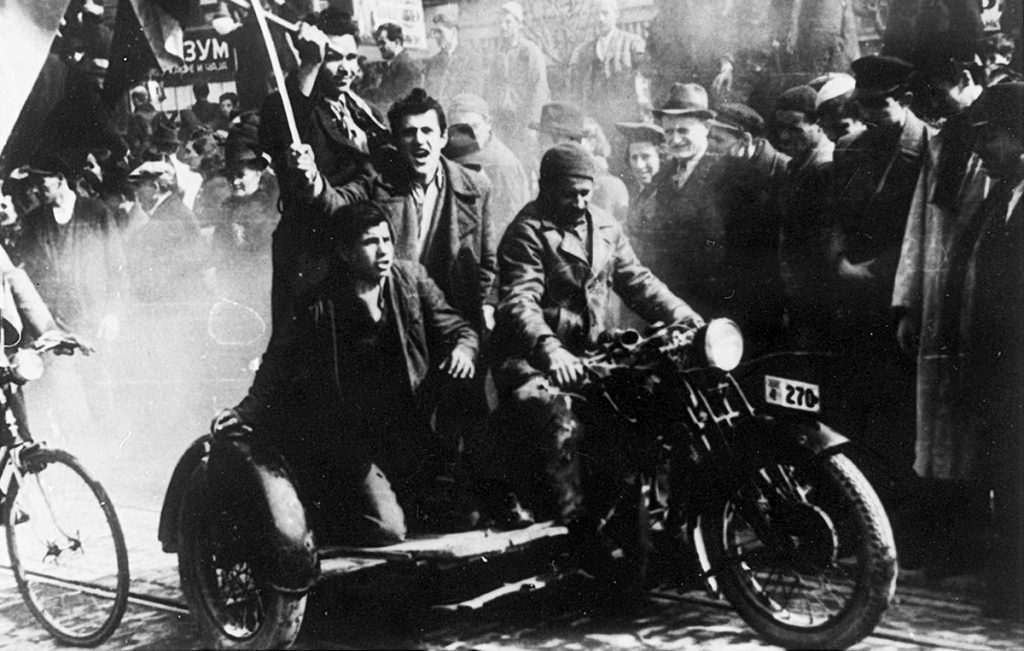
While freedom was still being celebrated in the center of Belgrade and the kolo (traditional dance) was being danced on Terazije, a powerful grenade explosion echoed.
That was a sign that the enemy had not yet completely surrendered.
Milka Kraljević states that this was part of the operation “Cyclone South of German SS officers and saboteurs from Stuttgart.”
The book “Death Came From the Underground,” by journalist Mirko Jovićević, which was written based on the testimonies of participants, states that the action got this name because it only referred to the Soviet Union and Belgrade.
Allegedly, 175 German saboteurs arrived in Belgrade that September, who knew everything about the city, had maps, and clear tasks.
Their goal was to mine buildings, bridges, kill leaders, but also cut water and sewage pipes and poison food, while the core of the German army was retreating.
“They were exclusively trained there for rear operations, so that when a city is liberated they would stay and cause problems.
“They spoke Serbian fantastically, very few people could track them down,” says Kraljević.
The book, which glorifies the partisan struggle, says of these German soldiers that they were “human beasts – who had already been erased from the list of the living” and that they fanatically carried out orders and died for the Führer.
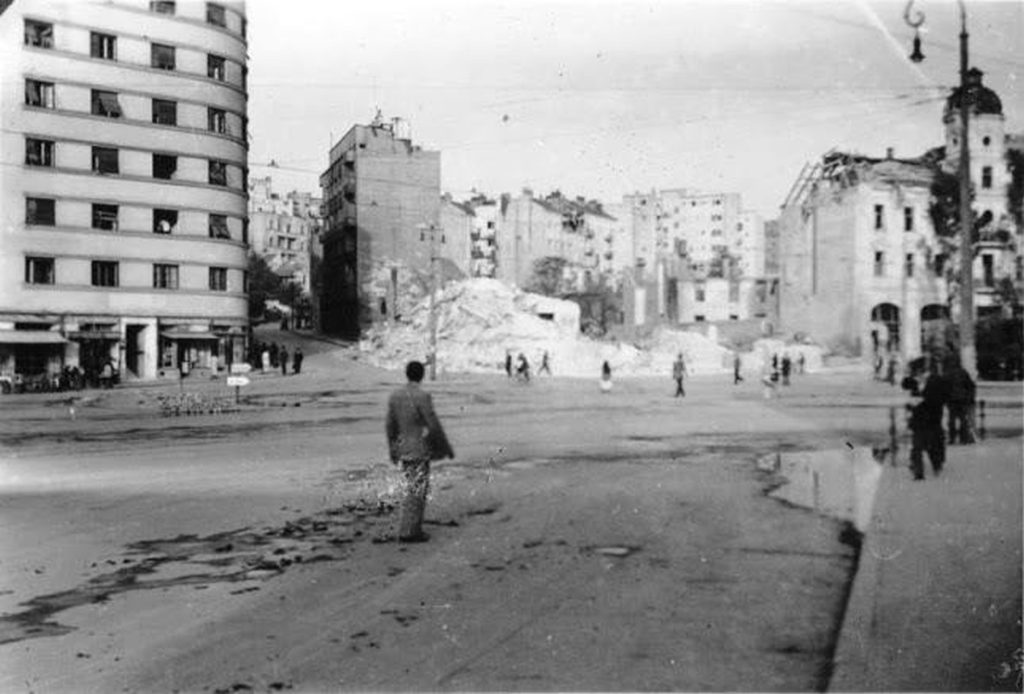
Who is entrusted with the task?
Gojko Kraljević joined the partisans at the age of 16 and went to war, where he would become one of the excellent saboteurs.
Instead of continuing to the Srem Front with the Sixth Lika Division, where he was a political commissar, he received an order from the Organisation for the Protection of the People (OZNA) to “switch to cleaning the sewage system.”
OZNA was the predecessor of the police and state security.
On Gojko’s 20th birthday, he receives an order to lead the operation codenamed Grmeč and, in three days with comrades he had just met, he descends into the underground of Belgrade for the first time.
“It was not easy for them at all. You enter the darkness, you don’t know what awaits you, you cannot use the weapons you have, because they ricochet back in the sewage system.
“They were forced into hand-to-hand combat. Not even a large group could go – seven to ten fighters,” states his wife Milka Kraljević.
Gojko, she adds, went with all groups.
“There is neither food nor water. They entered manholes and then moved by crawling, because they could not walk normally and waited for the Germans to approach them.
“They went step by step. Sometimes for two or three hours,” Kraljević describes.
Based on these motives, a film was shot in Soviet-Yugoslav co-production “Provereno nema mina” (Mines Checked Not Present), with Branko Pleša in the main role.
The book was written based on the testimonies of the fighters, and mostly Gojko Kraljević. He gave it to his wife as a gift.
Historian Milan Radanović particularly studied the battles for the liberation of Belgrade and reviewed the archive of the Corps of People’s Defence of Yugoslavia (KNOJ) and found no documents there about the so-called “Cyclone South” operation.
Apart from in the media in the Serbian language, there is not much data about it on the internet, and every German historian to whom the BBC addressed questions on this occasion considered that they were not sufficiently familiar with the topic to talk about it.
“I tried to find some trace in the military archives, but I didn’t, which doesn’t mean it didn’t happen.
“There is a realistic assumption that German forces left some soldiers to deal with rear activities,” adds Radanović.
Since most of the historical sources from that period have long been available to the public, this historian from Belgrade, who now lives in Zagreb, leaves open the possibility that it is a fabricated story.
“Even if it is true, although it sounds most attractive, that fight was not primary, there were many smaller battles that marked the battle for the liberation of the capital,” notes Radanović.
These are the battles of Yugoslav partisans and the Soviet Red Army for every street and bridge in the city.
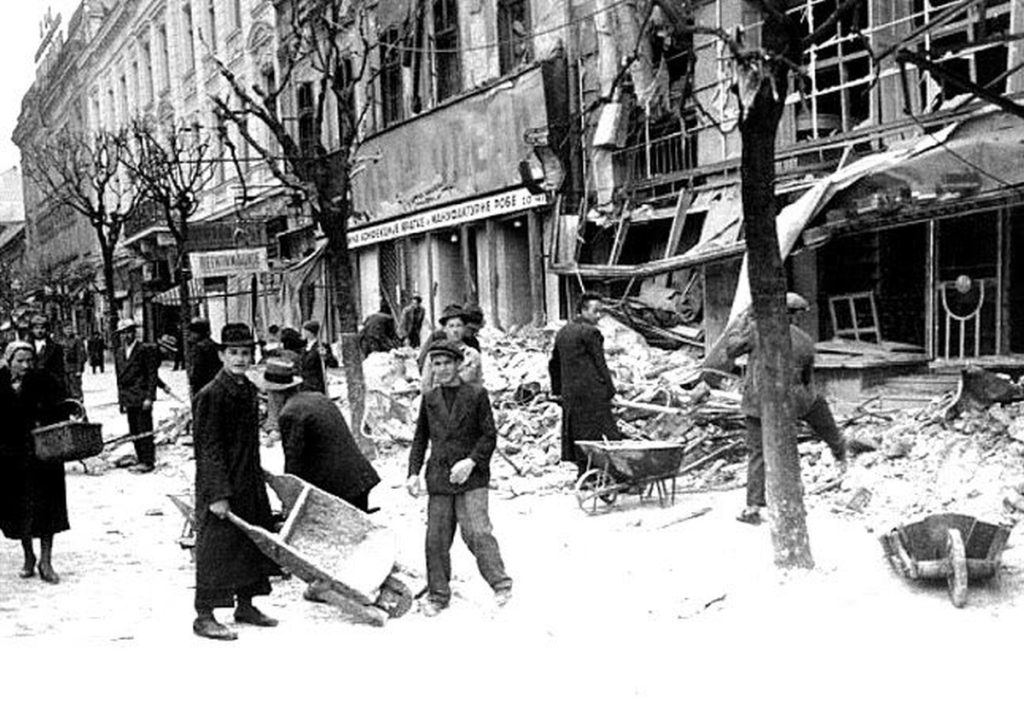
The role of the Red Army
“I highly doubt there was a war in the sewage system; the state of our sewage system is such that even today it would be difficult to conduct any serious battles.
“Something like that did happen in Budapest and Berlin,” says historian Aleksej Timofejev, who was born and educated in Moscow, and today is a professor at the Faculty of Philosophy in Belgrade.
He explains that the Red Army had two special units that, among other things, participated in the battle for Belgrade.
“These are the Danube Flotilla Reconnaissance Unit, which had land units and boats, something like modern American marines, and the Guard Engineers Assault Detachment, whose name concealed their true task.
“They served to breach well-fortified cities. They wore armor, vests, had flamethrowers, and used explosives,” states Timofejev.
While the members of the reconnaissance unit liberated Novi Sad and participated in demining and fighting at the Pančevo Bridge, the so-called guardsmen fought near the city center.
This is also evidenced by combat diaries with illustrations, which are available online in Russian.
“However, neither one nor the other participated in any underground battles,” the historian points out.
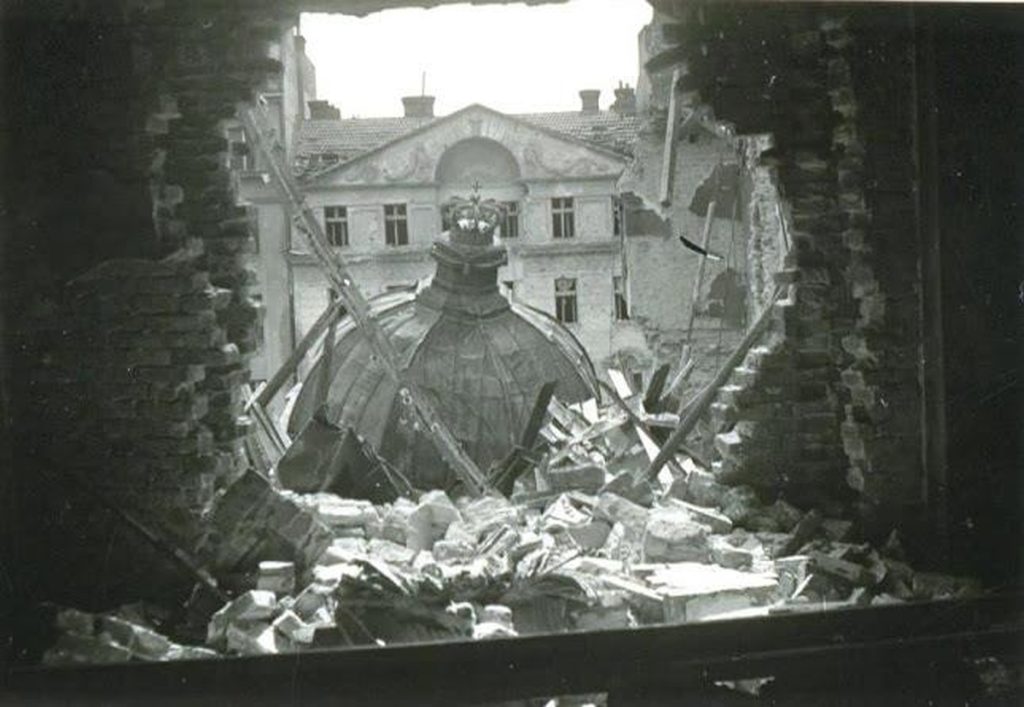
Checked not mined
The markings “provereno min net” – no mines, which still bear witness to the places checked and marked as safe by Soviet soldiers in those days, could have been left by both ordinary deminers and guard engineers.
One such inscription was recently marked on a bank building at the busy intersection of Kneza Miloša and Kralja Milana streets in Belgrade – also known as “Kod Londona” (At London).
“Probably when you take an entire city where there were several tens of thousands of enemy soldiers, someone won’t surrender.
“Moreover, the partisan army was very brutal towards prisoners; it only exchanged high-ranking officers,” notes Timofejev.
That is why, he adds, the Red Army had an order prohibiting the surrender of captured soldiers to Yugoslav partisans because “they kill prisoners, which causes greater resistance from the enemy.”
“This is directly stated. They were not humanists in the Red Army, but they did not want such an effect. In such circumstances, someone could hide in basements, but these were not battles in the true sense,” he adds.
Soviet special units had the authority to recruit the local population for their needs, and that is why a relatively large number of Yugoslavs entered these formations.
However, the book only talks about the units of Yugoslav partisans, and in the movie “Min net,” the Soviets are the protagonists.
Gojko Kraljević was a collaborator on the script for that film and would sometimes talk about it in lectures or informal gatherings, but this episode was not taught in schools.
“The impression was created that it was being hidden, but it wasn’t. No one forbade talking about it,” emphasizes Milka Kraljević.
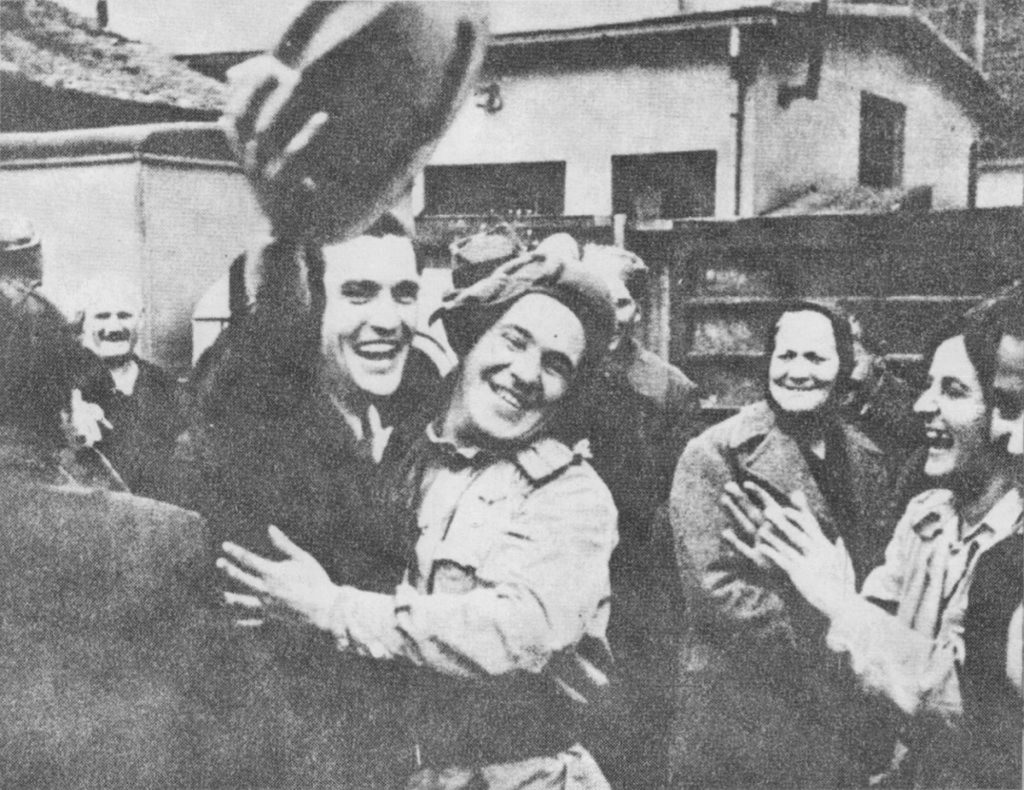
Why is the joint struggle not talked about?
“Already in 1948, it was not advisable to talk about how the partisans fought with the Soviets in Budapest; it was necessary to prove that they were alone.
“In those circumstances, there is a slight inflation of stories about battles in tunnels and the sewage system,” Timofejev points out.
In 1948, the Cominform Resolution occurred, and the split between the Yugoslav and Soviet leaders Josip Broz Tito and Iosif Vissarionovich Stalin.
In Budapest, this historian points out, underground battles were widespread, and the war was fought on three levels – in the air, among the buildings, and below ground.
“Here, it was more of a clearing the terrain of residual German soldiers,” Timofejev emphasizes.
The treatment of German prisoners, he adds, was no better than towards opponents in the civil war – such as Chetniks or Ustaše, which is why it is no coincidence that the Germans were so brutal, because they were “fighting for life and death.”
“It is possible that after the liberation of Belgrade, a few hundred soldiers remained, and then everyone crawls into a hole and tries to sell their life as dearly as possible,” concludes Timofejev.

Is it possible to fight in the sewage system?
The book lists numerous locations as battlegrounds – from the intersection of Kneza Miloša and Nemanjina, where the Ministry of Foreign Affairs is located today, through the Mostarska Petlja interchange, the sewage system below Bulevar kralja Aleksandra, the Botanical Garden, to Džordža Vašingtona and Dunav Station streets.
Archaeologist Rade Milić, who studies tunnels and underground Belgrade, analyzed a part of the locations from the book and determined that the mentioned manholes and basements indeed exist.
“All sewage pipes are connected as part of a system, and from that point of view, it is possible for these battles to happen,” Milić describes.
Some pipes below Belgrade carry entire rivers below the city, he adds, although some were built after the war when the sewage network was expanded.
In the eighties, books popularizing the partisan movement were not uncommon.
It is very possible that Jovićević’s book was written to be interesting to a wide audience, he assesses.
“These stories are probably over-dimensioned, but that some operations in the underground of Belgrade happened during the liberation – I am almost certain they did.
“Whether the scale was smaller than described in the book, and especially than in the Russian film, I believe it was,” concludes Milić.
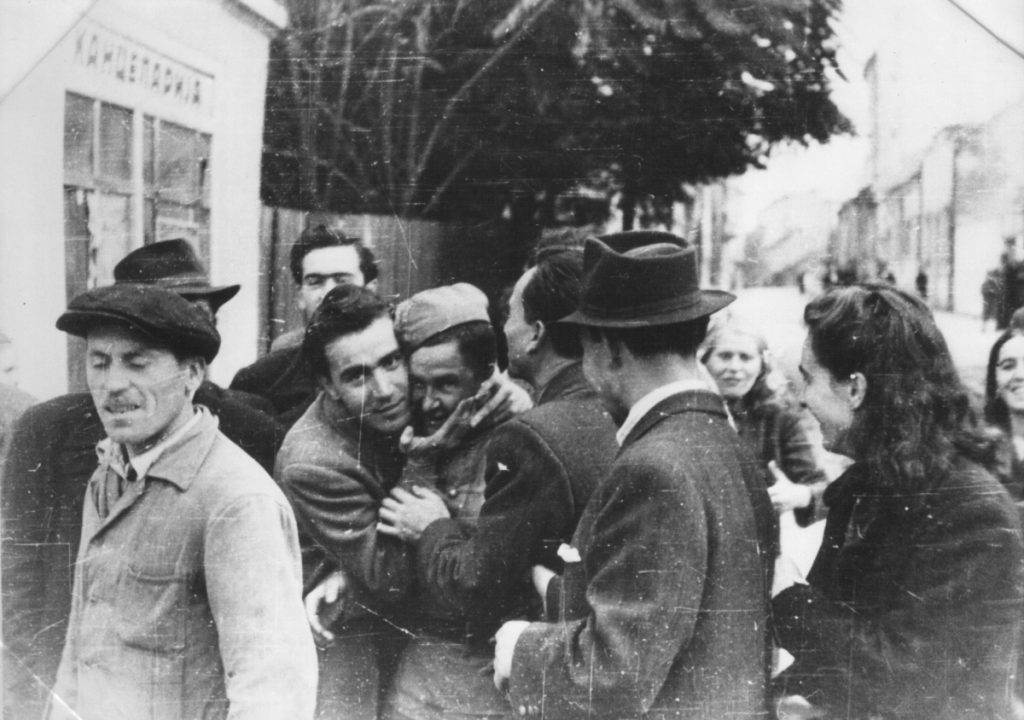
Water purification
However, Milka Kraljević is still convinced today that “the reality was more gruesome than what is written in the book.”
In the seven-day operation, according to the book’s claims, all 175 German saboteurs were killed or captured, and 60 KNOJ fighters also died and many more were wounded.
Gojko Kraljević emerged from the war as a Major in the Yugoslav People’s Army and won numerous awards.
In the years that followed, he held numerous state functions and was also involved in writing novels.
He even completed three faculties – Technology, Economics, and held a doctorate in chemical sciences.
He also published numerous scientific papers. Almost 40 years ago, he worked on the production of liquid organic fertilizer, and mostly devoted himself to projects for wastewater purification.
He managed to create a preparation that collects grease when, for example, oil is spilled on the sea.
“He used to joke that he had swallowed so much feces that he decided to purify the sewage system,” his widow concludes with a melancholic smile.
MORE TOPICS:
NEBOJŠA PAVKOVIĆ DIED: Serbian general passed away at the Military Medical Academy in Belgrade!
TRUMP WARNED ZELENSKY: Accept Putin’s terms or complete destruction of Ukraine threatens you!
Source: BBC; Photo: Wikimedia Creative Commons