




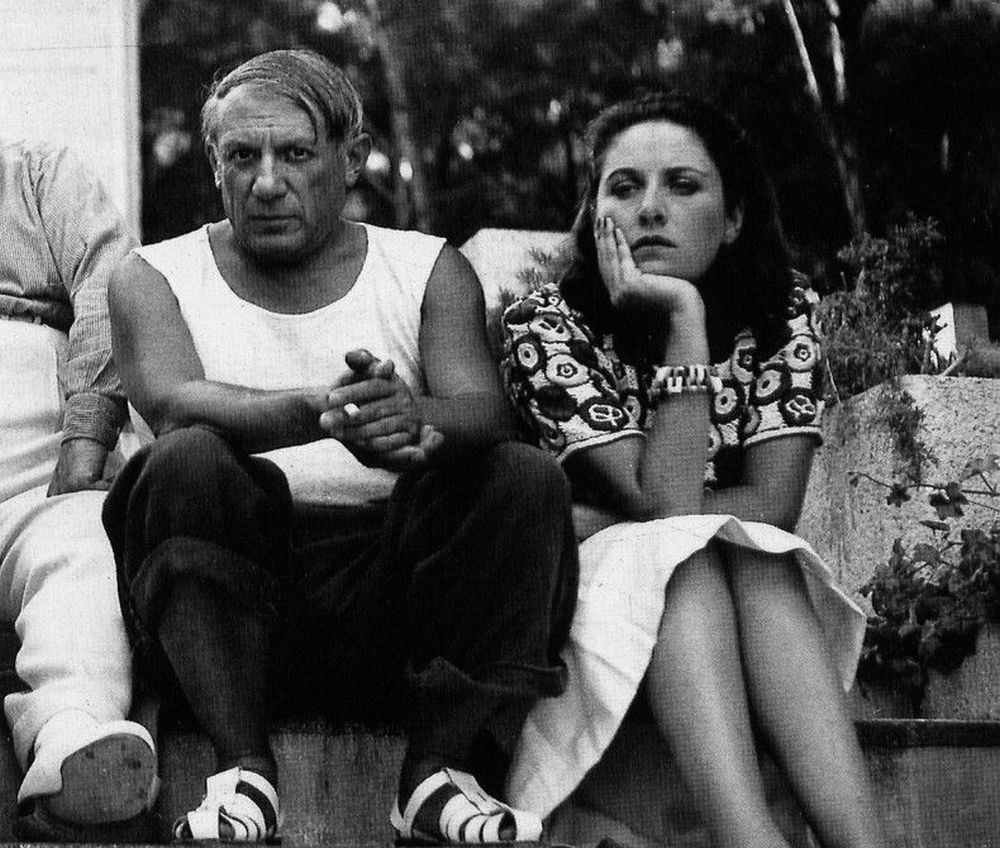
Sadness followed Dora Maar almost from birth. The daughter of renowned Croatian architect Josip Marković seemed destined for suffering. She embraced it, almost as if she found comfort in it, identifying it with life itself.
Raised between Argentina, where her parents lived, and France, where her grandparents brought her up, she was torn from childhood by separation, constant moving, and the lack of a true home.
She grew into an insecure beauty with the face of an angel and the soul of a wounded doe, constantly expecting the hunter’s rifle to fire. She suffered from anxiety, depression, and easily lost herself in others, losing her own identity.
Had she spent her life beside someone else, she might have found a trace of happiness. Instead, she met Picasso… and everything else was just – sadness.
A fateful encounter
Sensual and introverted, it was no surprise that Teodora Marković was almost hypnotically drawn to art. She enrolled in painting studies in Paris, but soon switched to photography. Contemporaries say she was an exceptional talent, especially in portraiture. She socialized with painters and poets of Paris and gradually established herself as an artist.
It was certainly a bold move when, at the age of 24, she opened her own studio in Paris in 1931. To mark the occasion, she changed her name to the artistic Dora Maar, which sounded more memorable and chic.
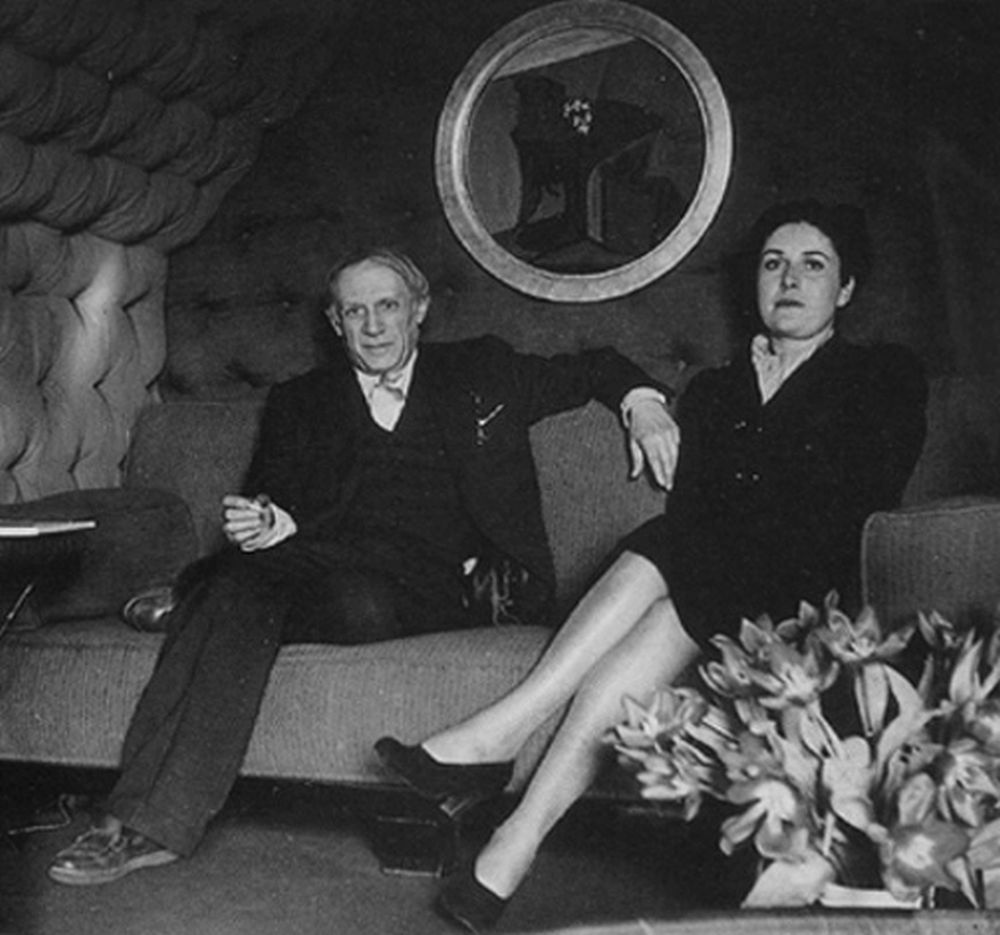
Picasso and Dora did not meet by chance. It was 1936 when, on the terrace of a Paris café, Dora decided to meet the famous and eccentric artist, known as much for his work as for his love affairs and the broken hearts he left behind.
Knowing that Picasso frequented the place, Dora sat with friends absentmindedly playing with a knife, stabbing it between her fingers as she waited for the encounter… As it turned out, it was a meeting with fate.
At one moment, the artist missed. The knife pierced her finger. Blood flowed. Picasso was fascinated by the wild beauty who played so easily on the edge of a blade and was almost excited by the sight of the elegant glove soaked in blood.
He stopped Dora’s bleeding with a handkerchief and took the glove, putting it in his pocket. It is said he kept it as a talisman in his studio for the rest of his life.
Their eyes met. Passion and magnetic attraction flared almost instantly. From that moment, for Dora, only he existed. From that moment, for Pablo, only she existed… at least for a while…
A relationship marked by scandals
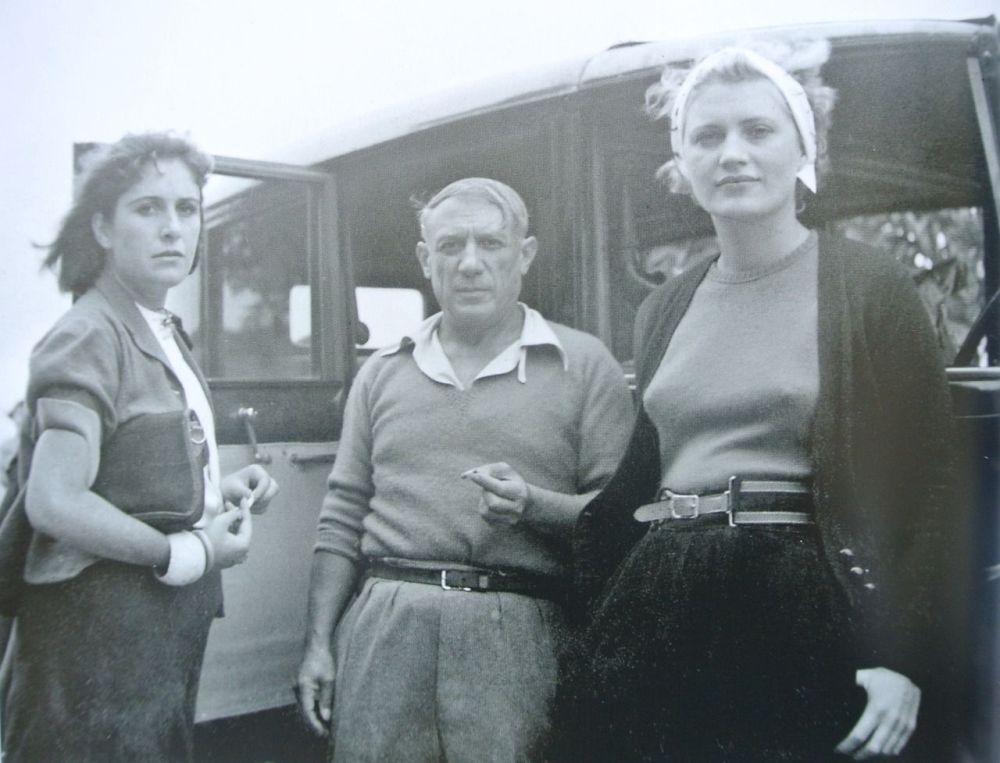
The knife incident seemed to foreshadow that Dora and Picasso’s relationship would be anything but calm. The artist, nearly 30 years older, already had numerous affairs behind him, a failed marriage with Russian ballerina Olga Khokhlova, and a relationship with his model, the beautiful Marie-Thérèse Walter.
The affair between Dora Maar and Picasso began almost immediately after they met. The painter had found a new muse and did not hide his fascination with the new beauty in his world.
It was inevitable that the two lovers would meet. It happened in Picasso’s studio. As expected, harsh words were exchanged, there were slaps, and Dora and Marie-Thérèse eventually even fought physically. The painter enjoyed it.
“Let the better one win,” he said.
The “better one,” at least in that clash, was Dora. After the fight, she moved into Picasso’s apartment. Marie-Thérèse had to leave, taking with her their daughter Maya.
Picasso immortalized the conflict between the two women in the painting “Fight in a Cage,” depicting two doves—a black one representing Dora Maar tearing apart and defeating the white bird symbolizing Marie-Thérèse.
Like Olga before her, Marie-Thérèse, and all Picasso’s later lovers, Dora became the painter’s muse. Her sensuality and sensitivity became his inexhaustible inspiration. During their turbulent relationship, which lasted nearly a decade, Picasso painted dozens of Dora’s portraits.
In all of them, she is portrayed as the “weeping woman”—a beauty with large, sorrowful eyes consumed by an inner unrest she cannot heal, and thus unable to find the peace she longs for. Picasso said he could never paint Dora as a “laughing woman.” To him, she was always in tears—beautiful, but desperate and deeply alone.
This sense of alienation haunted Dora even in moments of greatest closeness with Picasso. Hypersensitive and insecure, she did not find support in him, but rather a tormentor who seemed to deepen her fears, taking pleasure in her weaknesses.
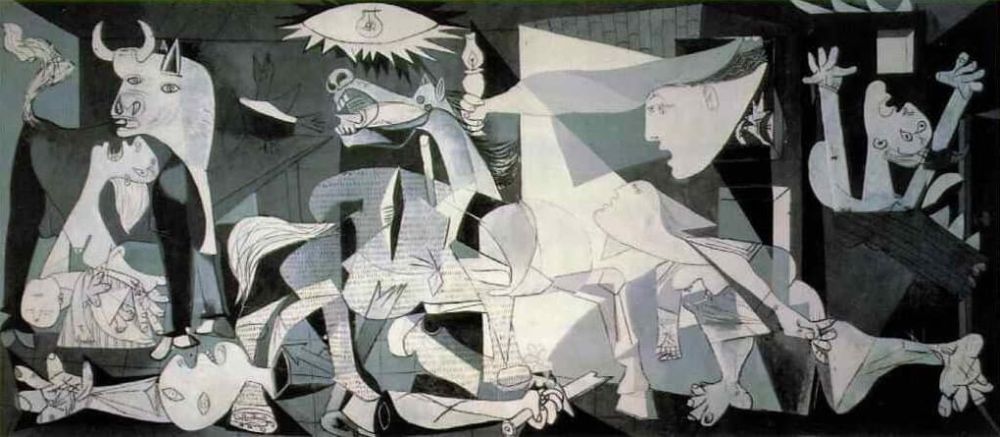
This relationship, although demanding and destructive, was fruitful. In 1937, Picasso painted “Guernica,” his most famous work. Dora Maar was the only photographer who documented the creation of the painting from beginning to end, and she even painted a small part of the composition herself. Far more politically aware than her lover, historians believe Dora was the one who gave the idea for the painting and guided Picasso during its creation.
A love for which she gave up her dreams
Picasso was a demanding partner. He jealously kept Dora for himself, insisting that she abandon photography and devote herself exclusively to painting. Dora eventually gave in, giving up the field in which she was original and turning to paintings that, in her execution, were only pale imitations of Picasso’s style.
This, along with increasingly frequent arguments with a lover who had grown tired of her and, as many times before, began turning his attention to other women, as well as the fact that she could not have children, contributed to Dora Maar’s worsening mental state.
Like Marie-Thérèse before her, Dora had to accept that Picasso had found a new, younger woman who captivated him. He left her for the painter Françoise Gilot, 40 years his junior. It was 1943, although their relationship, with interruptions, lasted until 1945.
Abandoned, Dora suffered a nervous breakdown and took a long time to recover. Reportedly, the psychiatrist who treated her even attempted electroshock therapy, although such methods were already banned at the time.
Picasso bought her a house where she lived in complete isolation, alone and detached from the world, surrounded by objects her beloved had given her and memories of him.
Only after Dora Maar’s death in 1997 was it discovered that the artist had, at some point after her breakup with Picasso, continued to create. In the years that followed, her paintings and photographs reached enormous value at auctions. During her lifetime, she never publicly exhibited them.
MORE TOPICS:
LEST WE FORGET: The March pogrom in Kosovo was deadly for many Serbs, while thousands got expelled!
Source: Istorijski zabavnikFoto: Pinterest, Wikipedia