




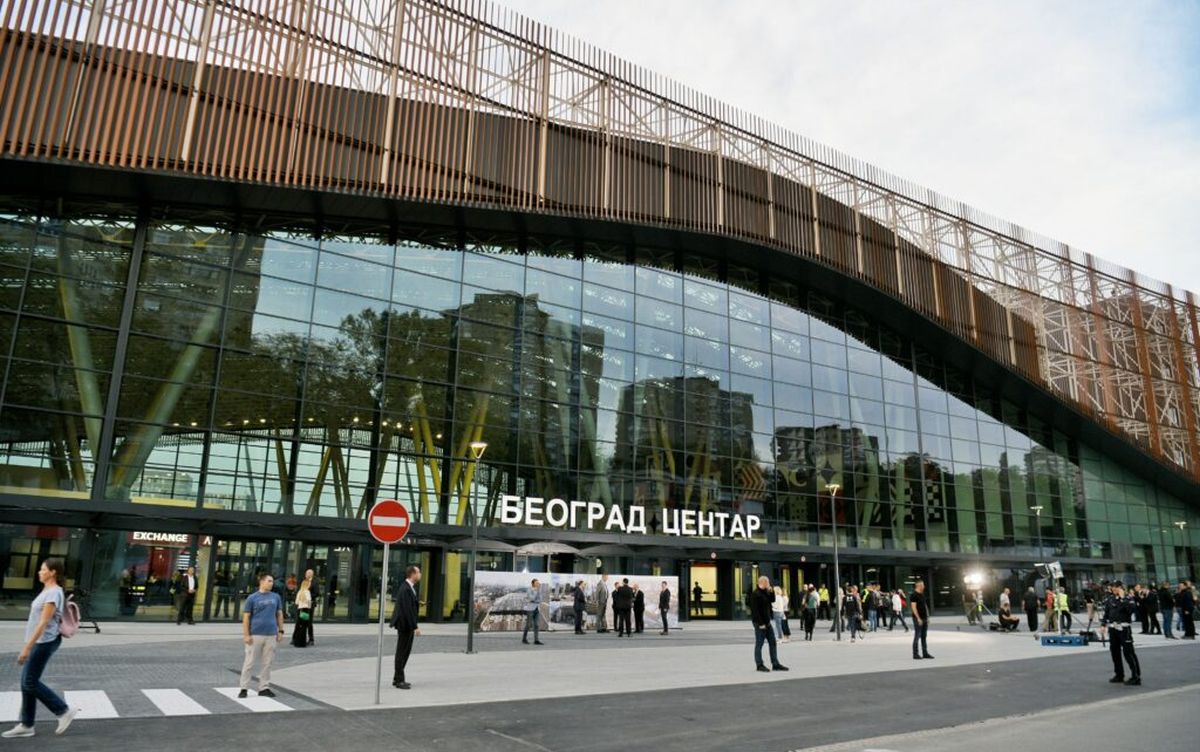
The Hungarian Railways (MAV) will, during the next year, in addition to Budapest, connect the capital of Serbia by train with Vienna as well, it has been confirmed for the N1 portal.
The long-awaited railway line between Belgrade and Budapest is expected, according to the latest announcements, to be established in the spring of 2026. But that’s not all – according to N1’s information, two trains a day from Belgrade will continue their journey beyond the Hungarian capital – to Vienna. In the opposite direction, from Vienna to Belgrade, there will also be two departures daily.
On the website of the Serbian Railways Infrastructure (IŽS), a draft timetable for 2025/26 briefly appeared some time ago. Although the timetable refers only to the section of the railway through Serbia, it is clear that six trains per day will run between Belgrade and Budapest in both directions. Three departures will be operated by Srbija Voz (using the new high-speed trains from the Chinese manufacturer CRRC), and three by the Hungarian MAV.
What immediately caught the attention of keen-eyed railway enthusiasts on online forums was that two MAV trains running to Belgrade, as well as two running toward Budapest, carry the same numbers as trains currently operating between the capitals of Hungary and Austria.
N1 officially requested written confirmation of the establishment of a direct railway line between Belgrade and Vienna from the Hungarian Railways (MAV), Srbija Voz, and the Serbian Ministry of Construction, Transport, and Infrastructure. However, even after a month, no response was received. Therefore, N1 finally reached out to the Austrian Railways (ÖBB) and received the requested information the same day.
“Together with our partner MAV, we plan to introduce in the future trains 144 and 148 between Belgrade, Budapest, and Vienna. In the opposite direction, trains 141 and 147 will operate between Vienna, Budapest, and Belgrade,” ÖBB told N1.
ÖBB noted that these trains currently operate only between Vienna and Budapest and that the start date of the direct line to Belgrade has not yet been determined, but it should happen during 2026.
Train 144 currently departs from Budapest at 12:40 and arrives in Vienna at 15:20 (according to the IŽS draft timetable, this train would depart from Prokop station in Belgrade at 8:40).
Train 148 currently departs from Budapest at 16:40 and arrives in Vienna at 19:20 (according to the IŽS draft timetable, this train would depart from Prokop station in Belgrade at 14:40).
Train 141 currently departs from Vienna at 8:42 and arrives in Budapest at 11:19 (according to the IŽS draft timetable, this train would arrive at Prokop station in Belgrade at 15:20).
Train 147 currently departs from Vienna at 14:42 and arrives in Budapest at 17:19 (according to the IŽS draft timetable, this train would arrive at Prokop station in Belgrade at 21:20).
It should be noted that the departure and arrival times in Belgrade are still unofficial and approximate, so it is not excluded that there will be certain changes in the final schedule. However, as things currently stand, the train journey between the capitals of Serbia and Austria should take just over six hours. By comparison, a bus trip between Belgrade and Vienna takes about nine hours.
As for trains that will not continue their journey from Belgrade to Vienna, but will terminate in Budapest, according to the IŽS draft timetable, departures from Prokop are planned at 6:40, 10:40, 12:40, 16:40, and 18:40. Train arrivals from Budapest at the central station in Belgrade are planned at 11:20, 13:20, 17:20, 19:20, and 23:20.
At the beginning of October, during the opening of the high-speed rail section from Novi Sad to Subotica, the President of Serbia expressed his expectation that passenger traffic to Budapest would be established in March 2026.
New routes and further modernization of railway lines planned
Currently, only one international train operates from Belgrade – to Bar in Montenegro – so the establishment of new lines to Budapest and Vienna will significantly expand the range of options, especially considering the connection opportunities in Hungary and Austria to other destinations across Europe.
Taking into account the public procurement initiated by Srbija Voz for the purchase of six new multi-system electric locomotives, which will be used for passenger train traction on electrified lines in Serbia and on international corridors through Montenegro, Croatia, Slovenia, North Macedonia, Hungary, Bulgaria, Germany, Austria, Slovakia, the Czech Republic, and Greece, it is clear that the Serbian railway operator plans to expand its network of destinations.
However, the plans are closely tied to infrastructure. With financial support from the European Union, Serbia will next year begin the reconstruction project of the railway to Niš (for speeds from 160 km/h to 200 km/h). The total value of the high-speed rail project to Niš is €2.77 billion, of which €610 million is an EU grant, €550 million will be allocated from the budget of the Republic of Serbia, and the rest will be financed through loans from the European Investment Bank (EIB) and the European Bank for Reconstruction and Development (EBRD).
Construction of the high-speed railway from Belgrade to Niš should, according to officials, take three to four years, and it has been repeatedly stated that negotiations are underway with North Macedonia and Greece regarding further work toward Skopje and Thessaloniki.
Works are currently underway on the reconstruction of the Niš–Dimitrovgrad railway (toward Bulgaria) for speeds up to 120 km/h. The total value of this project is €502 million, of which €234 million is provided through loans from European banks, €162 million from the budget, and nearly €106 million is a donation from the EU’s Western Balkans Investment Framework (WBIF). It was previously announced that work on this section should be completed by 2027.
In May this year, the establishment of a railway connection between Belgrade and Trieste, via Zagreb and Ljubljana, was also announced. Domestic media reported a month later that modernization of the railway to Šid (the border with Croatia) is planned by 2029. Trains on this section would, as stated, operate at speeds up to 200 km/h, with the investment valued at around €400 million.
A reconstruction of the Bar railway is also planned, and the section through Serbia is estimated to cost between €1.5 and €2 billion. As stated in 2024 by then-Minister of Transport Goran Vesić, the renewed Belgrade–Bar railway will be designed for maximum speeds of up to 120 km/h, with trains reaching speeds of 80 km/h on certain sections.
MORE TOPICS:
Source: N1 Foto: Filip Krainčanić/Nova.rs