



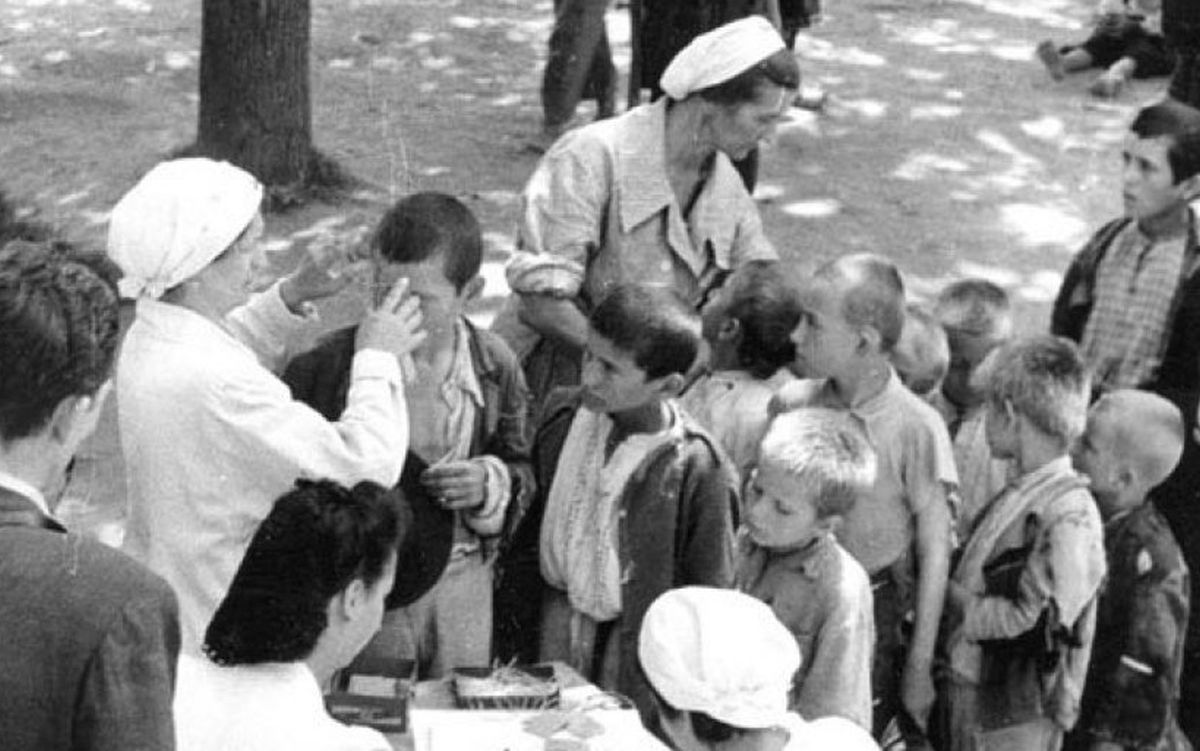
Živko Ivančević, the son of father Ljuboj and mother Smilja, a Serb from Croatia, was separated from his parents as a five-year-old and sent to the children’s camp in Sisak, in the Independent State of Croatia (NDH), and from there, thanks to the “Diana Budisavljević Action,” transferred to the Zagreb Institute for Deaf-Mute Children. From there he went to a foster family. But this is not the fate of one Živko, but of two men with the same name!
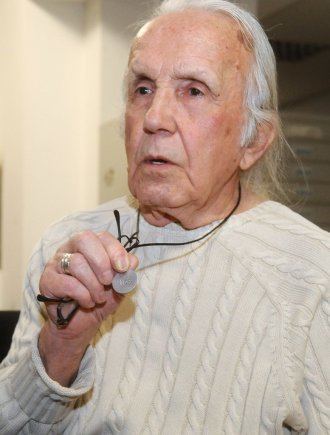
One of them was adopted by the Zelenbrz family from Zagreb, and his name and data were found on Diana’s list of children placed at the Institute for Deaf-Mute Children. The list has been kept at the Museum of Genocide Victims since last year, and Živko Zelenbrz was recently a guest in Belgrade and Novi Sad. Until recently, he knew nothing about himself, except that he was a Serbian child raised by a Zagreb family. From the period before that, he has only a metal tag with the number 1128. On Diana’s list it says that he is Živko Ivančević.

The other Živko Ivančević is 88 years old, from Lisičine, Voćin municipality, and today lives in Inđija with his wife Saveta. They have been married for 67 years. His birth certificate from Voćin states that he was born on August 28, 1936, to father Ljubomir and mother Smilja, so only recently, when his birth certificate arrived, did he learn that his father’s name was not Ljuboje. He too went through the camp in Sisak, and his mother Smilja was taken to a labor camp in Germany, while his father was killed in Jasenovac. He was also at the Institute for Deaf-Mute Children, from where he was sent to the Foruglaš family across the Drava River, to the village of Ždala. But unlike the first Živko, who remained Zelenbrz his entire life, his mother found him after the war and brought him back home, to Lisičine. There he lived and worked in the local Forestry Office until December 13, 1991, when he fled. He then lived in Tenja for six years and worked in a cooperative. After that he moved to Beška to live with his younger daughter, and then to Inđija, on the very day of the NATO bombing in 1999.
Which Živko is the real one? This one or the one from Diana’s list? Did the person who recorded the saved children make a mistake, or were there two Živko Ivančevićs whose fates were mixed up? Are they perhaps brothers or more distant relatives? All of this could be proven by a DNA analysis, which Živko from Inđija, as he confirmed to us, is ready for.
“I had a brother, Sreta, who died at the age of three, before the war. I don’t know that I had other brothers, but I would like to meet that Živko. I am also ready to give blood for analysis, if it will prove that my mother is really my mother, or perhaps to see whether that Živko and I are related,” says Živko from Inđija.
His life story is also film-like. At the beginning of the war, they fled from the Ustaše from Lisičine and reached the village of Nova Krivaja, where they were captured. They were transferred to Okučani, then to Stara Gradiška, where both of his grandmothers were killed, and further to Sisak, where he was separated from his mother and sent to Zagreb.
“I was very ill with typhus, so I did not immediately go to a family in Zagorje, like the others from my group. I waited for the children from Bosnia and was transferred with them to the village of Ždala. Pavelić’s wife was from there. I lived there for four years with Ivan and Maruša Forgulaš, until 1946. I went to school. I kept my name and surname, but they took me to the Catholic church, and I threw flowers at Pavelić at school. Those people took wonderful care of me, and when my mother came back from the camp, I didn’t want to go with her at first. To be honest, I didn’t even recognize my mother. I only know that she cried when she saw me. We had to get used to each other again. These other parents of mine from Ždala helped us. They sent piglets and flour, visited me. They offered to be godparents when I got married. They came to the wedding when my older daughter got married, and I went to a wedding of their granddaughter, in Zagreb,” Živko recounts.
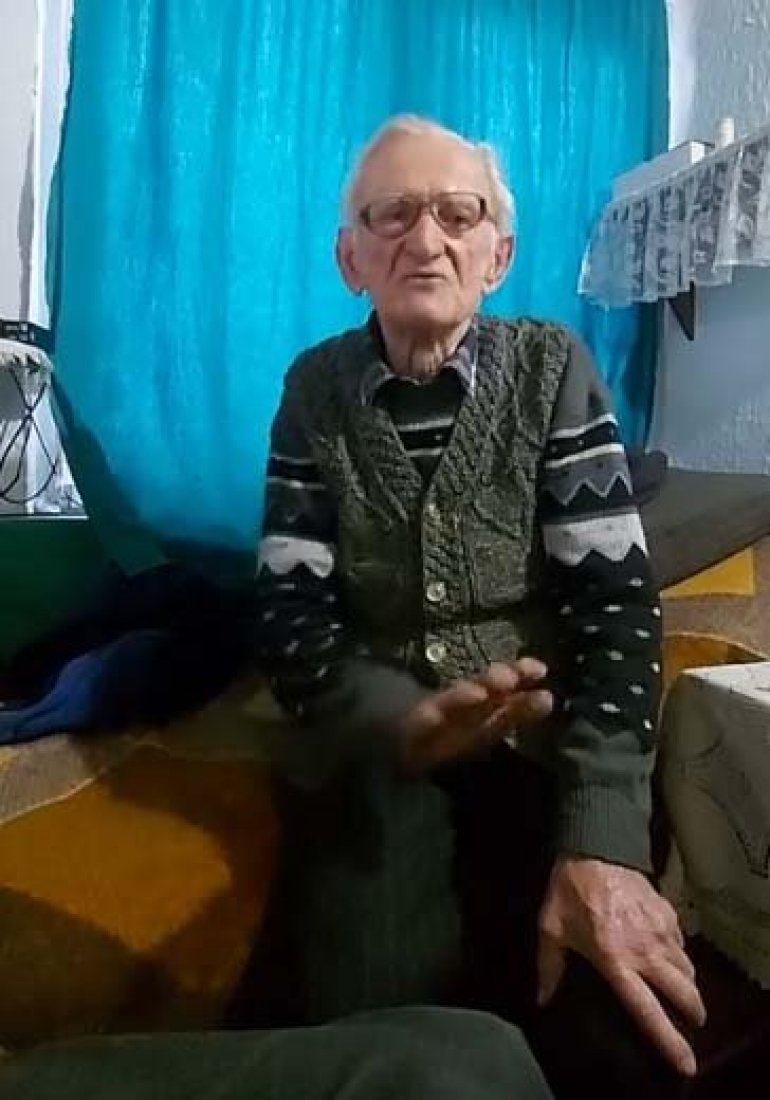
He still remembers that he and his mother lived in great poverty after the war, that they were often hungry, and that his mother was arrested because she did not want to join a cooperative. Recently, he visited her grave in Lisičine with his daughters.
“The trip exhausted me, it’s far away, I think that was my last visit,” says Živko.
According to Jasmina Tutunović Trifunov from the Museum of Genocide Victims, employees are currently checking available documents to see whether another child with the same name, surname, and parents’ personal data as Živko Ivančević, who according to the papers was adopted by the Zelenbrz family, was recorded.
“It happened that during the copying of various records, errors unintentionally crept in, which still happens today in all databases, especially in wartime circumstances,” our interlocutor says. “We have already had cases where two children had identical names and surnames, even though they came from different families. That is why it is necessary to carefully check the data, since in the end it always turns out that some detail differs.”
There were also examples where one child died and another, with exactly the same name, survived. There were also cases where a person had a twin they did not know about, who was killed or died in the war, and only learned about a brother or sister when they began searching for records. This happened especially with very young children, those born while fleeing or in camps.
A collection that might help the Museum of Genocide Victims determine the fate of both Živkos is the personal archive of Dragoje Lukić. For three full decades, he dealt with the suffering of children and helped survivors find family members. Lukić himself, as a war child who survived a camp, searched for his brothers and sisters.
If, however, data in the archives cannot be found, Živko from Inđija is ready to meet Živko from Zagreb and determine through personal experience whether life truly writes novels.
ŠTRBAC FIRST MET ŽIVKO
Savo Štrbac from the Documentation and Information Center “Veritas,” who first made contact with Živko from Inđija, says that both Živkos survived enormous horrors and were fortunate to be taken in and cared for by normal people in abnormal times:
“I believe that Živko Ivančević from Inđija is the ‘real’ one, because he has carried that name his entire life. He never had a number. That, however, does not diminish the importance of Diana’s list, and I hope that the full truth about the origin of both Živkos will be established.”
FIND OUT MORE:
LATEST NEWS: Four Serbs Among the Injured in Crans-Montana Fire; Stefan (31) Still Missing! (VIDEO)
Source: Novosti Foto: Privatna arhiva; Igor Marinković; Printscreen “Veritas”