



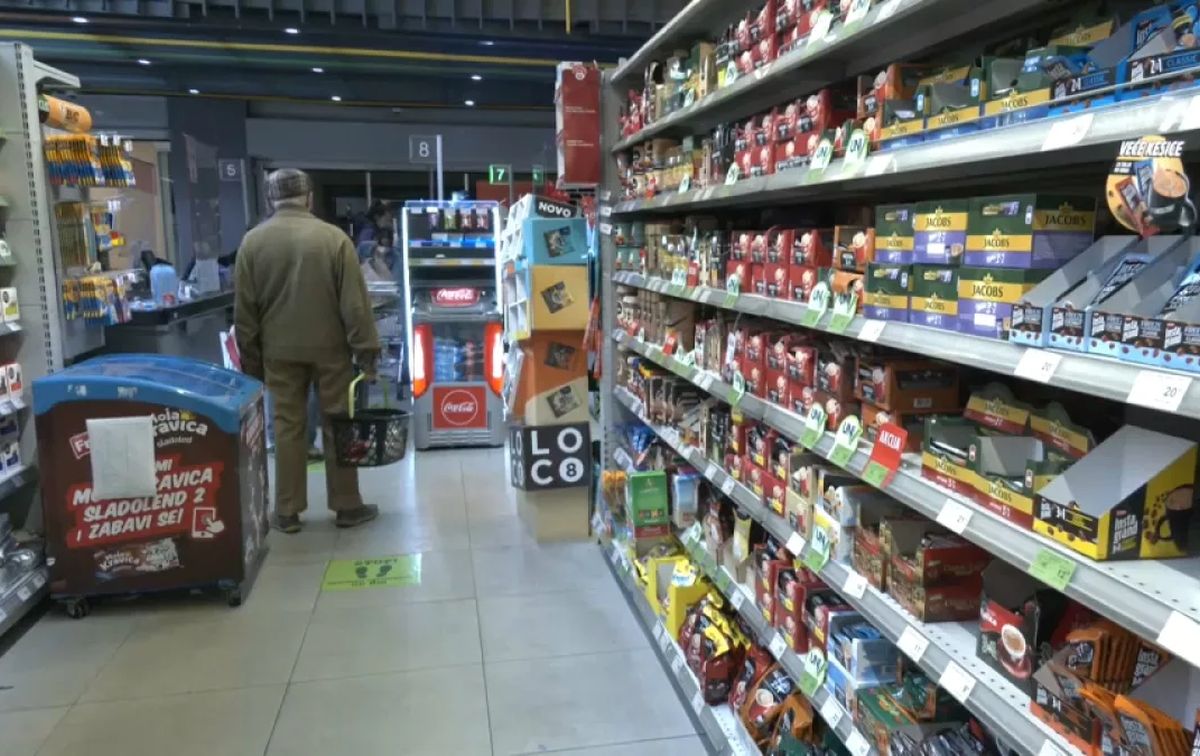
With the latest amendments to the Regulation on Margin Limits, supplier prices have been unfrozen, meaning they can now be freely set. Minister of Trade Jagoda Lazarević stated that there is now room for prices to be lowered, but experts are far less optimistic. They argue that now, with suppliers able to freely set prices and the regulation expiring, price increases are the only likely outcome, writes Nova ekonomija.
At the end of January, the government amended the Regulation on Special Conditions for Trade for Certain Types of Goods for the fifth time, also known as the Regulation on Margin Limits. The latest amendments removed the clause freezing supplier invoice prices.
Previously, the regulation restricted suppliers from raising invoice prices above the level set on August 1 of the previous year, meaning prices could not increase, though they could fall as there was no minimum price limit.
Minister Lazarević stated that manufacturers now have the opportunity to lower product prices due to the unfreezing of prices, and emphasized the need for systemic solutions.
However, experts consider this statement illogical, saying that if anything happens to prices, it will certainly not be a decrease.
READ MORE:
NO VUČIĆ’S CHEAP CONSUMER BASKET: Government Unfreezes Margins, Price Hikes Expected for Basic Food Items!
With the latest amendments to the Regulation on Margin Limits, supplier prices have been unfrozen, meaning they can now be freely set. Minister of Trade Jagoda Lazarević stated that there is now room for prices to be lowered, but experts are far less optimistic. They argue that now, with suppliers able to freely set prices and the regulation expiring, price increases are the only likely outcome, writes Nova ekonomija.
At the end of January, the government amended the Regulation on Special Conditions for Trade for Certain Types of Goods for the fifth time, also known as the Regulation on Margin Limits. The latest amendments removed the clause freezing supplier invoice prices.
Previously, the regulation restricted suppliers from raising invoice prices above the level set on August 1 of the previous year, meaning prices could not increase, though they could fall as there was no minimum price limit.
Minister Lazarević stated that manufacturers now have the opportunity to lower product prices due to the unfreezing of prices, and emphasized the need for systemic solutions.
However, experts consider this statement illogical, saying that if anything happens to prices, it will certainly not be a decrease.
No Conditions for Price Reductions
Dragovan Milićević, economist and former State Secretary in the Ministry of Trade, told Nova ekonomija that whether prices are lowered depends solely on suppliers’ goodwill, but he believes such a scenario is unlikely.
“Suppliers could already lower prices since the regulation only capped maximum prices. Now this will not happen, mainly because the regulation ‘caught them off guard.’ Additionally, of the three main cost inputs—raw materials, energy, and labor—two have increased,” Milićević explained.
He added that industrial prices rose in October of the previous year, and the minimum wage was also increased, meaning higher costs leave little room for price reductions.
“Chain Reactions Expected”
“There will be chain reactions. When electricity prices rose, that could not be passed to consumer prices because they were frozen, but now manufacturers will take advantage of this. With two recent increases in the minimum wage over a few months, it would be nice if suppliers lowered prices, but conditions for that don’t exist,” Milićević concluded.
Vasko Kelić, research associate at the Institute of Social Sciences, also doubts that prices will fall following the regulation change.
“Perhaps the minister referred to the upcoming law on unfair trade practices, which could slightly influence price reductions, but not significantly,” Kelić said. He expects price increases between the regulation’s expiration on March 1 and the enactment of the new law, despite the minister claiming no such space would exist.
He noted that while retail chains, particularly Delhaize, have reduced costs by closing stores and laying off workers, dramatic price hikes are unlikely. Any increase would primarily compensate for reduced profits.
Citizens Haven’t Felt Promised Reductions
Kelić also pointed out that although some prices fell due to the regulation, citizens did not see the significant reductions promised by the government. For reference, President Aleksandar Vučić had claimed price reductions could be up to 20%, which did not materialize in practice.
According to the Republic Statistical Office, in December 2025, food and non-alcoholic beverage prices were 0.5% lower than the previous month, while annual inflation in December was 2.7%. For the entire year 2025, consumer prices increased by 3.8% compared to 2024.
MORE TOPICS:
MILOŠ ENTERED MUSICAL HISTORY: Producer from Belgrade won two Grammy awards!
SERB ARRESTED IN ITALY: He robbed more than 20 ATMs across the country with explosives!
Source: N1, Foto: Euronews