




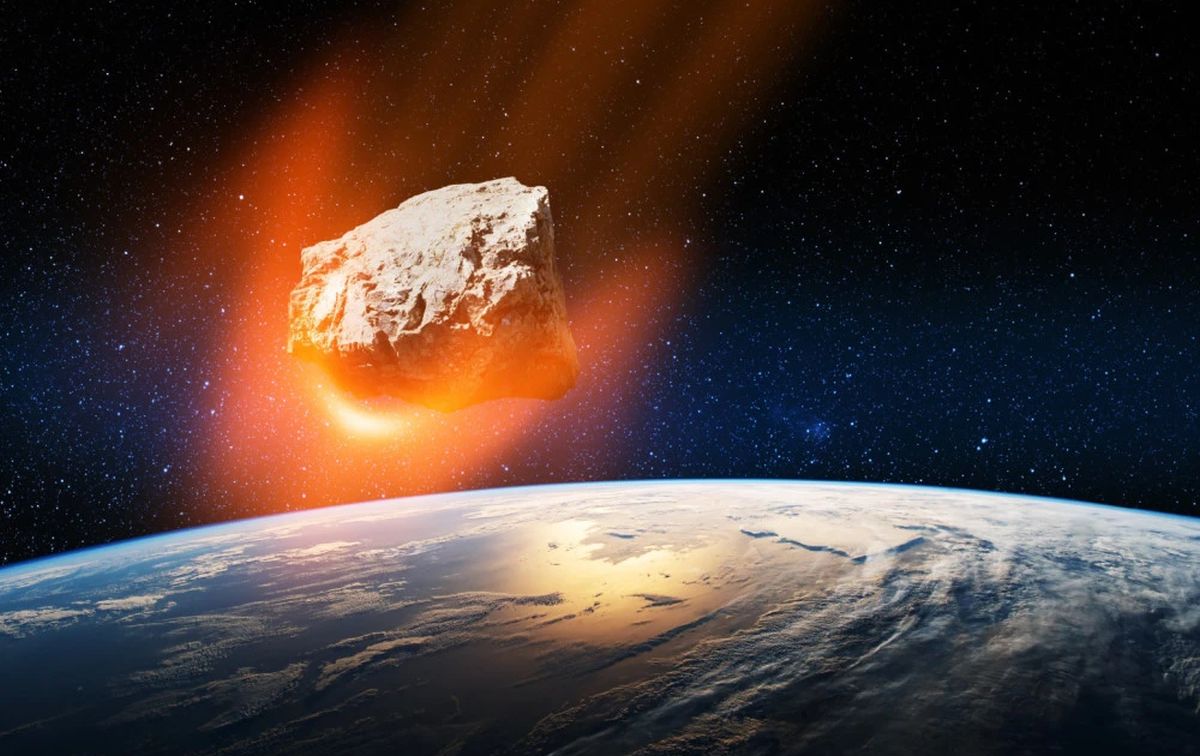
The American NASA and the European Space Agency (ESA) are actively tracking the movement of asteroid YR4, dubbed the “city killer,” after assessing that the chances of it hitting Earth have doubled.
Scientists revealed that the probability has increased from 1.2% to 2.2%, while the International Astronomical Union (IAU) has classified the asteroid as “level 3” on the Torino Scale of danger, making it the only one above level zero.
It is estimated that YR4 would release energy equivalent to several million tons of TNT, making the impact 150 times more powerful than the atomic bomb dropped on Hiroshima, reports Telegraf.
Although these calculations seem alarming, astronomer and professor of planetary science Richard Binzel from the Massachusetts Institute of Technology believes there is no cause for concern.
“We can expect the probability percentage to fluctuate. This is simply how scientific data measurements unfold,” he said.
Other experts emphasize that a 2.3% chance of impact also means a 97.9% chance that YR4 will completely miss Earth.
While sophisticated technology closely monitors the movement of this dangerous asteroid, NASA engineer David Rankin from the Catalina Sky Survey Project has presented a projection of potentially affected areas.
If YR4 does not miss our planet, it would be in a zone stretching from northern South America across the Pacific Ocean to Africa, the Arabian Sea, and South Asia.
In other words, countries potentially at risk include Colombia, Venezuela, and Ecuador, as well as Nigeria, Sudan, and Ethiopia, extending to Pakistan, India, and Bangladesh, reports Yahoo.com.
READ MORE:
NASA explains that continuous observations of the asteroid’s orbit will improve understanding of its “impact probability.” There is also a possibility that YR4 will be removed from the list of dangerous asteroids, as has happened with other “space rocks” in the past.
When the asteroid approaches us in 2032, it will be about 106,000 kilometers from Earth, providing ample space to avoid the worst-case scenario, experts highlight.
YR4 is estimated to be up to 90 meters wide. Such “space rocks” hit our planet approximately once every few thousand years, causing significant damage, but not devastation on the scale of the dinosaur era, the report concludes.
MORE TOPICS:
SERB (88) KILLS HIS WIFE IN FLORIDA: Suspect tried to disguise death as suicide! (VIDEO)
Source: B92, Foto: Shutterstock