




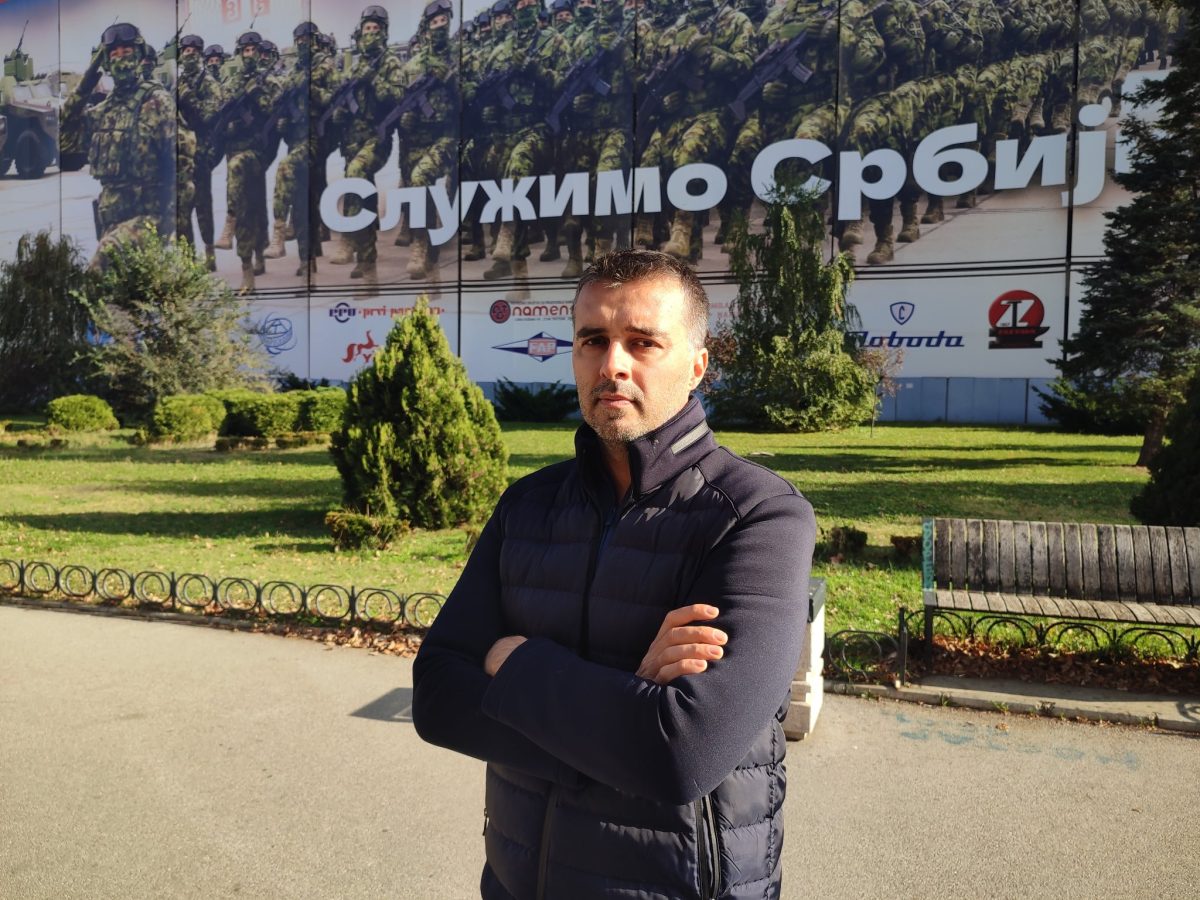
Over the past few years, through his activism in the Kreni-Promeni movement and his public appearances, Savo Manojlović has established himself as one of the leaders of that Serbia which does not think like the ruling regime. It began with environmental protests against lithium mining by the company Rio Tinto, and later he led demonstrations against proposed amendments to the Law on Referendum and the Law on Expropriation.
Manojlović was detained by police at the end of 2024 during protests against the demolition of the Old Sava Bridge, and in the past two years he has often been the target of attacks, both verbal and physical. Recently his family has also been targeted, first when he was physically attacked while driving the family car, and recently his child was also denied medical treatment…
Some time ago the spokesperson of Kreni-Promeni informed the public that a doctor at a Health Center refused to treat your child and cited as the reason the fact that you revealed the identity of police officers who beat students… Tell us something more specific about this case?
—I think the news you mentioned speaks for itself. My late mother was a doctor. I grew up being raised by her to believe that a doctor treats everyone regardless of religion, race, nation or political affiliation. I was raised to believe that a doctor is bound by the words of the Hippocratic Oath:
“At the moment when I join the members of the medical profession I solemnly promise that I will place my life in the service of humanity (…) that I will perform my profession conscientiously and with dignity and that the greatest concern will be the health of my patient (…) In performing my duties toward the patient I will not be influenced by considerations of religion, nationality, race, political or class affiliation. (…) I promise this solemnly and freely, calling upon my honor.”
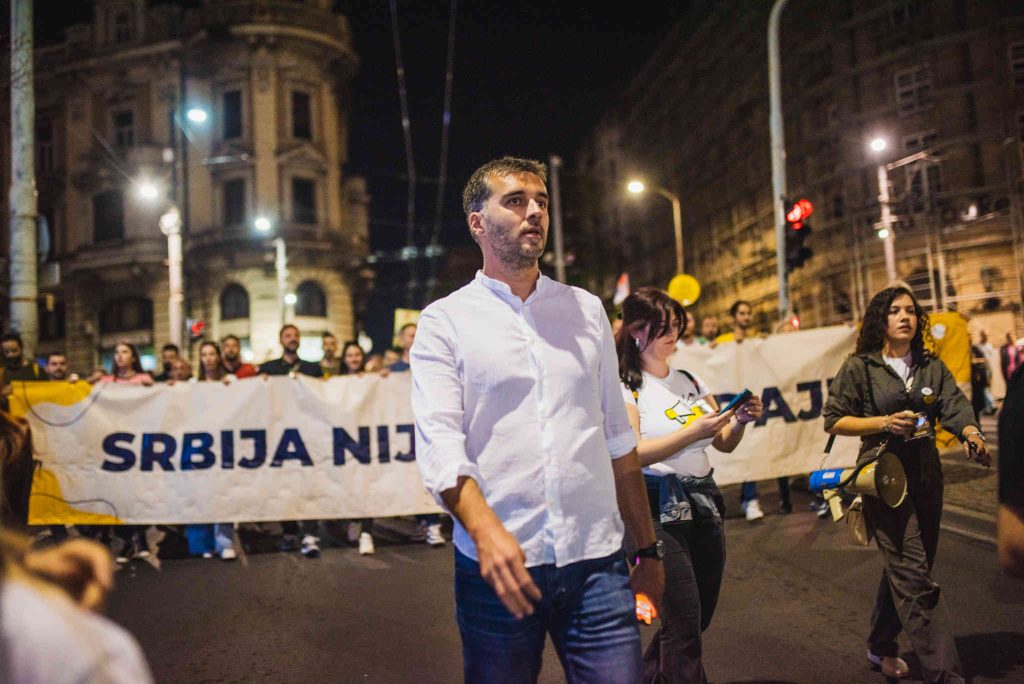
This is not the first unpleasant experience you have had. A few months ago you were attacked in your car while driving your family. At that time you carried out a citizen’s arrest of the attacker and handed him over to the police. What is the outcome of that case?
—Prosecutor Nebojša Stanković states that the attack on me, my wife and baby by SNS loyalist Strahinja Vujičić was not serious enough, because after two blows to the head and a death threat I managed to defend myself. That is literally what he wrote. On top of that the prosecutor did a very perfidious thing: instead of rejecting the criminal complaint and allowing me my legal right to appeal, he sent the matter to the misdemeanor court with an official note, thereby denying me the right to appeal. On top of that, the police initiated misdemeanor proceedings against me because I defended myself.
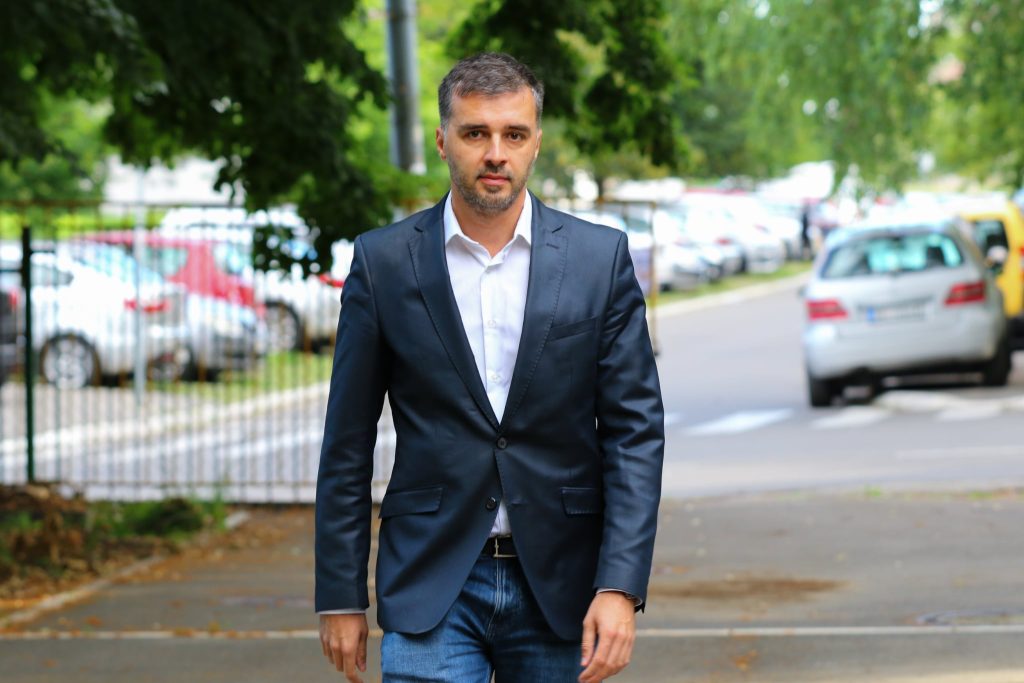
That day when I subdued the attacker and carried out a citizen’s arrest, all the police officers were correct. They pointed out that based on witness statements it was clear what had happened and that the duty prosecutor would detain him. Duty prosecutor Jelena Stojanović released him outside the law and practice, and according to information we have Dačić’s cabinet is putting pressure on police officials.
Why don’t you make that public?
—I do not want to put myself in the foreground or create a sensation. I defended myself and my family and public support means a lot to me. I would like to use the opportunity to talk about how rotten the system is and how susceptible it is to corruption and political pressure. If this is happening to me, who as a public figure has the protection of the public, as someone who with the Kreni-Promeni movement won 18% in the Belgrade elections, which is the best individual opposition result since 2008, imagine how difficult it is for ordinary citizens in this system. You know, if this is happening to me, imagine what injustices people face who do not have access to the public.
Did you prosecute the police officers who beat you on the bridge?
—Yes.
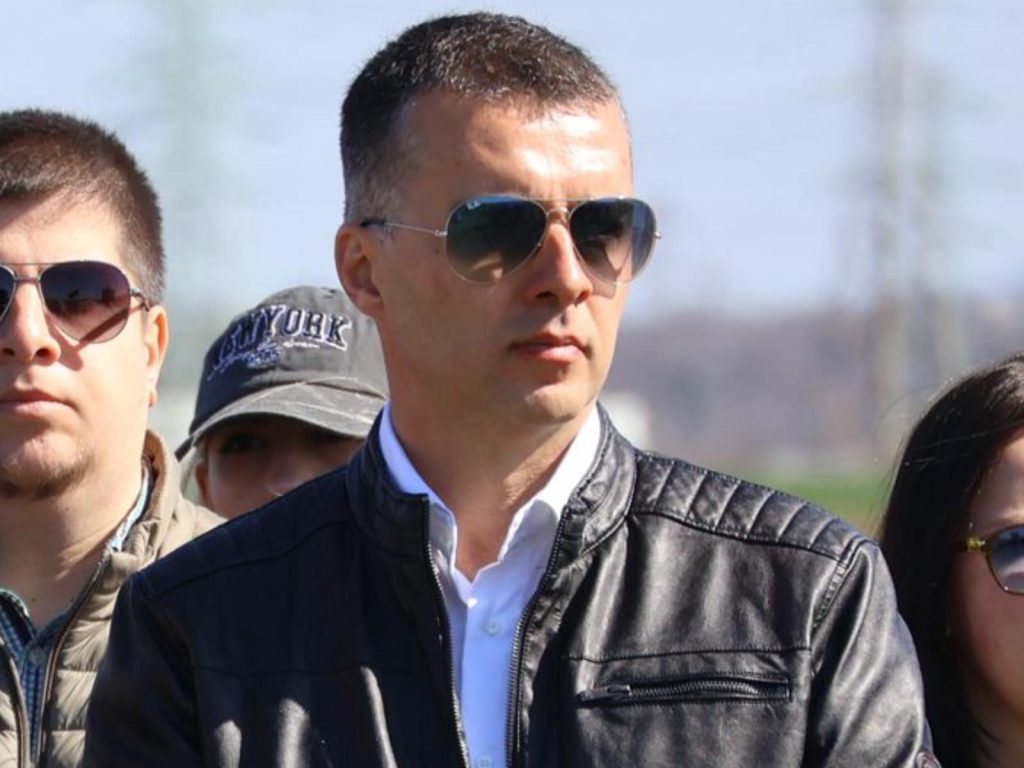
Recently you publicly complained that your members, citizens of Obrenovac employed in public institutions, are suffering pressure because of participation in protests. What is it about?
—In Obrenovac, but also throughout Serbia, in recent months there has been increased repression against people who are active participants in protests. They are being transferred to lower positions, fired, and pressure is also placed on family members. If you connect this with changes in the police, where criminalized parts of the police are being placed in key positions, and add amendments to judicial laws that prevent parts of the prosecution that had begun doing their job from working, we see that Serbia is sliding from a soft toward an open dictatorship.

In our media outlet, Serbian Times, we have several times publicly requested that the Prosecutor’s Office question Čedomir Jovanović over statements about the use of a sound cannon during the protest in Belgrade on March 15. How do you explain the fact that only a few from the opposition ranks demanded the same, when we know that President Vučić announced he would resign if it is proven that the sound cannon was used that day… Why is the opposition not playing that media opportunity?
—I personally made the same request on behalf of the Kreni-Promeni movement to the prosecutor’s office. We also submitted a petition with over half a million signatures to the UN and other international institutions. Along with the petition a request and an expert report of more than 50 pages were submitted, where we present legally what happened, factual descriptions, but also a large number of pieces of evidence. That document is based on testimony from 2,000 people. The preparation of the case was carried out by the Kreni-Promeni expert team led by Professor Slobodan Tomić, a professor at York University. We also filed a criminal complaint requesting that, among others, Vučić and Dačić be questioned.
The use of a sound cannon is a terrorist act carried out by this government against its own citizens. Society will be taken back from the hands of corrupt politicians when all people from this and previous governments are held accountable for corruption, but also for human rights violations. It is also necessary to verify the legality of their property and confiscate all illegally acquired assets.
In the first-instance procedure you won a verdict against the owner of TV Pink, Željko Mitrović. Is that encouraging news when it comes to the Serbian judiciary, are some changes nevertheless happening within it?
—We will see what happens in the second-instance procedure. But I would emphasize that you always have parts of the system that do their job. Sometimes they are less visible, sometimes people like to generalize and portray everything as bad. But we do have parts of the system that honestly do their job. Take, for example, the heroes Milenković and Mitić, two police officers who uncovered Jovanjica — a huge marijuana plantation behind which stand politicians and state security. Because of people who honestly do their job we will cleanse the police, judiciary and state structures of those who broke the law. That means criminal responsibility for all who broke the law and the verification and confiscation of illegally acquired property. Whoever respected the law has nothing to fear, whoever broke the law has nothing to hope for.
The so-called Mrdić laws are currently a topic. What do you expect from the European Commission in that case, will the EU again turn a blind eye to Vučić?
—Changes to these laws are in absolute contradiction with the concept of modern constitutionalism and European standards of the rule of law. If Europe turns a blind eye, it has betrayed its own values and that essentially means the end of Serbia’s European path. Vučić, however, amended the laws in order to change the situation on the ground. While he bargains with Europe, prosecutors who worked on cases against this government have already been transferred.
Is it possible that no one from the EU and the European Commission read, saw or reacted to the admission of the proposer of the law, Uglješa Mrdić, that he initiated them to prevent the arrest of ministers from the SNS?
—Uglješa Mrdić’s statement is a direct admission of a coup d’état. He admitted that unconstitutional amendments were carried out so that one independent and autonomous branch of government (the judiciary) would not do its job and that those in power who broke the law would not be held accountable. The fact is, however, that representatives of the EU immediately pointed out that these were changes outside European standards of the rule of law.
In your letter to the Financial Times you said that the West must stop supporting authoritarian and corrupt regimes in the Balkans. Did you receive any feedback, at least one message from the West?
—Stabilocracy has been described as a system where Europe allows certain autocrats to violate democratic standards, but maintain a certain stability and deliver what great powers need.
—It is not a matter of sending messages. Simply, the concept of stabilocracy that Europe pushed with small corrupt Balkan leaders like Vučić, Thaçi, Milo Đukanović, Borisov and Edi Rama has failed. It turned out that there is neither stability nor democracy there. It has also been shown that an autocrat cannot fulfill everything even when he makes agreements with great powers. A good example is the stopping of the Rio Tinto project, which was a rebellion initiated by Kreni-Promeni and residents of endangered areas, joined by a huge number of citizens. It was shown that in this country, when people organize, it is the people who decide, not politicians and foreign embassies.
In your opinion, what is the reason why the EU, and the Western world in general, supports and maintains Vučić in power? What interests lie behind that?
—All great powers behaved pragmatically and Vučić suited them. The West suited him because he made concessions regarding Kosovo and promised Rio Tinto. He allowed the Chinese to violate environmental standards in eastern Serbia. He himself said on RTS: they come here because it is easier — in China they must respect environmental standards, here they do not have to.
From the Russians he does not dare to demand respect for the NIS contract, according to which before offering NIS to another company they must offer it to Serbia at the same price.
—A serious state respects other countries, understands their interests, does not overestimate itself in relations with great powers, but does not underestimate itself either. I understand the interests of all the great powers listed. But the interest of the Republic of Serbia, the Serbian people and all its citizens is that we have democratic institutions and a system that punishes corruption, that we protect our people in Kosovo and Metohija, that foreign companies — whether they come from Britain, Germany, the United States or China — respect environmental standards and laws in Serbia as they respect them in their own countries. I also understand Russia’s position and perhaps it suits them to sell NIS to the Hungarians, but Serbia’s interest is to regain ownership of this company and invoke the contractually guaranteed right of first refusal and buy back the company at a fair price, respecting others’ interests but also our own.
Ana Brnabić has called early elections in 9 municipalities. Do you think there are regular electoral conditions under which students and the opposition should participate in them, bearing in mind that the previous local elections were marked by many irregularities?
—A dictator will never give you free elections. If he gave free elections, he would no longer be a dictator. This regime must be fought in every way — both institutionally and outside institutions. The last local elections in places under government control show a huge drop in this government’s popularity. At this moment this government, even with all the theft, cannot win elections. What is the key proof for this claim? That this government always called early elections and said it would call them whenever someone asked, and now for the first time it refuses to do so. These are municipalities under strong government control. If the trend of declining popularity continues there, that is a clear indication that this government does not have majority support.
In your opinion, what is the best solution for parliamentary elections and the winning formula for changing the regime: students running independently with opposition support, a coalition of students and opposition, or two or three columns with students and a fragmented opposition?
—Kreni-Promeni has clearly stated its position. Despite the fact that in the last local elections we won the most votes, that in Belgrade we recorded the best individual opposition result since 2008, and in Novi Sad since 2012, we are ready to support a student list. It is like playing for the national team. If your goal is a medal, you do not look at who will score how many points — you pass the ball to the one who is in the better position to score the winning basket.
Vučić recently mentioned in Zaječar that elections could be in a month or two. Do you think it is a bluff and when do you expect he might actually call them?
—When you have no policy and no solutions, you create a sensation, like Vučić, around stories about whether elections will be in two, four or five months. In doing so he actually avoids talking about the topics and problems into which he has plunged the country. I am interested in why he does not respond to Trump’s accusations that the President of the United States prevented some kind of conflict between Serbia and the so-called Kosovo. Was that a pre-arranged war between Vučić and Kurti like the one in Banjska? Where did he and his ministers, who outside politics had no real jobs, get millions, villas and jeeps? Where did they get the money to educate their children abroad?
How do you think Vučić will solve the “constitutional problem” that he can no longer run for president: will he appear as the head of the list and candidate for prime minister and how will he solve the second problem — timing, that is, how will he bridge the time gap between presidential and parliamentary elections?
—He can run, combine and separate elections wherever and however he wants. If he could win elections, he would have already called them as the students have been demanding for almost a year. His only chance is to provoke some conflict between those who oppose him or to nominate some fake opposition lists in order to prevent the collapse. He no longer has a majority.
Vučić recently mentioned in Zaječar that elections could be in a month or two. Do you think it is a bluff and when do you expect he might actually call them?
—When you have no policy and no solutions, you create a sensation, like Vučić, around stories about whether elections will be in two, four or five months. In doing so he actually avoids talking about the topics and problems into which he has plunged the country. I am interested in why he does not respond to Trump’s accusations that the President of the United States prevented some kind of conflict between Serbia and the so-called Kosovo. Was that a pre-arranged war between Vučić and Kurti like the one in Banjska? Where did he and his ministers, who outside politics had no real jobs, get millions, villas and jeeps? Where did they get the money to educate their children abroad?
How do you think Vučić will solve the “constitutional problem” that he can no longer run for president: will he appear as the head of the list and candidate for prime minister and how will he solve the second problem — timing, that is, how will he bridge the time gap between presidential and parliamentary elections?
—He can run, combine and separate elections wherever and however he wants. If he could win elections, he would have already called them as the students have been demanding for almost a year. His only chance is to provoke some conflict between those who oppose him or to nominate some fake opposition lists in order to prevent the collapse. He no longer has a majority.
You previously stated that Kreni-Promeni would not comment on relations within the opposition or on the so-called fake opposition. Nevertheless, answer my question: how much influence and support does that fake opposition have and how much can it affect the result of future elections?
– By who comments on whom and who deals with whom, you can see what someone’s goal is and who their opponent is. My opponent is the corrupt government that has occupied the institutions of the Republic of Serbia. I would not spend energy and lose focus on other actors.
MORE TOPICS:
Source: Antonije KOvačević Foto: Privatna arhiva