




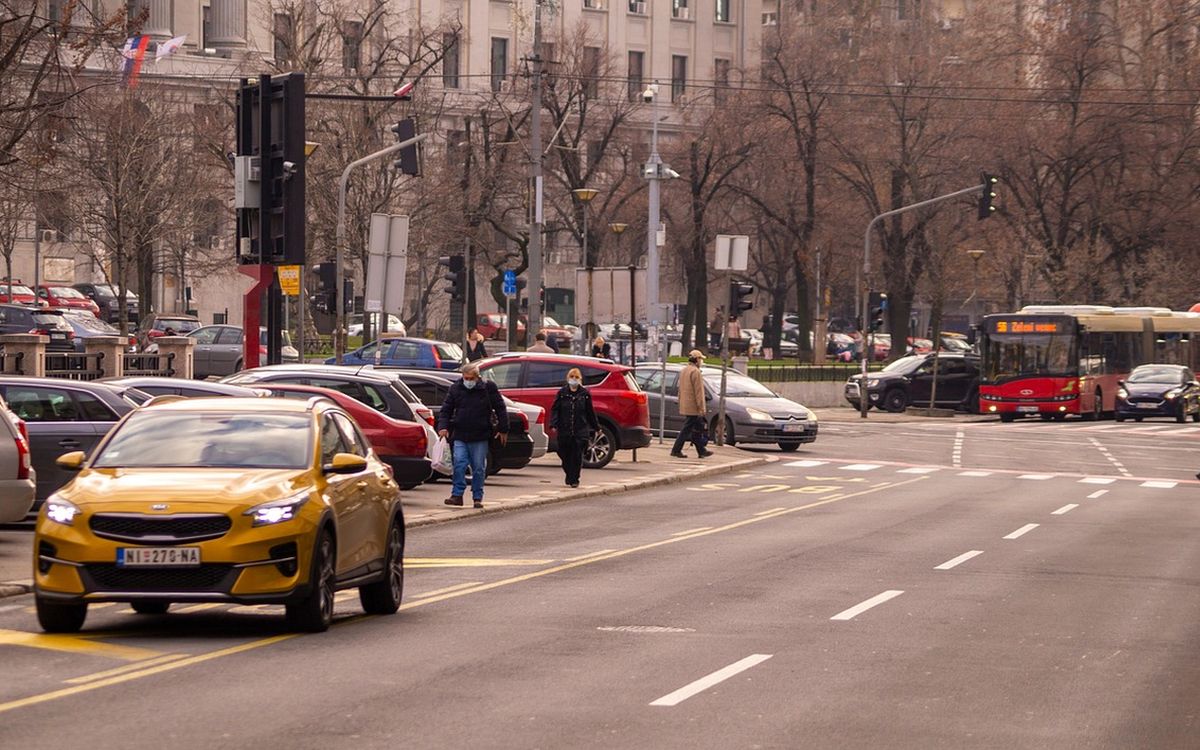
The Traffic Safety Agency estimates that Serbia currently lacks as many as 10,000 professional drivers. As a result, the age limit for obtaining licenses has been lowered, and foreign drivers are increasingly being hired. In the past two days, two serious accidents in Belgrade involved public transportation vehicles. But what kind of training and inspections do those transporting passengers in the capital undergo?
Drivers in High Demand
Needed and sought after like gold—professional drivers. According to licensing data, Serbia has 175,000 licensed truck and bus drivers, yet the Traffic Safety Agency estimates a shortfall of around 10,000.
“I renewed my B category license, but I lost my D license, so now I have to get it back. Anyway, that’s it for me—42 years in GSP and another two years with a private company,” an urban bus driver on Line 31 was heard saying, likely to a colleague.
FIND OUT MORE IN ENGLISH:
Lowering the Age Limit and Training Requirements
One-third of professional drivers are over 55 years old, reinforcing the aging workforce issue. To combat the shortage, Serbia has lowered the minimum age requirements—trucks can now be driven at 18, and buses at 21, with enhanced training requirements.
“They must complete 130 hours of theoretical training and a minimum of ten hours of practical training. After that, they take an exam, and upon passing, they receive a professional driver’s license,” explains Slobodan Karličić from the Traffic Safety Agency.
The job market is relentless. Serbian drivers are leaving, while foreign drivers are arriving, attracted by higher wages and better working conditions. Foreign drivers automatically receive Serbian licenses if they obtained their professional permits before 2020.
“If they acquired their C or D category license after 2020, they must undergo the same training requirements as our local drivers,” Karličić clarifies.
Serbia Needs 5,000 New Drivers Each Year
Without passenger and freight transport, economic progress is impossible. According to Serbijatransport, Serbia needs 5,000 new drivers annually. The association advocates for lower training and licensing costs.
“We propose that young people under 30 be provided with free or subsidized training for professional C and D category licenses through driving schools and professional training centers, similar to how it was done in secondary transport schools or the military in the past,” says Goran Aleksić, General Director of the Serbijatransport Association.
Safety Comes First—At Any Cost
“Nothing is too expensive when it comes to road safety. Every driver must complete the necessary training programs,” Karličić emphasizes.
The association has also reached an agreement with the Ministry of Finance, which has now legally approved a fuel excise tax reduction of 34.56 dinars per liter for all transport companies, effective July 1.
“This is an excellent incentive for higher-quality operations, better service, improved business conditions, newer vehicles, and attracting young drivers,” says Aleksić.
These are not insignificant funds, and they could help transport company owners support drivers in obtaining their licenses.
Meanwhile, transport companies are calling for the elimination of unfair competition, such as unauthorized minivan tours and ride-hailing services operating outside of regulations.
READ MORE:
A MAJOR VICTORY FOR TRUMP: Google Maps Renames Gulf of Mexico to Gulf of America!
TUCKER CARLSON SHOCKS EVERYONE: America tried to assassinate Putin during Biden administration!
Source: RTS, Foto: Pixabay