




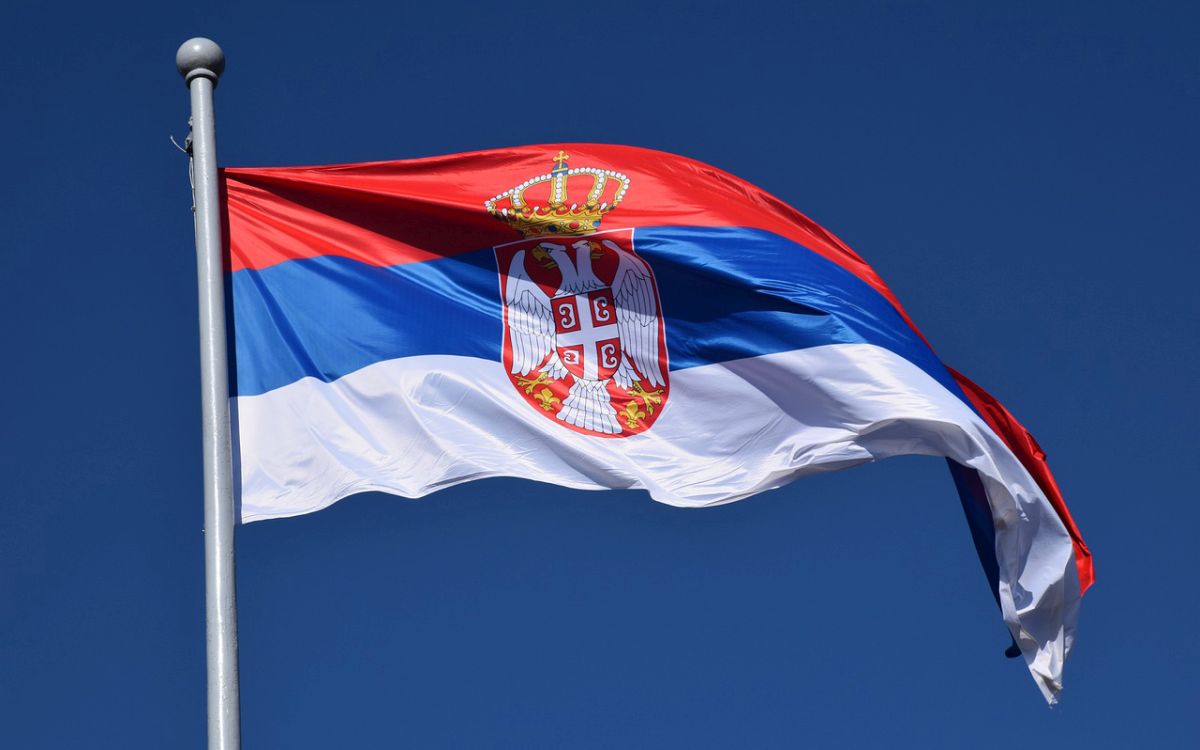
In Serbia, as well as in the Republic of Srpska, the Day of Serbian Unity, Freedom and the National Flag is celebrated today in memory of September 15, 1918, when the Serbian army broke through the Salonica Front, which led to the collapse of the Central Powers alliance and the end of the First World War.
Vučić: May this day inspire us to preserve unity
The President of Serbia, Aleksandar Vučić, told the citizens that today we proudly celebrate the Day of Serbian Unity, Freedom and the National Flag, which reminds us of what connects us.
“Today we proudly celebrate the day that reminds us of what connects us – unity, freedom and our tricolor. Our flag is a symbol of memory, tradition and the future we are building together,” said Vučić, congratulating the citizens on the holiday, in a post on Instagram.
May this day inspire us to preserve unity, be proud of our roots and pass on the values of freedom and unity to the generations to come, Vučić emphasized. One flag, the president said in the post.
As a sign of special respect for the heroic ancestors who defeated the enemies in 1918 and fought for the magnificent victory of the Serbs in the First World War, the Government of Serbia made a decision on September 11, 2020, that from now on the day of the breakthrough of the Salonica Front, September 15, will be celebrated as the Day of Serbian Unity, Freedom and the National Flag. The Government of the Republic of Srpska made the same decision.
The collapse of the fronts of the Central Powers, which was caused by the Serbian breakthrough of the Salonica Front, led to the end of the First World War, the most devastating the world had seen until then, that is, the capitulation of first Bulgaria and Turkey, then Austria-Hungary and Germany.
The victory in the First World War, the breakthrough of the Salonica Front, the end of the World War and the formation of the Kingdom of Serbs, Croats and Slovenes, is one of the greatest successes in the entire history of the Serbs.
After liberating the area of the Kingdom of Serbia and Belgrade, the Serbian army immediately continued the liberation of their compatriots, the Serbs of the then Austria-Hungary, and then other South Slavic peoples, thus achieving the previously officially proclaimed goal of liberation and unification, and a new common state, the Kingdom of Serbs, Croats and Slovenes, was formed, that is, from 1929 the Kingdom of Yugoslavia.
With superhuman efforts, the Serbs broke through the Salonica Front by crushing the Bulgarian-German forces that held that part of the battle line.
Artillery action of nine hours preceded the breakthrough
The breakthrough was preceded by a massive artillery action, which lasted for nine hours continuously. Approximately 2,000 long-range barrels were in action. The fire of tremendous destructive power lasted until the start of the breakthrough on September 15 at 5:30 am. At the same time, the gradual advance of the Serbian soldiers towards the enemy’s positions was underway. It was a painstaking climb to the peaks where the Bulgarians, Germans and Austro-Hungarians were entrenched. Then followed the charge, the breakthrough, with fierce blows from the soldiers who had spent the previous hours pressed against the mountain slopes, while the artillery was hitting the enemies over them, preparing the breakthrough.
Then, after the Serbian advance continued at high speed, to the astonishment of not only the enemy but also the allies, the weakest link in the chain of the Central Powers fell apart.
Finally, Bulgaria, after its entire armies surrendered to the Serbs, capitulated on September 29.
Austria-Hungary capitulated, after Turkey, on November 3. The signing of the armistice with Germany, on the Western Front, on November 11, marked the end of the First World War.
A valid illustration of the state of mind in those days is certainly the address of the German Emperor Wilhelm to the Bulgarian monarch Ferdinand, in which it was stated that it was shameful that, as he put it, 60,000 Serbs decided the outcome of the war.
The Salonica Front, by the way, included Serbian, French, British and Italian troops, with some Greeks, as well as Russians, until the last months of 1917, who rebelled after the revolutionary events in Russia that year, so that formation was disbanded. The most numerous were the French, a significant part of the troops from the colonies.
On the other hand, on the opposite side of the front, German, Bulgarian and Austro-Hungarian troops were entrenched, with the Bulgarians being the most numerous.
The Salonica Front was established after the failure of the Gallipoli operation
The Salonica Front was established after the failure of the Gallipoli operation. It was an attempt by the British to occupy the peninsula that controls the Dardanelles, which would open the way to Constantinople. However, with some help from the Germans, the Turks successfully repelled the invading British troops at Gallipoli. Here too, the majority of the British contingent was made up of troops from the colonies, mainly from Australia and India.
Then, with the landing of two French and one British division in Salonica in October 1915, the formation of a new front in the hinterland of that city began.
The Serbs, who until then were recovering in Corfu, from March to mid-May 1916 after the tragic retreat through the mountain passes from Kosovo and Metohija towards the Adriatic, in the winter of 1915/1916, were also transferred to the hinterland of Salonica. As far as is known, there were 6,025 officers and 124,190 soldiers.
The Salonica Front, with a total length of about 600 kilometers, also called the Balkan, Macedonian or Southern, included the stretch from the Adriatic-Ionian coast, a little north of Vlorë, to the east to Dedeagac on the Aegean coast, today’s Alexandroupolis.
First victories on the Salonica Front
The Serbs on the Salonica Front achieved their first serious victories in September 1916 by occupying Kajmakčalan, thus liberating the first feet of the enslaved homeland, and then by liberating Bitola in November 1916.
One of the consequences of the Battle of Kajmakčalan was the disbandment of the Third Serbian Army on March 28, 1917, due to tremendous losses. The rest of the personnel were then reassigned to the First and Second Armies.
In June 1918, Franchet d’Espèrey, the commander-in-chief of the Allied forces on the Salonica Front, during a meeting with Regent Aleksandar Karađorđević and Serbian generals, agreed on a large offensive that took place in mid-September 1918.
The breakthrough was carried out in the sector Dobro Polje – Veternik – Kozjak, where the Serbs were located, who were assigned the main thrust during the breakthrough. The First and Second Serbian Armies, i.e., six infantry and one cavalry division, were reinforced with two French infantry divisions.
The First Serbian Army was commanded by General Petar Bojović, the Second, by Duke Stepa Stepanović. The commander of the Staff was Duke Živojin Mišić.
Volunteers in the Serbian army the most combat-ready element
At that time, there were up to 140,000 Serbs on the Salonica Front, of which approximately 25,000 were volunteers, almost exclusively Serbs from the areas of Austria-Hungary, partly from captivity from Russia, and partly from America. In the final phase of the war, according to contemporary testimonies, the volunteers were the most combat-ready element of the Serbian army.
The breakthrough was achieved from September 15 to 17, 1918, on the front of two Bulgarian divisions. The original intention of the Allied command, the military goal, was to take control of the Vardar valley. However, the fierce advance of the Serbs changed everything. Thus, instead of the original, limited goals, a fierce advance to the north followed.
After Belgrade was liberated on November 1, the further advance of the Serbian army followed, primarily with the aim of liberating Vojvodina, and then to the west, towards the Karawanks, Rijeka, Dalmatia, Prekmurje.
The title of Duke, for successful leadership of the breakthrough and offensive, was given to General Petar Bojović.
Unification of the unliberated regions with Serbia
The culmination of the Serbian victories were the decisions of the Serbs from the previously unliberated regions to unite with Serbia. Vojvodina declared its unification with the Kingdom of Serbia on November 25, 1918, with Syrmia making the same decision at the Assembly in Ruma a day earlier. Montenegro declared its unification on November 26.
On December 1, 1918, Regent Aleksandar Karađorđević in the Krsmanović palace on Terazije in Belgrade, proclaimed the creation of the Kingdom of Serbs, Croats and Slovenes, thus achieving the unification that generations had aspired to.
This year, the Day of Serbian Unity, Freedom and the National Flag, that is, the anniversary of the heroic breakthrough of the Salonica Front, is also being marked with a large military parade “Strength of Unity” on September 20 in Belgrade.
The central event in Gadžin Han
Serbia and the Republic of Srpska are celebrating the Day of Serbian Unity, Freedom and the National Flag today. The central event will be held in Gadžin Han, near Niš. On the occasion of September 15, 1918, when the Serbian army broke through the Salonica Front, a large number of events, a parliamentary forum, as well as a joint session of the Governments of Srpska and Serbia will be held in Belgrade over the next seven days. The celebration ends on September 20 with the military parade “Strength of Unity” in front of the “Serbia” Palace in Belgrade.
MORE TOPICS:
NATO IS CONSIDERING CLOSING THE SKY OVER UKRAINE: Russia responded fiercely, “that would mean war”!
Source: RTS; Photo: Pixabay