




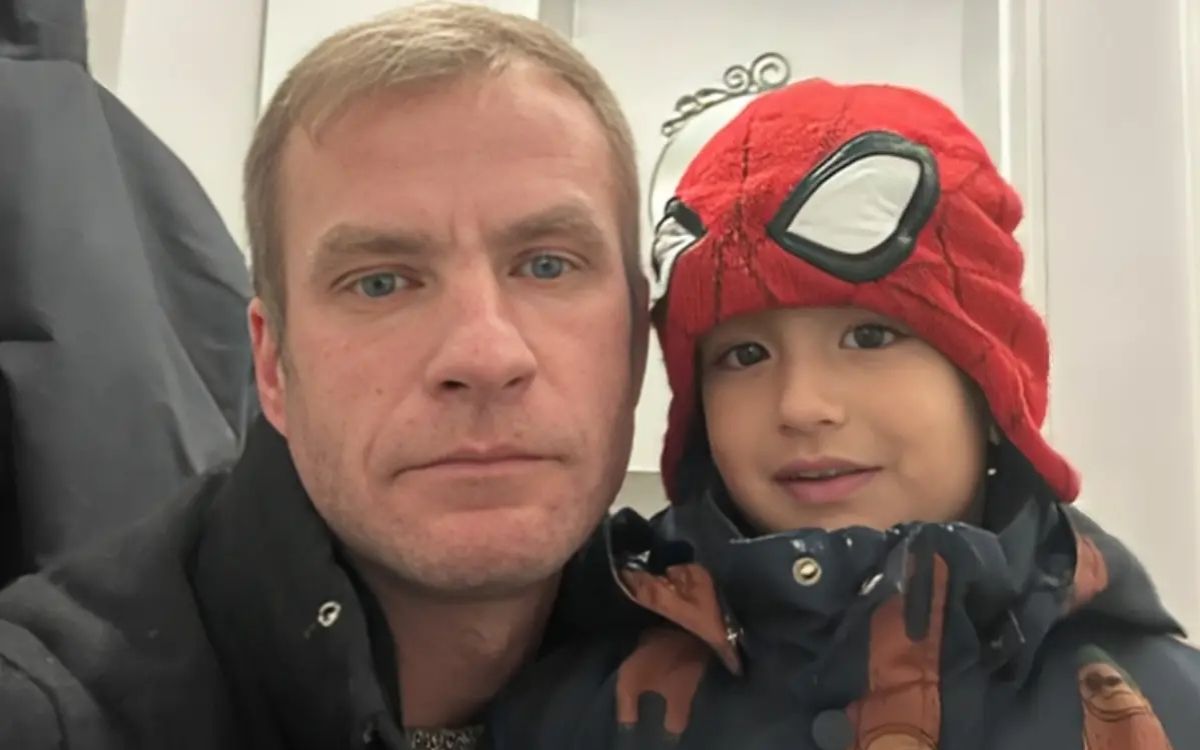
Swedish migration authorities deported four-year-old Raif Terzić, a boy with special needs born in Malmö, to Bosnia and Herzegovina. His parents and other children today have Swedish citizenship or permanent residence permits in Sweden.
Upon his birth in 2021, Raif did not automatically acquire Swedish citizenship because at that moment neither his father Haris Terzić nor his mother Nicole Eriksson had it; she arrived in Sweden as a teenager from Germany and is originally from Kosovo, reports Index.hr.
However, Haris received Swedish citizenship a few months later, while the mother already had a permanent residence permit.
In the meantime, the parents requested citizenship for Raif twice, but the Swedish Migration Agency rejected them both times.
After that, their request for Raif’s permanent residence in Sweden was also rejected.
The Migration Agency concluded that, according to their requirements, Raif should first apply for citizenship of Bosnia and Herzegovina, in accordance with his father’s citizenship at the time of his birth.
Based on that, he could apply for a residence permit or citizenship in Sweden.
In November of last year, Haris was invited to a meeting at the Migration Agency, where he was informed that Raif would be deported to Bosnia and Herzegovina, a country with which he had no prior connection.
The status of the other family members was not in question, and Raif was expected to leave Sweden alone.
“I thought we were invited to find some solution, but we found out that the decision on Raif’s deportation was final,” 42-year-old Haris told Index, adding that he then turned to the Swedish media.
Raif’s story was first published by the daily newspaper Sydsvenskan.
At that moment, in his country of birth, Raif was left without child allowance, without health care and the right to rehabilitation due to autism spectrum disorder, as well as without the right to kindergarten.
Namely, Raif is only four years old, does not speak, is not independent in anything, and still uses diapers.
Haris and Nicole realized they had no choice but to actually request Bosnian-Herzegovinian citizenship for Raif.
His mother Nicole wrote on Facebook that representatives of the Migration Agency personally escorted Haris and Raif to the plane for Bosnia and Herzegovina.
In November 2025, Raif received a passport from Bosnia and Herzegovina and then returned to Malmö with his father.
This time, he arrived in his homeland Sweden as a tourist, which is why he is allowed to stay for 90 days. The parents immediately applied for permanent residence for Raif, but the decision is awaited for three to nine months.
During that time, Raif is not allowed to stay in Sweden.
In Bosnia and Herzegovina, he has only an 84-year-old grandmother, who cannot take care of him. Haris says that temporary separation of the family is the only solution.
The decision of the Migration Agency states that “family life can also be maintained outside of Sweden.”
“What are all those conventions on child protection for if the bureaucracy can make such decisions? After all, Raif was born in Sweden and has a greater right to Swedish citizenship than I do,” said Haris, who will have to go to Bosnia and Herzegovina with his son at the beginning of March.
The existence of the entire family is also at stake, because, as Haris says, he is the owner of a small construction company with three employees and is not sure if his business will survive during his absence.
MORE TOPICS:
Source: N1; Photo: Printscreen X