




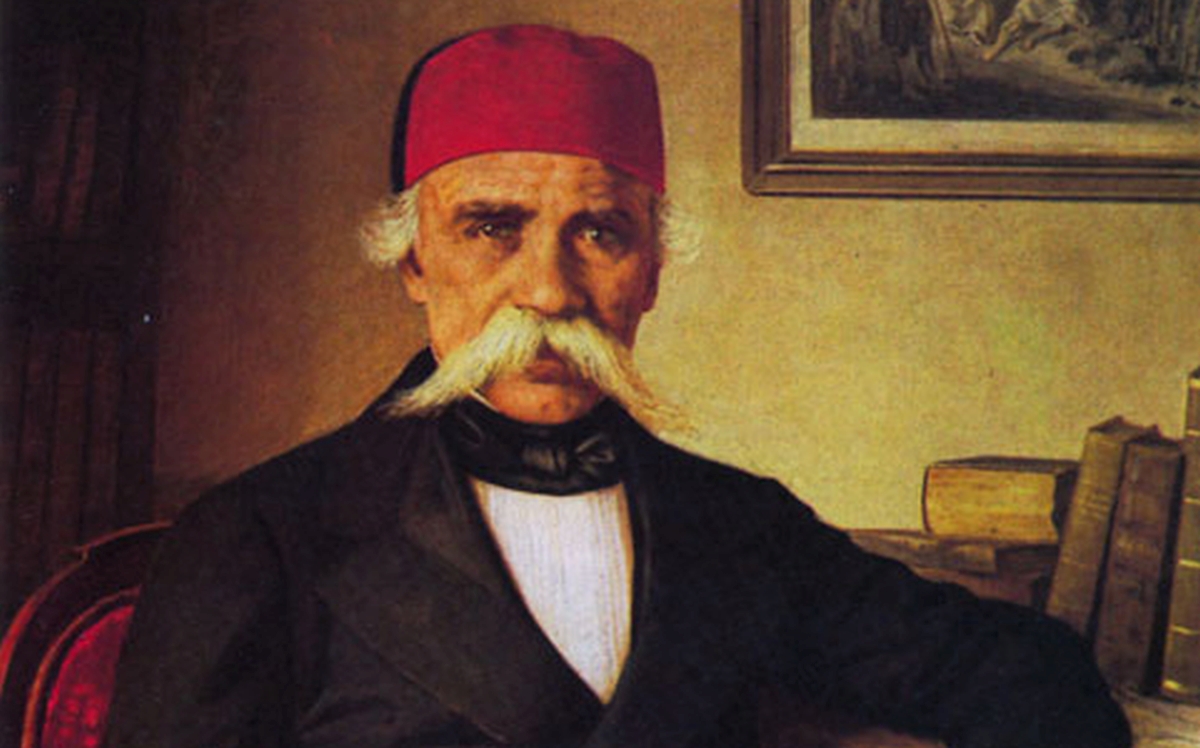
Have you ever wondered how we would speak today if there had been no Vuk Karadžić and his reform of the Cyrillic script, grammar, and dictionary? Would we, for example, have names starting with the letter “J,” and would things be harder for us without the rule “write as you speak, read as it is written”?
We do not know the answer, because Vuk’s reform officially “took hold” in 1847, when The War for the Serbian Language by Đuro Daničić and Poems by Branko Radičević were published. Only in 1868, several years after Vuk’s death, did the Serbian language become official.
The Ekavian pronunciation was introduced into official usage by Stojan Novaković, his follower and the author of Grammar of the Serbian Language, three decades after Vuk’s death.
Still, a hypothesis of how we might speak today without Vuk was offered by historian Prof. Dr. Predrag J. Marković in the book Alternative History of Serbia, published by Laguna. As a co-author together with historian Čedomir Antić, he cites examples from Sterija’s comedies.
“Would it be better for us today if we spoke like Sterija’s characters Ružičić and Baron Golić? Would our culture be more visible in Europe if Hadžić and Vidaković had prevailed? Would we, like the Croats, translate all words into Slaveno-Serbian? For example, instead of ‘history,’ would we say ‘povest’?”
“Greetings to you, flower of love, dewed by the stream of nymphs. Zephyrs of Amor fly around your bosom, and your radiant, brimming eyes blunt Cupid’s arrow,” is how Ružičić courted Evica, one of the main protagonists of the comedy The Affected Gourd by Jovan Sterija Popović.
“Naipače ubo means besonders; consequently, I could not have had any bad opinion of you and your dearest grandmother,” says Baron Golić in Lies and Counter-Lies. When asked whether he is a Serb, he replies: “Indeed, both by surname and by lineage.”
MORE TOPICS:
PACT AGAINST SERBIA? Croatia, Albania and so-called Kosovo held a meeting on “defense cooperation”!
Source: Nova Ekonomija Foto: Wikimedia Creative Commons