




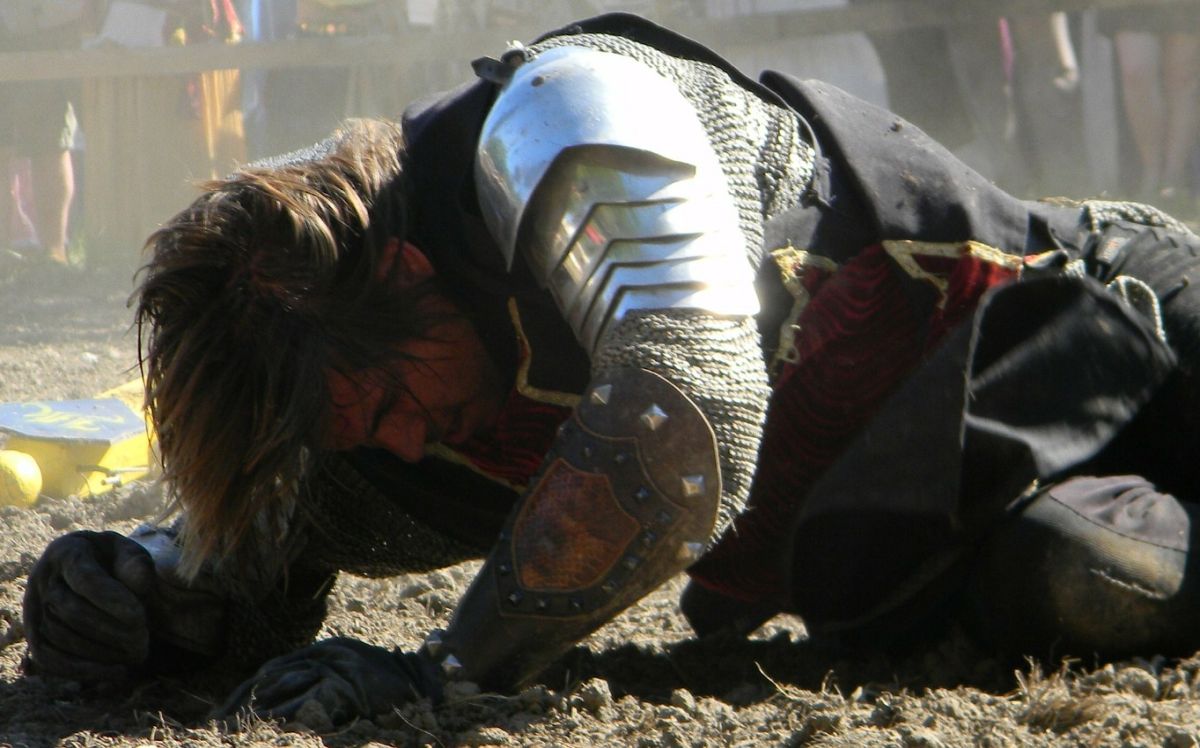
It was the beginning of a cold autumn in the year 1371. Near the village of Černomen, on the Maritsa River, the two Despots Mrnjavčević, brothers Vukašin and Uglješa, were leading their army to war against the Ottoman Turks.
The opposing commander, the Ottoman Pasha Lala Shahin, would ultimately win by launching a surprise morning attack on the undefended Serbian camp. With a bloody massacre of sleeping, drunken soldiers, the entire Eastern Balkans, from the Black Sea to Niš, fell into the hands of the Turks.
Background to the Battle
A few years earlier, the Ottoman Empire was practically divided into two parts: European (Rumelia), with its capital in Edirne, and Asian (Anatolia). While Murat was occupied with affairs in Asia Minor, the European part of the empire was ruled by various military commanders called ghazis. The main one was Lala Shahin. A talented commander, he was also Murat’s teacher. With limited resources, he managed to secure the Turkish foothold on the European continent.
Serbian Despots
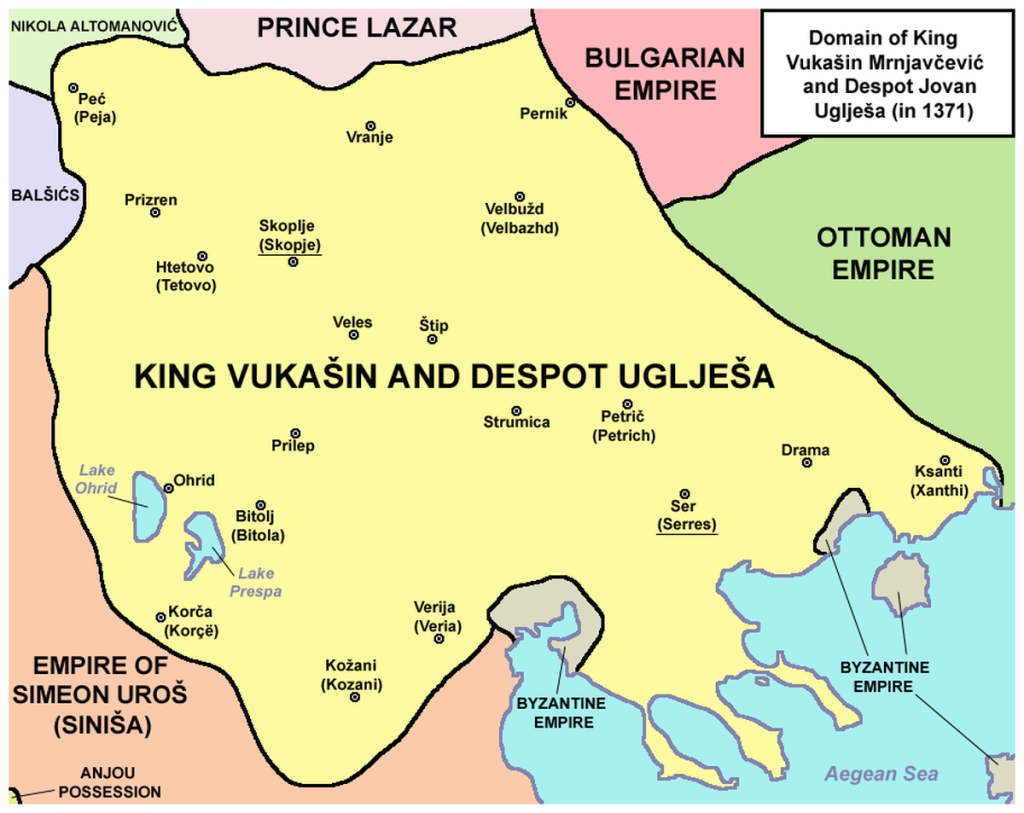
After the death of Emperor Dušan in 1355, the Serbian Empire began to crumble. Its vast territories in Macedonia and Greece were divided among numerous regional lords. The strongest among them, the Mrnjavčević brothers, Vukašin and Uglješa, ruled territories in modern-day Macedonia. Vukašin proclaimed himself King of “all Serbs and Greeks.”
The Rationale for the Attack
After crushing the resistance of Duke Momčilo in Thrace and the Rhodope Mountains, the Turks continued their push west. The state of the two Serbian Despots stood in their way. Faced with the encroaching threat, they decided to gather an army and strike first. They wanted to destroy the Turkish force and expel them entirely from Rumelia. The Serbian brothers chose the right moment for an attack, as the Turkish position in Europe had worsened after Amadeo of Savoy conquered Gallipoli in 1364.
The Armies
- Serbian Army: The exact number is unknown, with historians debating figures ranging from 20,000 to 70,000. Given the territory from which the army was gathered and the tactics used, the smaller number is likely closer to the truth.
- Ottoman Army: The Turkish army was significantly smaller, though its exact number is also unknown. Contemporary sources suggest a force of no more than 800 men. Realistic estimates suggest the Turkish troops were about half the size of the Serbian force.
The Critical Difference
Quality, not quantity, was decisive in the final outcome of the battle. The Ottoman army consisted of seasoned warriors, veterans of many battles, sieges, and raids. In contrast, the Serbian army was undisciplined and had a small number of cavalry.
Overconfident due to their numerical superiority, the Serbian brothers began their march east. Their primary goal was to expel the Ottomans from Edirne. Descending the Maritsa valley, they were preparing a surprise attack on the Turkish European capital. However, Lala Shahin knew of their plan.
Exploiting his tactical advantage, he regularly sent out scouts to monitor the Serbian advance. Vukašin and Uglješa did not attempt anything similar on their side.
Lala Shahin patiently waited for the right moment to attack. This occurred in the early morning hours of September 26th. The Serbs made their final great mistake by celebrating their impending victory with a huge feast when setting up their camp along the Maritsa. By morning, the camp was left unguarded, and most of the soldiers were asleep or drunk.
The Slaughter
Lala Shahin’s troops attacked the camp in the morning. They used knives to slaughter their sleeping enemies. In the ensuing massacre, both Serbian rulers were brutally killed. Those who did not fall to the Turkish knife either drowned while fleeing into the nearby Maritsa.
With one decisive blow, the Serbian army was wiped out. Lala Shahin’s victory made it impossible to gather a new army from the territory of Macedonia. The ego of the two Despots and the alcohol in the blood of their soldiers determined the fate of the entire Balkans. For the next decade and a half, the Ottomans expanded across the Balkans practically without resistance.
It was not until 1386 that Murat suffered his first defeat in a war with Moravian Serbia. However, by then it was too late for Bulgaria. After the Battle of Nicopolis, it fell under Turkish servitude, which would last for the next 500 years.
Source: Serbian Times; Photo: Pixabay / Wikimedia Creative Commons
MORE TOPICS:
US-ISRAEL CONFLICT LOOMS: Trump Unveils Gaza Peace Plan, Netanyahu Vows to Continue War
FINNISH BASKETBALL WONDER ARRIVES IN BELGRADE: Mika Muurinen Takes Partizan Jersey (PHOTO)