




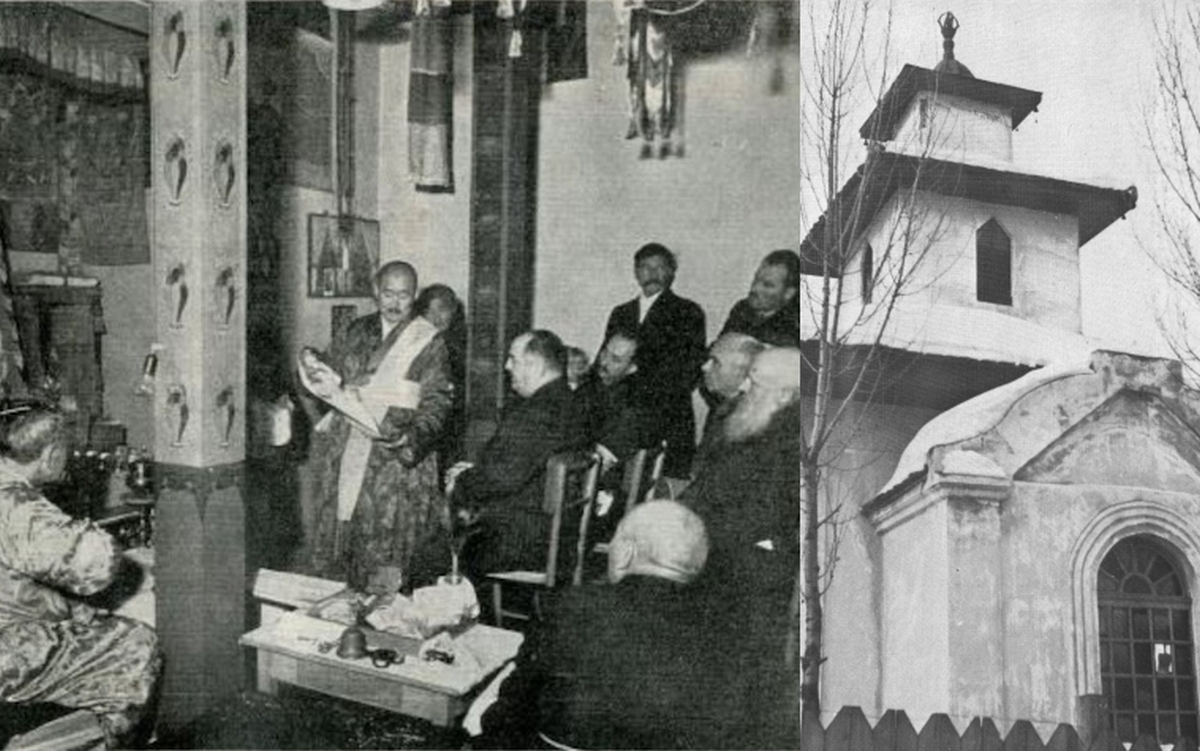
The first half of the 20th century brought endless columns of refugees fleeing Russia to escape the Bolsheviks, and thus by the end of 1919 a hungry, exhausted, and plundered population began arriving in Serbia as well. Among the refugees from Russia, the following year a smaller group of Kalmyks also arrived — a West Mongolian people predominantly of the Buddhist faith — who mostly settled in Belgrade.
Between 1920 and 1923, about 500 Kalmyks arrived in Serbia, most of them settling in Belgrade, specifically in Mali Mokri Lug, while some also lived in Karaburma, around Cvetkova pijaca, and at Crveni krst.
At first, the newcomers aroused the curiosity of Belgraders due to their unusual appearance, as people had not previously encountered anything similar. A people of short stature, with distinctly black hair and broad heads with slanted eyes — a classic Mongolian type — Belgraders called them Chinese, a name that followed them throughout their lives in our country.
Among the Kalmyk population that arrived in Serbia were also several of their priests, the oldest by age and rank being baksha Gavi Jimbа (Manchuda) Borinov. The Kalmyks established their first place of worship in 1923 in two rented rooms at 47 Vojislava Ilića Street, and two years later they moved to 51 Metohijska Street.
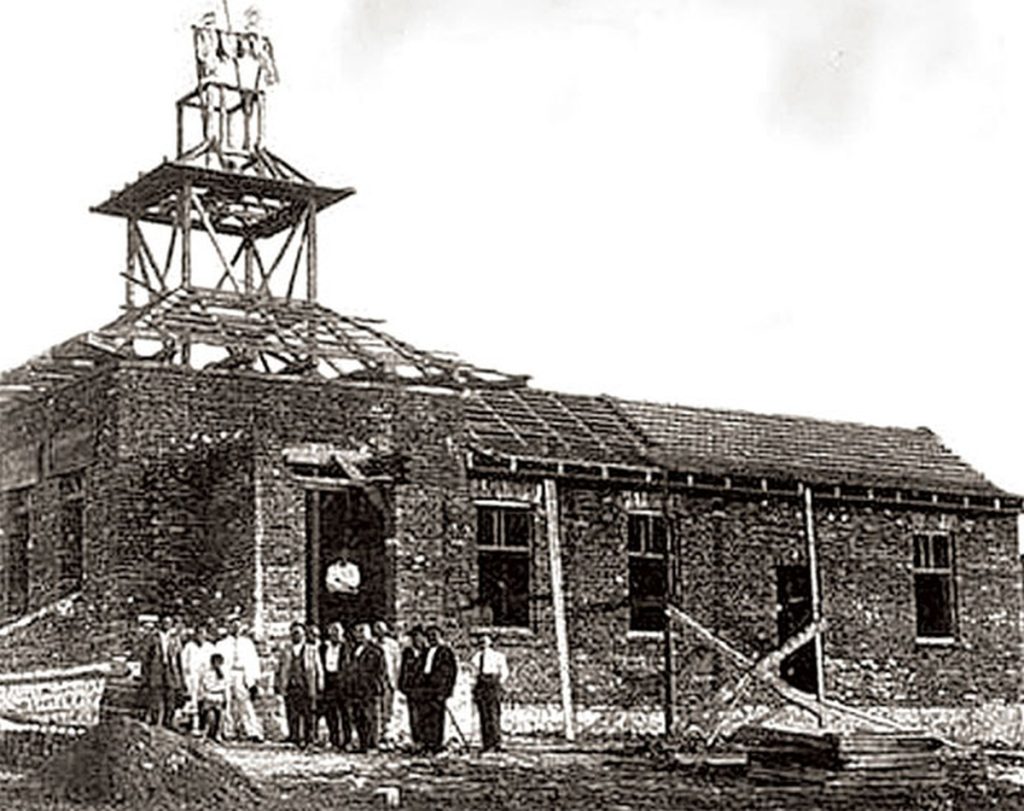
As they did not have enough money to pay rent and equip the temple, Kalmyk priests turned to the Ministry of Religion, which influenced the Ministry of the Interior to grant them permission to collect voluntary donations. Since the rented premises were too small and quite far from the Kalmyk settlement, the need arose to build the first Buddhist temple in this area.
This was followed by the collection of documentation, meetings at the Ministry of Religion, and a conversation with Serbian Orthodox Patriarch Dimitrije, after which a construction commission was formed and an action launched to collect voluntary contributions.
Belgraders responded in large numbers to the appeal of their new fellow citizens, with the first among them being industrialist Miloš Jaćimović, who donated a 530-square-meter plot of land to the Kalmyk colony, as well as 10,000 bricks, more than 7,000 roof tiles, cement, and other construction materials. Many prominent Serbs followed the example of Miloš Jaćimović, and a contribution even came from the royal family.
Construction of the temple — the first and only of its kind in Europe outside Russia — was completed in 1929, and the ceremonial consecration was held on December 12 of the same year. The Kalmyk temple, or Chinese church as the Serbs of the time called it, was located in Zvezdara on a street that was then named Buddhist Street. Today it is Budvanska Street.

The Buddhist temple in Belgrade soon became a gathering place for the Kalmyks, where the language of this people as well as Buddhist beliefs were taught. Among the most notable guests of the temple was the Kalmyk princess Nirdžidma Torgutska, daughter of the Torgut prince Palta, who was hosted on September 20, 1933.
The following year, aid arrived for the Kalmyks from Tokyo in the form of items for furnishing the temple, as well as a large bronze statue of Buddha, which was consecrated on March 25, 1934. That same year, the daily press again wrote about Belgrade Buddhists, on the occasion of a memorial service for King Alexander, who was assassinated in Marseille.
Members of the Kalmyk colony in Belgrade mostly worked as construction laborers, while their women made slippers and lanterns that they sold at the market. Children attended Belgrade high schools, and as many as two Kalmyks studied at the University of Belgrade.
During the battles for the liberation of Belgrade in 1944, the upper part of the Kalmyk temple was partially destroyed, and that same year the Kalmyk colony in Belgrade ceased to exist, as its members fled to Germany and later to the United States.
After the war, the new authorities decided that the Kalmyk temple should no longer exist since this people had left our country, and thus in 1950 the dome of the temple was demolished, while the ground floor was converted into a cultural center. Later, the Socialist Alliance of Working People moved in, followed by the work organization Budućnost, which demolished the temple and built a two-story building on its foundations, housing its Cooling service.
Today, all that remains of the Kalmyk community and the Buddhist temple in Serbia are photographs, documents, and the occasional report about an unusual culture that attracted the attention of the public at the time.
MORE TOPICS:
Source: KafenisanjeFoto: Beogradske opštinske novine, Wikimedia Creative Commons