



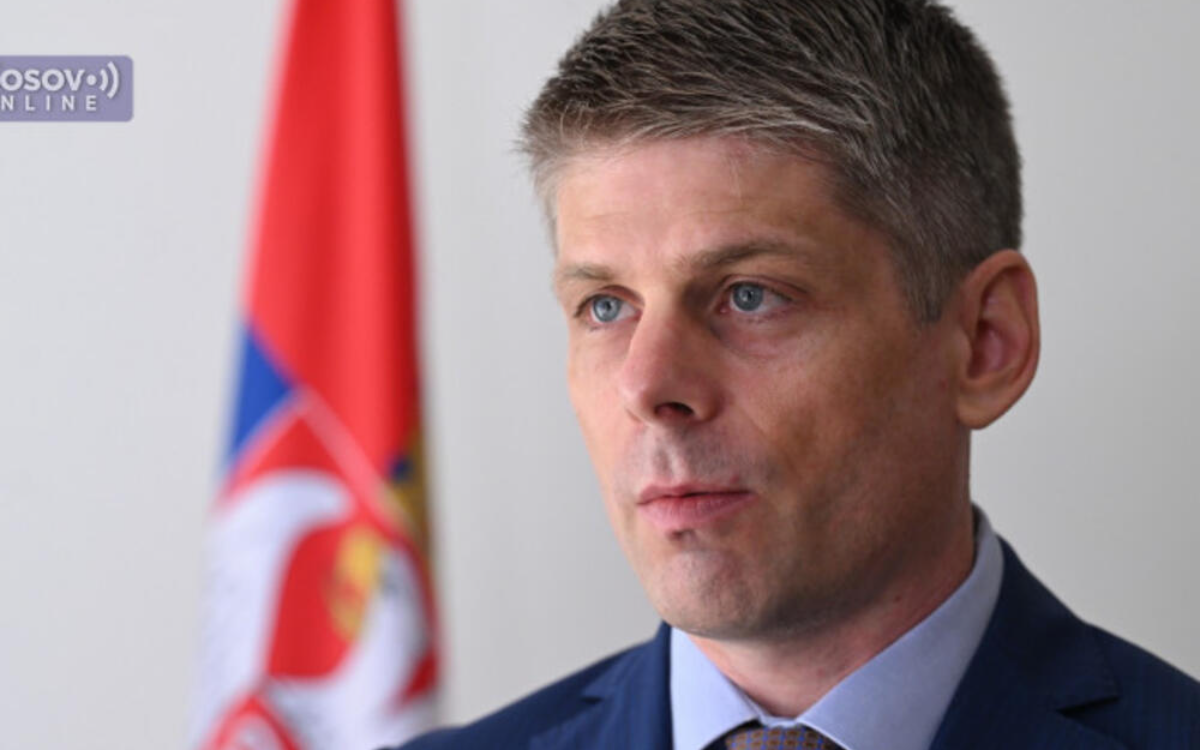
The Director of the Office for Public and Cultural Diplomacy, Arno Gujon, stated that the image of Serbia and Serbs from the Autonomous Province of Kosovo and Metohija has significantly changed in France. From a time when it was undesirable to talk about their persecution to today, when their side of the story is increasingly heard and understood, but that it took a lot of time and effort, his office announced today.
“We were stigmatized. It was a few years after the terrible propaganda from 1999. At that time, media in France like ‘Liberation’ and ‘Le Monde’ wrote that the genocide that was taking place in Kosovo and Metohija was reminiscent of the time of Genghis Khan.
Serb-hater Bernard-Henri Lévy, who was recently accused of embezzlement in France, said that the Serbian people should be freed from Milošević, but also from themselves, as if the Serbian people were inherently evil and diabolical,” Gujon said in an exclusive interview for the French media “Omerta.”
He recalled that at that time, television in France spoke of nearly 500,000 missing Albanians, which, he says, was an obvious lie, because it was inconceivable that a genocide could be carried out unnoticed in the 21st century.
Gujon states that these exaggerated numbers served as the basis for fierce propaganda, which later made it difficult to help Serbs in the Autonomous Province of Kosovo and Metohija. “We wanted to talk about it through the magazine of the association ‘Solidarity for Kosovo’, which is still sent quarterly to all our donors, through newsletters, through books and documentaries.
FIND OUT MORE:
We shot the documentary ‘Kosovo, Christianity in Danger’, which was shown on the popular French television KTO, as well as on many other foreign televisions. The film received numerous awards in Serbia and abroad because it shows the reality and brutality of the lives of Serbs from the southern province, about which little was known until then,” says Gujon.
In an interview for “Omerta,” he explained what life in Kosovo and Metohija looks like today and that, when you head towards the Visoki Dečani monastery, you pass through checkpoints with observation towers, barbed wire, and machine gun nests.
“Only then can you enter the monastery, which is an island of peace in an ocean of hatred. This symbol of peace has been the target of several armed attacks in recent years, including mortars, rockets, and a terrorist attack attempt. It was precisely thanks to the security passage, which was financed by ‘Solidarity for Kosovo’, that it was possible to protect and preserve this holy place at that time,” he says.
Gujon states that all this work, as well as the work of great professors and journalists who defended the truth about Kosovo and Metohija, contributed to changing the image of Serbia and Serbs in France, but also around the world.
“Three years ago, the well-known journalist Régis Le Sommier was in Kosovo and Metohija, saw with his own eyes, filmed, and published on ‘Omerta’ the attempts to steal wine from Serbian winegrowers from Velika Hoča, who are the last winegrowers in this region.
It is good that in this way people were finally able to get a true picture of what is really happening not far from us. Just two hours by plane or one day by car from Paris. It is here, in the very heart of Europe.
And all this is happening right now,” concluded Gujon, as reported by Tanjug.
MORE TOPICS:
COLUMN, KOVAČEVIĆ: On the police, batons, revolution and its children…
ALL MEMBERS OF OUR TEAM WON MEDALS: Six medals for Serbia at the Balkan Mathematical Olympiad!
Source: Politika, Foto: Printscreen Kosovo online