




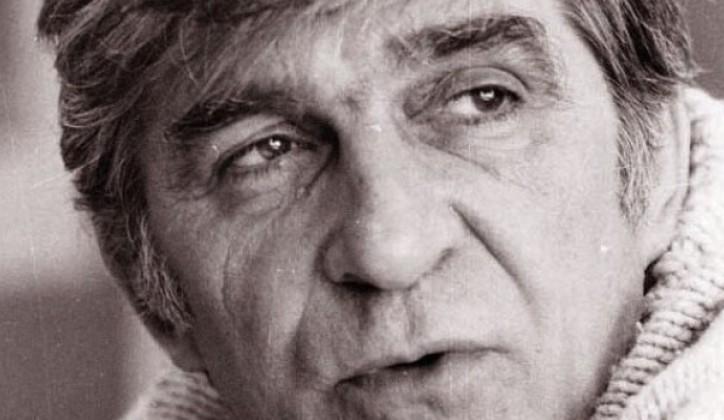
We know that poets never die, but there is even better news: one poet who has not been among us for a full 39 years is more popular than all today’s show-business stars and those who feel like them.
A passionate lover of boxing (the champion of Vojvodina in the welterweight category), an unfinished student of Slavic studies, a man who survived three clinical deaths, had three marriages and six children, a maestro who wrote poetry and postcards with equal passion, a fighter against petty-bourgeois stagnation and always outside the mold, a poet who even performed as the “opening act” at concerts of Toma Zdravković—once again proved that death is only temporary.
In family records it was written:
“On March 14, 1932, our heart, Miroslav, was born in Mokrin, Banat. Monday evening at half past nine. At birth he received the name Stevan. He was baptized on April 17 of the same year…”
His mother was a “wealthy bride,” with ducats and a dowry from the village of Grabež, where the northernmost Serbian Orthodox monastery stands, while his father came from the south. That March she came to give birth on her parents’ estate, and when a male child was born in the family, in the excitement Mika’s grandfather and father got so drunk that they began insulting each other.
Father (and mother) on a business trip
Since the grandfather had been a soldier in the Austro-Hungarian war and the father came from Vranje, the quarrel revolved around the words “German” and “Gypsy.” A fierce fight followed, knives flashed, and the father went outside in his jacket into the cold. His mother Melanija, who had given birth just 48 hours earlier, ran after him to bring him a coat so he would not freeze in the heavy snow. The two walked six kilometers to the first station. The father wrapped the mother in his coat and carried her in his arms.
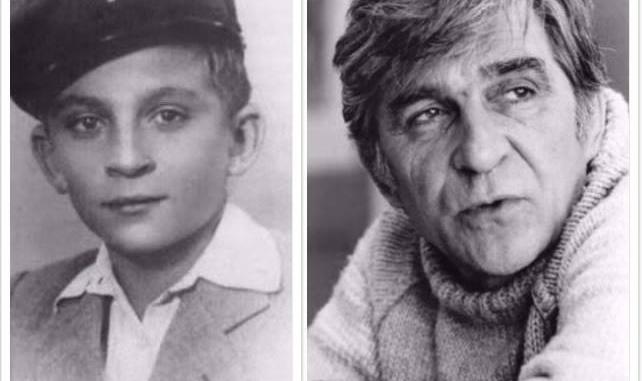
And Miroslav, “our heart,” stayed with his grandparents. A neighbor, Hristina Zrnić, had a small baby and breastfed Miroslav as well.
He saw his father and mother—who had been practically banished by the family because “they left the child on the farm with the grandparents”—for the first time when he was six years old. And that meeting took place on “neutral ground,” in Kikinda. That was also the first time he saw a city. His mother wore a hat, his father a coat, and they gave him a plush horse. Before he started school his father gave him a writing tablet with a primer and sponge, but also a traditional šajkača cap that was too big and fell over his ears and forehead. The gift was his father’s revenge on Banat, which had refused to accept him and insisted he was an outsider.
He started school in Mokrin. His grandfather left him at the entrance to the village; he looked neglected and miserable and everyone laughed at him. Someone shouted “peasant!” The children then began trampling and beating him. They crushed his cap and broke his tablet. From that shock he stuttered for the rest of his life.
Boxers and poets
He had better school days as well. In Kikinda he shared a desk with Jovan Ćirilov.
“He wrote poetry even then. I boxed. But both of us got top grades in Serbian essays. So both boxers and poets wrote excellent essays.”
Today the poet’s bust stands in his native village, in the square between the school and the church.
As a boy he once drank muddy water while chopping wood in the forest with his father and got paratyphoid fever. He also survived diphtheria. He served in the navy on the island of Korčula as a radio operator. He became enchanted with the sea, which he first saw at seventeen. He volunteered for military service early just so he could choose his branch—and he chose the navy simply to hear the waves.
“You think the sea is only water. The sea is enormous male freedom.”
He wished to die at sea, “even if it were a sea of moss.” He used to say the real sea was invented, just like real literature. According to him there were two seas—summer and winter. In the summer sea there was nothing, he said, but fortunately there was also the winter sea.
Invented biographies
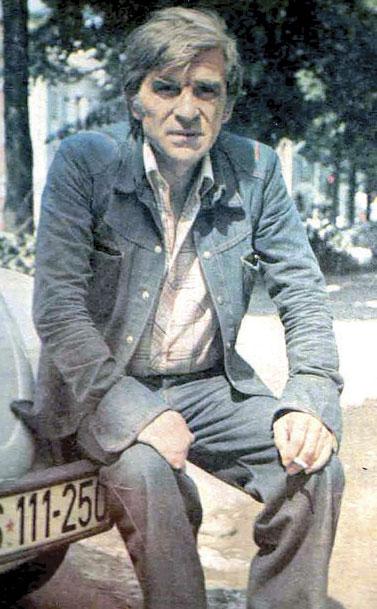
Throughout his life he invented his biography, family history and life details, because he despised the classic biographies printed on the backs of books. In that way he awakened readers’ imagination. He liked his biography to begin with the words:
“Once there was a man… or perhaps there wasn’t.”
Even the story of his parents’ wedding was something he fabricated, driving his family crazy with unbelievable inventions.
His father had originally been Bulgarian, Antov, but took his wife Melanija’s surname at their wedding and became Antić. Mika often teased him for abandoning his origins.
Once, searching for his father’s roots, he went to Bosilegrad to find his grandfather Nikola’s grave. He bought fifty candles and lit them there. At dusk someone reported a fire at the cemetery. Mika was taken to the police station, but once they realized it was neither political provocation nor arson, the drunken poet was released on condition he go home only after sobering up.
A bohemian life
He loved women and fell in love easily. His first great love was on Korčula, with a girl named Marija, and he immediately wanted to marry her, though his parents prevented it. The poem “Solaris” remained as a memory of that love.
His first marriage came soon after. At 21, a student of Slavic studies, he married 16-year-old Ljubica, called Buba. Authorities had to approve the marriage because she was underage. There were dramatic family arguments and even threats that Mika would run away to Slovenia if they prevented the wedding.
The marriage ended after ten years. When they divorced he sent a postcard to his family:
“Buba and I divorced in court today. Do not say anything bad about her. I was the one at fault.”
He later had four children in his second marriage with Svetlana and two in his third with Ljiljana.
A legend of cafés and poetry
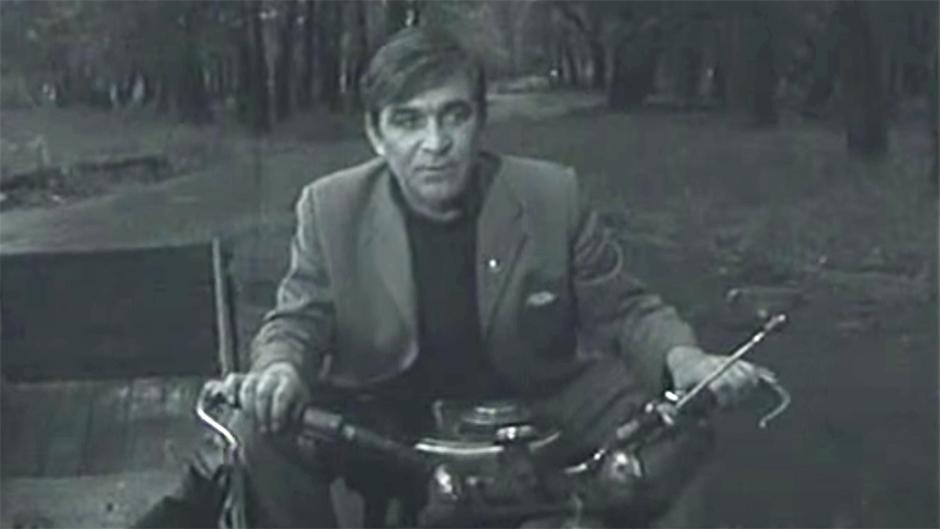
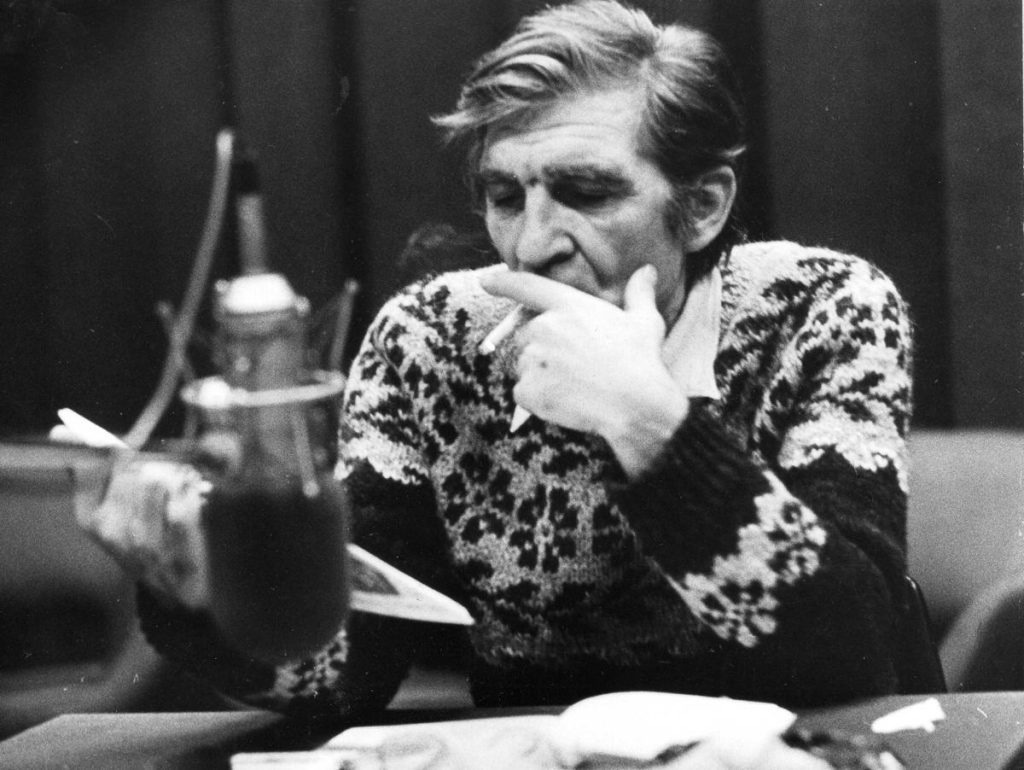
He rarely slept and spent his life half-dozing. If a thought or verse struck him between sleep and waking, he would literally jump out of bed to write it down.
Writing, he believed, was ritual.
“Writing is sacred. I don’t always write. But I think sleeplessly, for nights.”
His “Bermuda triangle” was Pančevo, Kikinda and Novi Sad; later also Mostar, Paris and Novi Sad. Before discovering taverns he and his friends would spend entire nights in vineyards drinking and singing, bringing home bunches of grapes to worried parents in the morning.
A famous anecdote says that one night in a tavern he refused to go home unless it was “in a Jaguar.” When they couldn’t find one, someone brought a Mercedes. Mika climbed onto the hood and pretended it was a Jaguar.
“Giving birth to a poem”
In his secret diary, published after his death, he wrote:
“I gave away poems constantly. I didn’t care whether they ended up in a book or a gutter. What mattered was that they reach people’s hearts.”
His first literary reviewer was Oskar Davičo. Mika was only 17 when he knocked on the famous writer’s door with his first manuscript of poems.
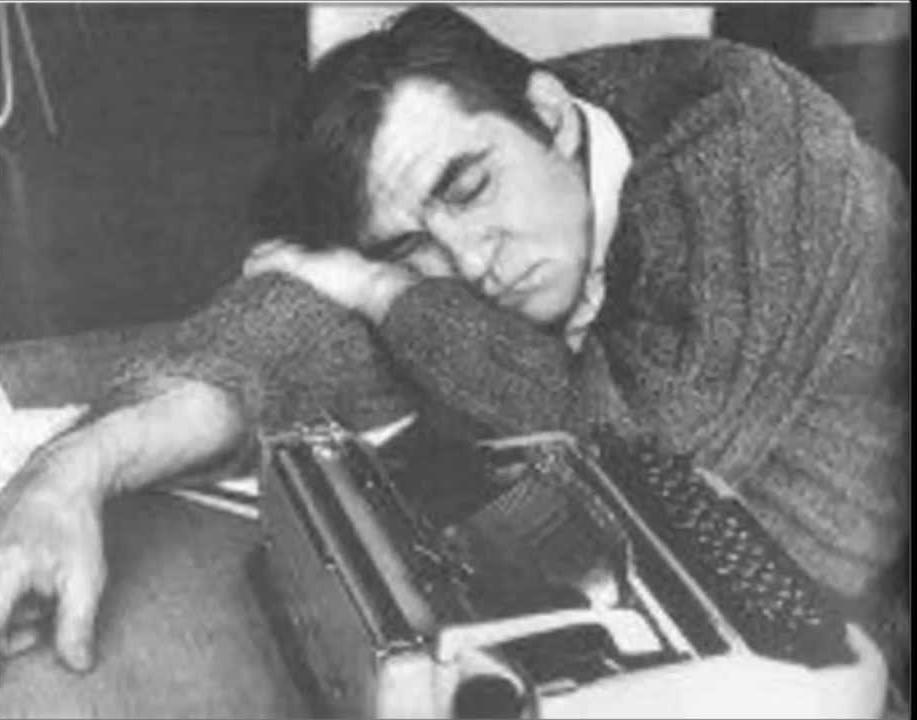
“I suffer while writing. I throw away and burn a lot. Whole nights pass and I squeeze out only two or three good lines. Making a poem is like giving birth.”
The poet who died three times
He experienced clinical death three times and described them almost like experiments.
“There is something in which I surpassed Jesus Christ. He resurrected once; I did it three times.”
The first death occurred in Bukhara in Central Asia, the second in Novi Sad during treatment for alcoholism, and the third in Belgrade in 1983 after receiving potassium injections at a military hospital.
Each time he returned to life.
He left with gold on his hands
His final death came in his home in Novi Sad on June 24, 1986, the same morning he received the AVNOJ Award. After resting, he went out to the garden and collapsed beside a table.
He had earlier undergone surgery for jaw cancer and lost part of his tongue—an unbearable punishment for a poet. In his final years he spoke little and communicated by writing notes. He painted passionately, creating a famous cycle of sunflowers using golden pigment.
When he died, golden dust remained on his hands and could not be washed away.
He left this world with gold on his hands.
His funeral
At his funeral in Novi Sad, attended by thousands, speeches were forbidden according to his will. Instead, a Romani orchestra played a lament, an actor recited “The Immortal Poem,” and another poet read his final message:
“When I die, speeches will be held in Novi Sad, but that will be someone else lying there. Go instead to Mokrin and let poets speak verses there.”
And that is exactly what happened.
That evening in Mokrin poets gathered and recited.
His mother Melanija wrote in her diary:
“My Mika, my only son, died on June 24, 1986, at half past seven in the evening… my beloved child, my genius, my clever boy.”
And on a postcard he once sent her from Petrovaradin in December 1974, he wrote:
“My dear, don’t worry, I’m still foolishly living. I’m whole! Happy slava. Light a candle for father. Yours, M.”
Today would have been his birthday.
So light a candle for him.
And read a poem.
For example, this one.
AFTER LOVE
We say goodbye,
we say goodbye and with terribly long legs
we walk out into the world.
You into your youth
beyond the factories,
beyond the docks
and the bridge,
down the crossroads that split apart
like people after a quarrel.
I into my youth
along the railway
where grass tastes of water,
sand
and sun.
Never again will we sit at the same desk
or copy homework from each other,
nor share our lunch during recess.
Never again will I laugh at your
worn-out dolls,
nor you at the unruly tuft of hair
on my crown
which those behind us always pulled.
This is not only the end
of one school year.
They say:
childhood is over.
One great childhood
ended today.
They say it,
and everyone is happy together,
rolling down the stairs like a handful
of spilled marbles,
all ridiculous with satisfaction
like plasticine figures,
all colorful and strange
like a city during great holidays.
Only I know:
never again,
never again
will we hold hands
or walk from corner to corner
trying in vain to remember, while silent,
something very important,
something so enormously important
that once we part
we will never again
be able to remember it.
MORE TOPICS:
Source: Aleksandar Đuričić; Foto: Wikipedia