




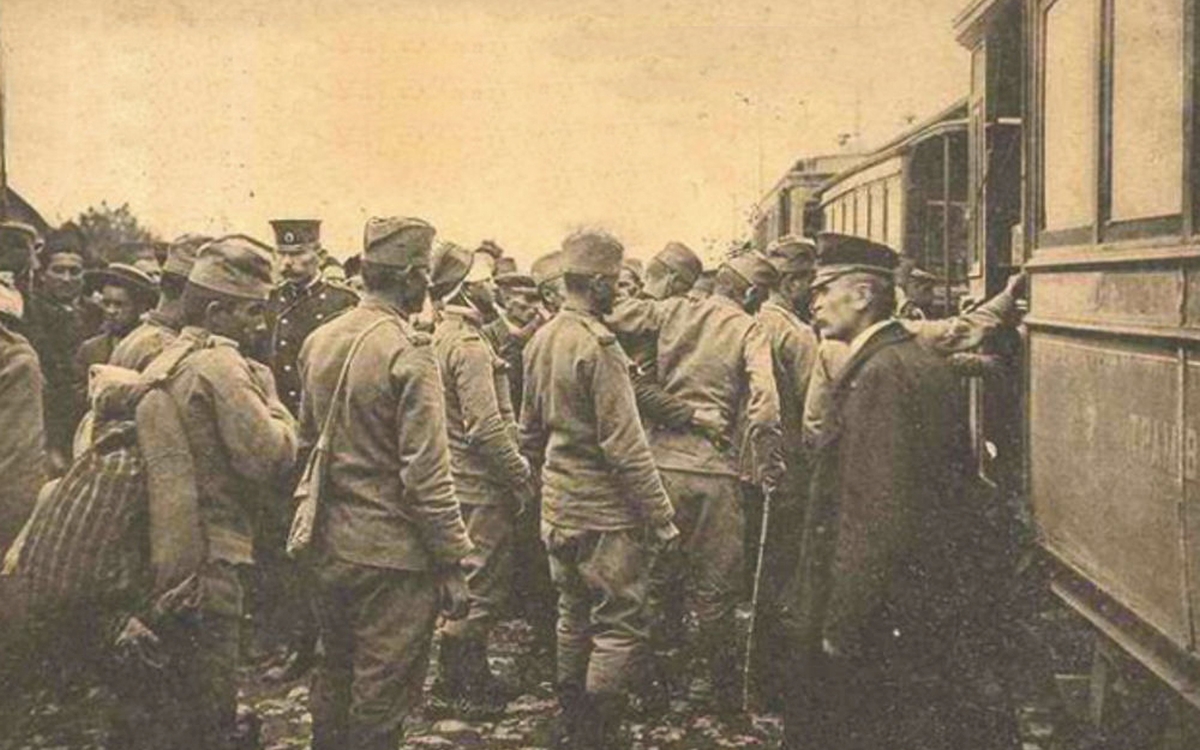
During the short-lived Serbo-Bulgarian War of 1885, an extraordinary episode took place, one that can be considered a historical precedent in warfare—Serbia allowed and facilitated a humanitarian convoy carrying medicine and medical supplies for its enemy!
This unusual story began with the efforts of the Principality of Bulgaria to annex Eastern Rumelia and achieve national unification. King Milan of Serbia saw this as a direct violation of the Berlin Congress agreements and a threat both to Serbs living in Eastern Rumelia and to the Kingdom of Serbia itself.
King Milan believed that if Bulgaria succeeded, it would become the dominant power in the Balkans. After a series of provocations along the border and failed diplomatic initiatives, Serbia declared war on Bulgaria.
At that time, Bulgaria—having only recently gained independence from the Ottoman Empire—lacked a developed military medical system. There was no organized way to transport the wounded from the battlefield or provide them with adequate care.

To help Bulgaria, the International Red Cross collected humanitarian aid from across Europe.
While it is often mistakenly claimed in the media that Serbia was the only possible route for delivering aid, the truth is that Serbia provided the shortest and most efficient route, though it required passing near Serbian military forces.
According to a report from the Austrian Red Cross, which mediated the operation, the winter of 1885 was particularly harsh, Bulgaria had no railways, and the Danube was difficult to navigate. There was also an overland route via Lom Palanka to Sofia, but it was costly and time-consuming.

King Milan personally ensured safe passage for the medical convoy through Serbia, even assisting in the section from Niš to the Bulgarian border, where no railway existed. At the time, humanitarian organizations praised Serbia’s decision as a noble and unprecedented humanitarian act.
Reports from the International Red Cross in Geneva, as well as Austrian and British humanitarian organizations involved in the mission, clearly describe Serbia’s actions as a precedent and a point of national honor.
The Red Cross headquarters stated that allowing humanitarian aid to pass through one’s own territory for enemy soldiers was in full accordance with the Geneva Convention, though the convention did not explicitly require warring parties to do so. This generous interpretation of humanitarian principles, they noted, deserved applause and should become a legal standard in the future.

The British Red Cross called this operation “undoubtedly one of the most remarkable events of this war.” Their report noted that simply allowing medical aid to reach enemy forces was already a significant step, but providing transport assistance along the way was an unprecedented act of generosity, bringing honor to those who enabled it.
FIND OUT MORE:
The humanitarian convoy for Bulgaria departed from Belgrade on December 22, 1885. The delegation spent the night in Bela Palanka before continuing toward Bulgaria on December 23, when Serbian transport vehicles near Pirot were replaced with Bulgarian ones.
At that time, Belgrade had a Red Cross warehouse and store, so part of the shipment bound for Sofia included supplies sourced from Belgrade—though they did not belong to the Serbian state. One of the mission’s organizers, British humanitarian Sir Kenneth Barrington, mentioned in a letter to his wife that he had personally purchased supplies for Bulgarian wounded in Belgrade for £300. The British Red Cross report provided details on the purchases, which included blankets and mattresses.
For years, a false story has circulated in domestic media, claiming that the International Red Cross honored Serbia by placing a plaque in its Geneva headquarters with the inscription:

“Be humane as Serbia was humane.”

This never happened.
However, this does not diminish the importance or greatness of the true story—on the contrary! Falsifying our own history only leads to its destruction and oblivion, and that must not be allowed.
MORE TOPICS:
DODIK CALMS THE TENSIONS: Independence of Republika Srpska will prevail by political means!
Source: Serbian Times, Foto: Wikimedia Creative Commons