




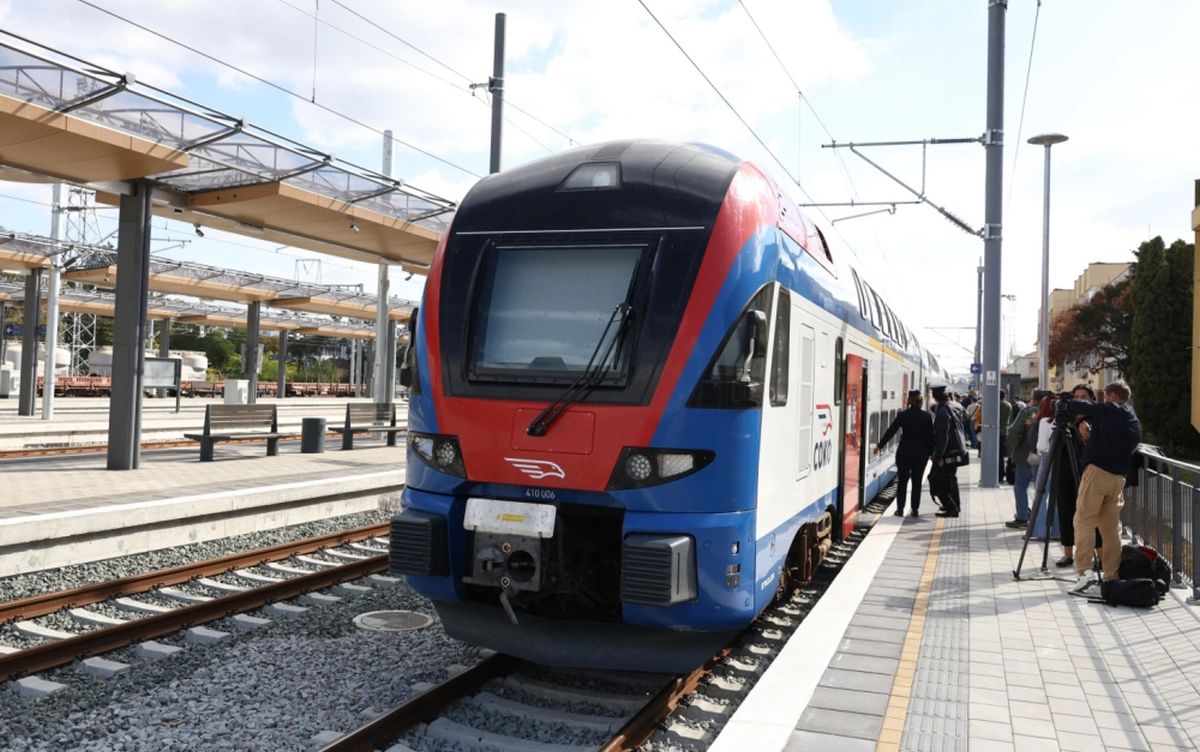
Hungarian Transport Minister Dávid Vitézy has said that nobody can currently predict when passenger trains will begin operating between Budapest and Belgrade, explaining that the delay is due to differences between Chinese and European approaches to railway traffic control software.
Answering questions from citizens on social media, Vitézy recalled that it had recently been discovered that certain functions in the Chinese system did not comply with regulations. He added that these errors “mainly stem from differences in the operating logic of Chinese and European systems.”
“New errors have emerged in recent weeks, and it is questionable whether they actually pose a safety risk. It may sound strange, but we cannot say that at this point. These are simply differences in the way the software operates, meaning that the Chinese system functions differently from the European one,” Vitézy explained.
If it is ultimately established that there are no remaining safety-critical errors, passenger services could begin relatively quickly, according to the Hungarian minister, as there are no other outstanding issues.
However, if the system needs to undergo certification again, the process will take considerably longer and could last several months.
Chinese software was the result of a political deal between Xi and Orbán
Vitézy also claims that the decision to install Chinese software was the result of a political agreement. The original plan had been to install software supplied by a Czech company, but Hungary’s then-prime minister traveled to meet Chinese President Xi Jinping and “returned home with a decision that the Chinese state-owned company CRSC would develop the train control system.”
“This happened because Viktor Orbán ultimately agreed to let the Chinese develop a European railway traffic control system for the first time in Europe. However, they had never previously built such a system according to European standards, with level crossings and all the specific requirements involved. They are doing it here for the first time,” Vitézy said.
He pointed out that construction work on the railway line up to the Serbian border has been completed, that the line has been taken over by Hungarian State Railways (MÁV), and that freight trains are already operating on it.
“Passenger services will be able to begin once the train control system is operational. Everyone wants passenger traffic on the Budapest–Belgrade railway to start as soon as possible. We have to wait for this work to be completed, meaning we need to allow experts enough time to hold discussions with the Chinese and carry out the necessary tests of the software’s functionality,” Vitézy stated.
Once that process is completed, passenger services will also be able to commence, he emphasized.
It should be recalled that passenger services on the high-speed Belgrade–Budapest railway had previously been expected to begin on December 13, coinciding with the introduction of MÁV’s new timetable.
However, in mid-November, Dávid Vitézy announced that new problems had been discovered with the Chinese software and that trains to Belgrade would not be included in the new railway timetable, which takes effect on December 13.
The plan was to connect the capitals of Hungary and Serbia with eight daily train departures in each direction, two of which would continue on to Vienna.
MORE TOPICS:
Source: N1 Foto: M.M./ATAImages
 Add Serbian Times as your Google source