




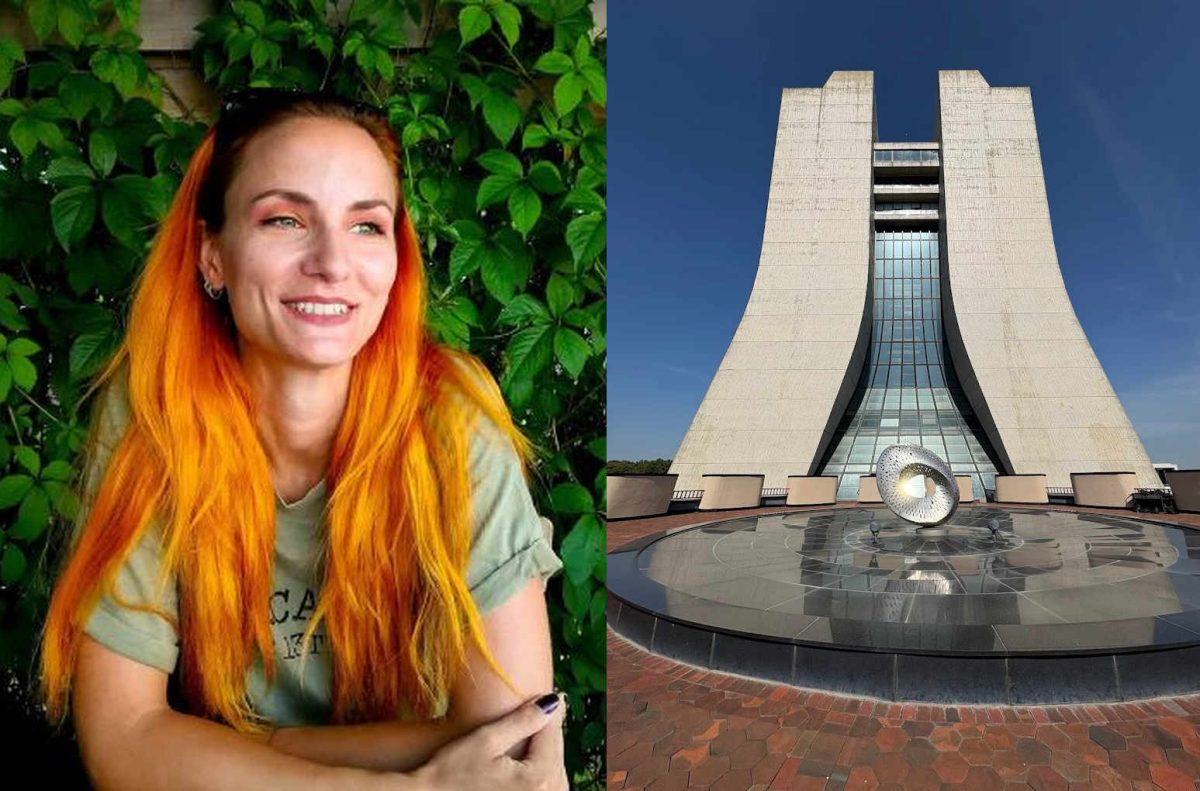
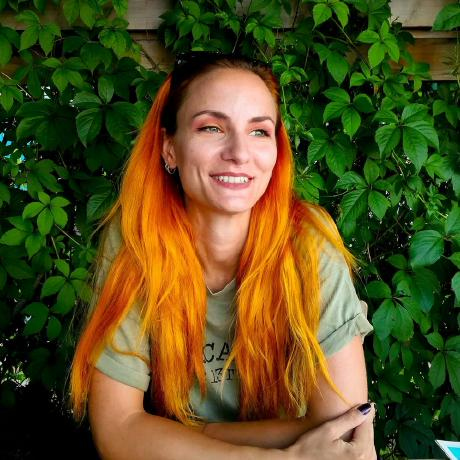
The Latin proverb „Per aspera ad astra“ (Through hardships to the stars) in the case of the young scientist Aleksandra Ćiprijanović literally led across many read books and learned theorems, but with a gaze constantly fixed on the stars, to which she dedicated a good part of her life.
Born in Belgrade, she was interested in various sciences since childhood, mostly astronomy and physics, so after finishing her undergraduate, master’s, and doctoral studies in astrophysics at the Faculty of Mathematics in Belgrade, she received a scientific title at the Department of Astronomy.
But she wanted something more than books and theory, she wanted to reach the stars… And that was not possible from Serbia, so she headed across the ocean, to America, where today she works at Fermilab near Chicago, one of the most prestigious institutions for astrophysics research on planet Earth.
-Since childhood, I have been interested in science, although I was indecisive and interested in various topics – astronomy, physics, geology, biology, paleontology, medicine. When it came time to enroll in college, I somehow managed to realize which of these areas fascinated me the most, and so I enrolled in astrophysics studies.
How did it come about that you came to America?
-My arrival in America was the result of several factors – plans, desires, a bit of luck, and current circumstances. I came to America at the end of 2019, although I visited occasionally a couple of years earlier, as I collaborated with scientists here. At that time, I was extremely interested in artificial intelligence and machine learning, which I began to incorporate into my research. At that time, the use of this type of algorithm in astrophysics was not as widespread as it is today, especially not in Serbia, so I found collaborators in America. During one visit, I had the opportunity to apply for a job at the Fermi National Accelerator Laboratory (Fermilab) in Chicago, and because of that, I stayed in America. Also, in the meantime, I received titles at the University of Chicago (CASE Scientist Affiliate) and at the NSF and Simons SkAI Institute (Senior Personnel).
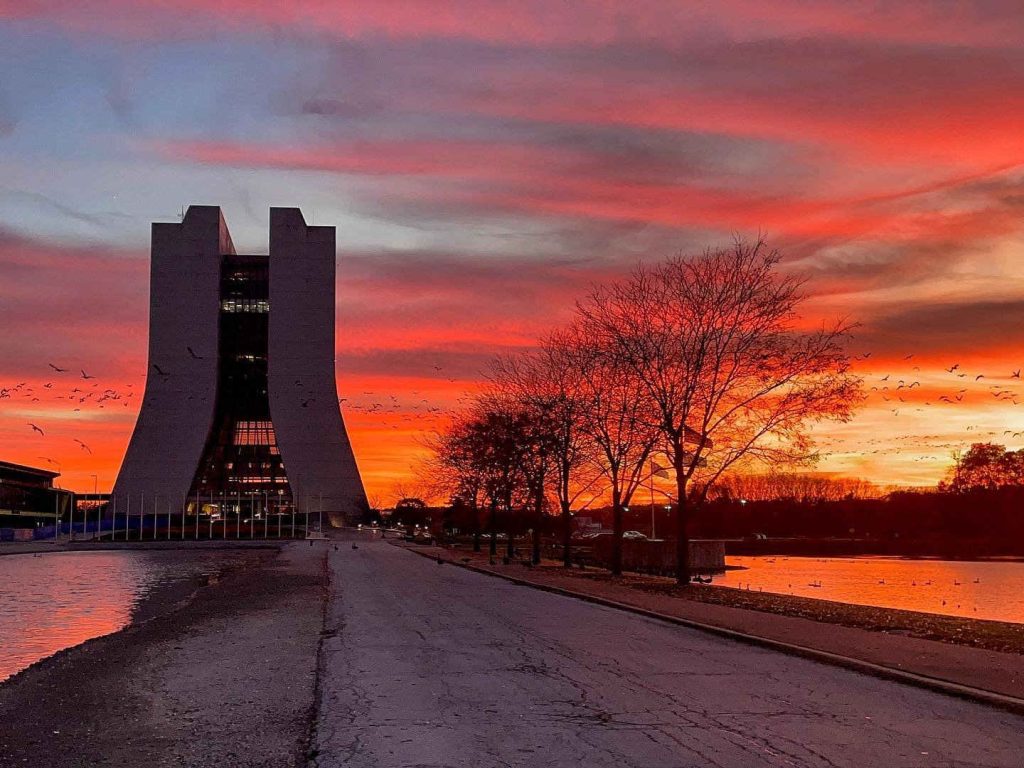
THE PLACE FROM WHERE AMERICANS STUDY THE COSMOS: Fermilab center not far from Chicago
Was it difficult to find an engagement in such a prestigious institution as Fermilab?
-When I started focusing on artificial intelligence, my collaboration with scientists from Fermilab and from America intensified. On one occasion, I came to visit Fermilab because of a joint project. During that visit, a postdoctoral position opened up that matched my interests and knowledge very well, so I applied for that job and got it. Thus, my short visit turned into employment and I stayed in America. After that, I applied for their prestigious position called Wilson Fellow Associate Scientist, which I also received, and then I definitely knew that I was staying in Chicago.
You are also part of the Deep Skies project, which consists of a small group of young scientists from all over the world. What is needed to enter that circle, to get an invitation for the select company? How would you describe that project in a few sentences… What is Deep Skies?
-Deep Skies is an informal group of scientists and students interested in the use of artificial intelligence in science. The focus is on application in astrophysics and cosmology, but there are people involved in other fields as well. Deep Skies was founded by several American scientists, and it enabled me to collaborate more easily with researchers from America while I was in Serbia.

ARTIFICIAL INTELLIGENCE AS A TOOL: Aleksandra Ćiprijanović
I am still a member of this group and I am happy to help new scientists and students who are interested in these topics and want to find people for collaboration, mentors, or simply to hear about scholarships, jobs, or internships at different institutions in America and beyond. For someone to become a member, they just need to fill out a form on the website. In principle, to be accepted, it is necessary to be part of some educational or scientific institution, although among the members we also have people who have moved to industry, and even a high school student or two! Mostly, people join because they know someone who is already a member of Deep Skies, so by recommendation.
Among the areas of research is the discovery of new galaxies and their classification? Have you discovered any new cluster recently… And how much have new, advanced techniques, including AI, improved that search and given results?
-What interests me deeply is how matter in the universe evolves (from the Big Bang until today), and how dark matter and dark energy dictate this evolution. For example, how different types of galaxies are formed, how galaxies interact with each other, and how this interaction dictates the creation and evolution of different stellar populations within the galaxies themselves.
Artificial intelligence, i.e., AI plays a huge role in this research. Today we have large surveys of the entire sky at different wavelengths. Artificial intelligence and machine learning are used to connect these huge and complex data sets in order to get a more complete picture of the universe.
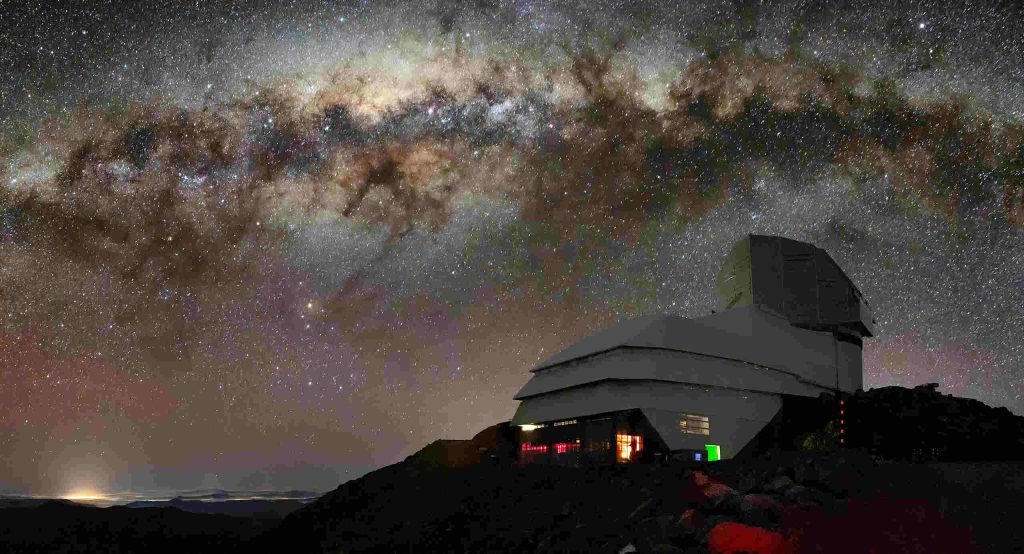

THE LARGEST TELESCOPES IN THE WORLD: Vera Rubin Observatory in Chile
Also, searching for objects that are rare or very faintly visible in such large sky surveys would be impossible today without the use of artificial intelligence. For example, the Vera Rubin Observatory will observe the entire sky every three to four days (and so for ten years!). Believe it or not, this new telescope will be so good and will allow us to see so many galaxies (about twenty billion) that even though the universe is mostly empty, most of these galaxies will overlap with other objects in the image. That is in itself also a problem that we hope to solve, among other things, with the help of artificial intelligence.
We sometimes hear dramatic announcements about ozone holes and other ecological problems. How do those problems look from space?
-Although this type of problem looks small when you study a universe in which there are billions of other galaxies, we currently have one home – planet Earth. The current state of our planet is truly worrying, regardless of whether you look at it from the surface or from space. For example, did you know that Earth is surrounded by garbage? Millions of pieces of garbage are in Earth’s orbit today. And to that, we can add over ten thousand satellites and plans to launch many more new ones. I always suggest that people find one of the interactive visualizations on the internet, because that is the only way they can become aware of the scale of this problem (e.g., at spacetrashsigns.org).
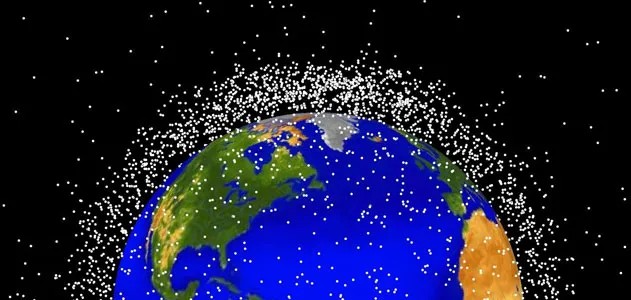
TRASH SURROUNDS THE PLANET: A NASA image shows what surrounds Earth
The second thing that worries me greatly on a daily basis are, of course, ozone holes and very clear climate changes. One of the newer questions is how this is affected by the extremely large energy needs of large companies that focus on the development of artificial intelligence and the creation of complex models such as the well-known ChatGPT. Given that my research also deals with the use and development of artificial intelligence, I hope that we will collectively manage to improve this type of model and make them more energy-efficient and “greener”.
The planet is obviously changing… How much is the Cosmos changing? And are those changes large or small, fast or slow?
-On time scales close to us (hundreds and thousands of years), the universe is completely static and uninteresting. In the universe, everything is counted in millions and billions of years. For example, the universe is about 13.8 billion years old, and the distance to our nearest large spiral galaxy, Andromeda, is 2.5 million light-years. One of the processes my research deals with are interactions and collisions of galaxies, which are otherwise very common and normal when you study the entire universe and its evolution.
It is interesting that Andromeda is approaching the Milky Way at an enormous speed (over 100 kilometers per second). However, Andromeda is so far away that it will collide with us only in several billion years. One of the few things that happen fast in the universe are supernovas (explosions of stars at the end of their lives). However, on our human time scales, even with the enormous number of stars in all galaxies, these are extremely rare phenomena.
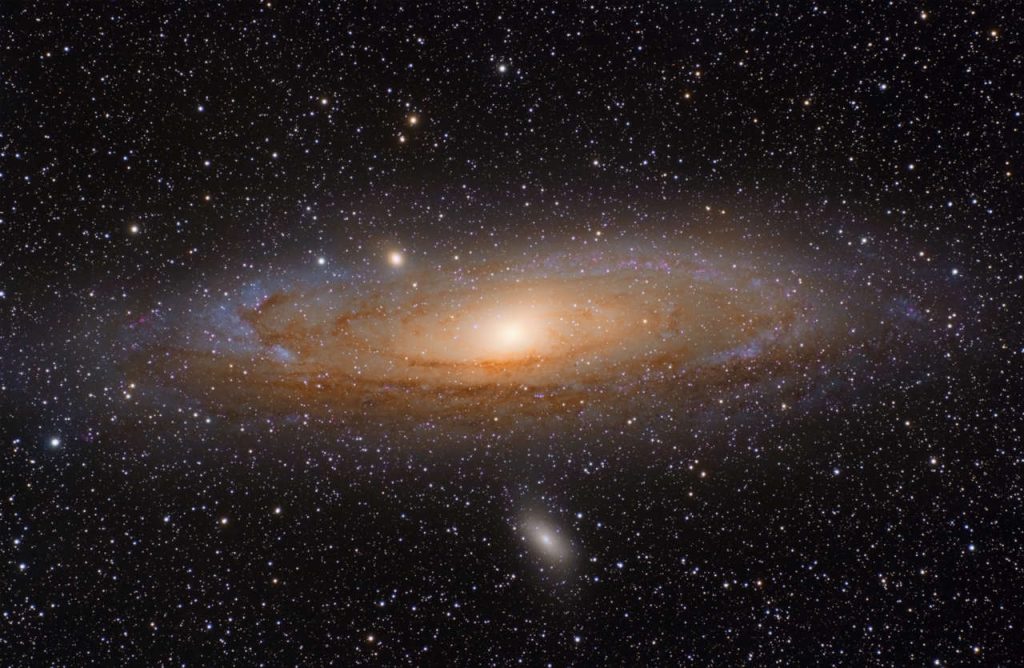
IN THE UNIVERSE EVERYTHING LASTS LONG: The Andromeda galaxy on its path toward us
One of the areas you research is gravitational lenses… What is that exactly and how much has science progressed in that regard?
-Gravitational lenses are extremely interesting, but as a phenomenon, they are actually very simple. For example, I study strong gravitational lenses that occur when a massive object (such as another galaxy or a cluster of galaxies) is found between us as observers and a distant galaxy. The gravity of that massive object curves space-time and leads to the bending of the light path of the distant galaxy located behind it. This phenomenon causes the shape of the distant galaxy to be deformed and to look stretched out like an arc or a ring. Although such seemingly deformed galaxies are extremely rare compared to regular galaxies, thousands of gravitational lenses have already been discovered, and with new sky surveys, such as the Vera Rubin Observatory which recently began operations, we estimate that we will discover more than one hundred thousand new gravitational lenses.
Gravitational lenses are of invaluable importance to science because they allow us to study very distant galaxies, but also to better understand the evolution of the universe and how it expands, i.e., to better estimate the so-called cosmological parameters.
In Fermilab, research is carried out using a huge accelerator, something like the more familiar CERN in Switzerland, although this one in Chicago is much older. Seen from the outside, it looks like a space station… And what is inside?
-Fermilab or Fermi National Accelerator Laboratory is an institute that focuses on research in the field of high-energy and particle physics. As the name itself says, this research is made possible by the existence of a large accelerator, which began operations in 1971. The largest accelerator today is located at CERN (Large Hadron Collider or LHC), and it began operations in 2009. Scientists from Fermilab have been part of CERN experiments in very large numbers since the very beginning.
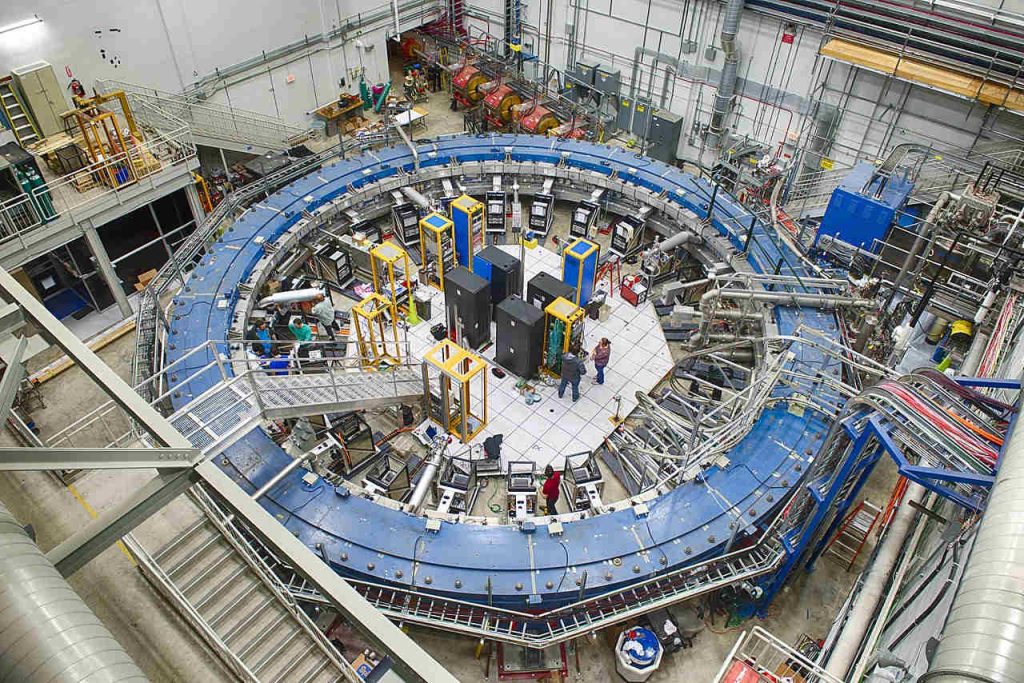
HERE GREAT SECRETS OF TIME AND SPACE ARE STUDIED: The accelerator at Fermilab
In addition to the accelerator, Fermilab today has a large number of other experiments, and scientists are engaged in researching neutrinos and muons, dark matter and dark energy, quantum physics and quantum computers, as well as the development of new detector technologies, chips, artificial intelligence, etc.
-For example, the largest experiment currently under construction is DUNE (Deep Underground Neutrino Experiment). DUNE will use the accelerator at Fermilab to produce neutrinos, extremely light particles that very rarely interact with other particles, and are therefore very difficult to detect and study; billions of neutrinos pass through each of us every second without us feeling them at all. The neutrinos will then pass through one detector at Fermilab, and then travel underground 1300 km to South Dakota (to the Sanford Underground Research Facility) where they will pass through another detector. Although most neutrinos will pass unhindered through both detectors without any interaction, those we manage to detect will allow us to better understand these particles, but also the very origin of matter (and its dominance over antimatter) after the Big Bang.
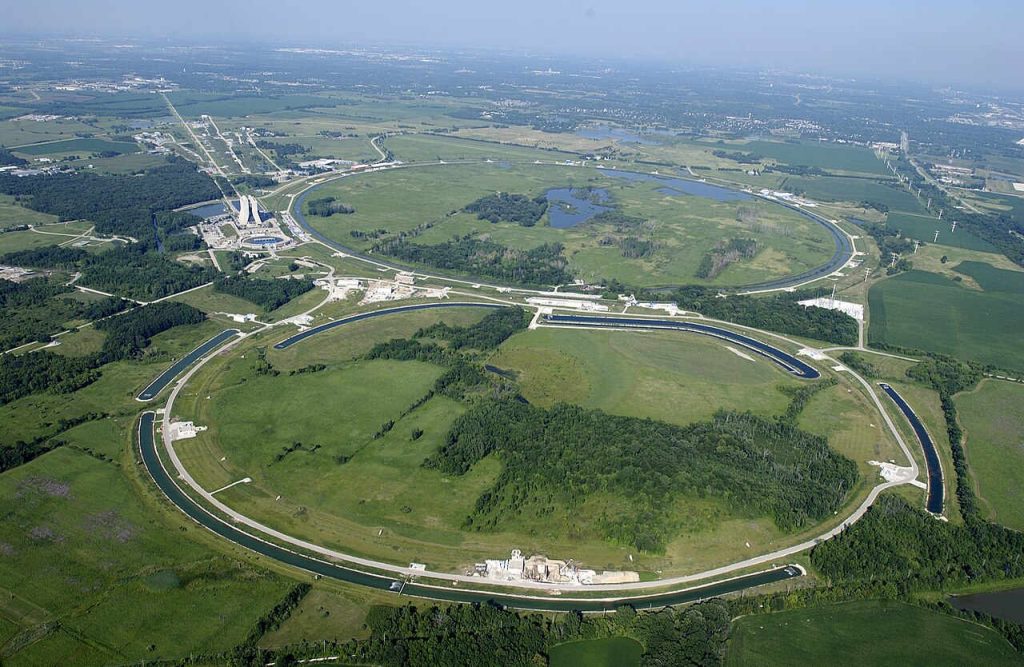
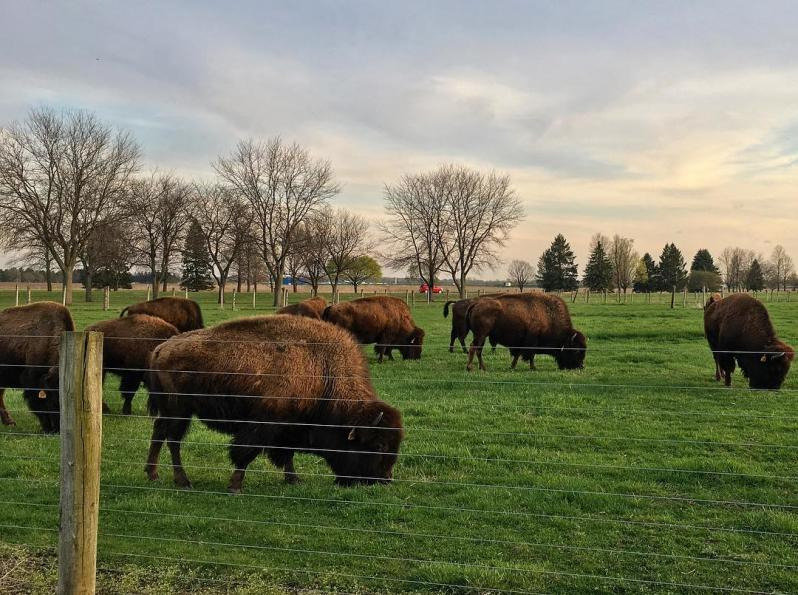
SCIENCE INSIDE, BISON OUTSIDE!: The Fermilab complex occupies as much as 30 square km
What is the largest and most significant project in which you participated?
-As my research mostly focuses on the universe, I am part of large international collaborations and sky surveys such as the Dark Energy Survey (DES) and the new Vera Rubin Legacy Survey of Space and Time (LSST), together with many other researchers from Fermilab and other American and world institutions. Although the telescopes for these sky surveys are in the mountains of Chile, scientists from Fermilab played a major role in technology development, construction, observations, and analysis of this data. Recently, my research in the field of artificial intelligence is becoming more and more multi-disciplinary, so I am also turning to experiments that focus on neutrinos and other particles. I hope that in the future I will have a larger role in experiments such as DUNE.
How significant is your work in some practical, everyday things, where does it all have application in real life?
-Although Fermilab focuses on fundamental research in the field of physics, the technology that is constantly being developed to enable that easily finds commercial applications and is useful to people more broadly. Besides new technologies (magnets, various types of detectors, chips, software, artificial intelligence, etc.), an example I like to cite is that the accelerator at Fermilab was once used for treating cancer patients. Today, this type of technology (proton, neutron, radiation therapy) is applied in hospitals all over the world.
Is Fermilab more of a commercial firm or a state institution, a scientific incubator? Given that in America everything is more or less commercialized, how much do you resist that temptation and do you manage to remain „pure scientists“?
-Fermilab is a state scientific institute, and the projects are funded by the Department of Energy. Fermilab collaborates with other faculties and institutes, but also some companies (for example, when it comes to artificial intelligence), however, the focus is on fundamental research and the development of new technologies, not on profit.
And finally, tell me something about personal plans… Are you perhaps planning a return to Serbia? Has anyone called you from Belgrade, Serbia, offered you a job, a professorship?
-For now, I do not plan to return to Serbia. Although I collaborate with colleagues in Serbia and Europe, at least in the near future, my life and work are here, in Chicago.
Author: Antonije Kovačević; Photo: Handout
MORE TOPICS:
HILARIOUS COMEDY ARRIVES IN AMERICA!: “Montenegrin in bed” is my life story, that is why the play is so funny! (VIDEO)
 Add Serbian Times as your Google source