




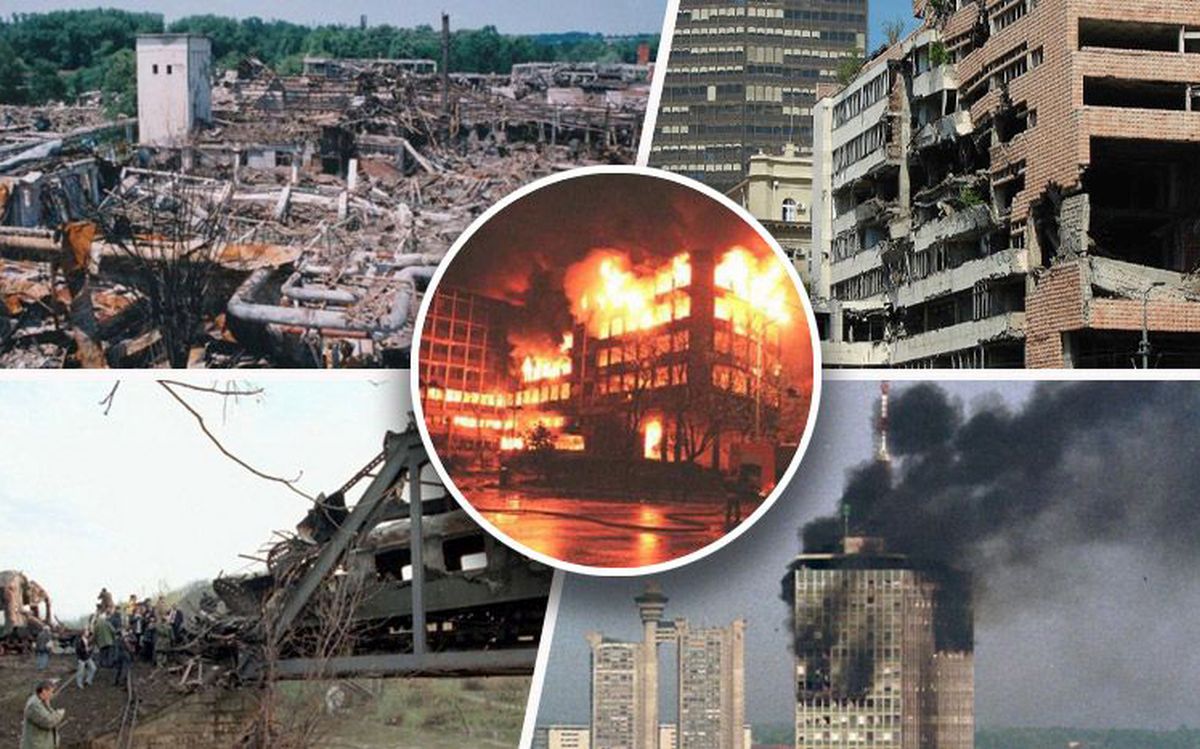
This year in Serbia and among Serbs in the diaspora, the 27th anniversary of the NATO aggression against the Federal Republic of Yugoslavia (FRY) is being marked, which lasted 78 days – from March 24 to June 10, 1999, when the Kumanovo Agreement was signed, officially ending the bombing.
A day later, United Nations Security Council (UNSC) Resolution 1244 was adopted, according to which the autonomous province of Kosovo and Metohija (KiM) remains part of the FRY, while international peacekeeping forces assume responsibility for the implementation of the agreement and the security of the population in this territory.
The NATO alliance’s attack on the Federal Republic of Yugoslavia was carried out without the permission of the United Nations Security Council, which is why that military operation remained remembered as illegitimate and illegal, or rather as an aggression. The FRY of that time found itself under attack by the strongest world power in history.
Participating in the NATO aggression were the USA, United Kingdom, Germany, France, Spain, Italy, Canada, Turkey, Belgium, Netherlands, Norway, Denmark, Portugal, while airspace for the flight of the Alliance’s aircraft was granted by Austria, Albania, Hungary, and the former Yugoslav republics of Slovenia, Croatia, Bosnia and Herzegovina, and North Macedonia.
Permission for the start of the attack on March 24, 1999, was given by Javier Solana, Secretary General of NATO, and the Alliance’s troops were commanded by American General Wesley Clark.
For Germany, it was the first military engagement since the end of the Second World War.
The official pretext for the attack was the unsuccessful negotiations in Rambouillet, as well as the alleged “massacre” in Račak, in which 45 people were killed, mostly members of the so-called “Kosovo Liberation Army” (KLA), which Serbia designates as a terrorist organization. The international community, however, claimed that the majority were Albanian civilians.
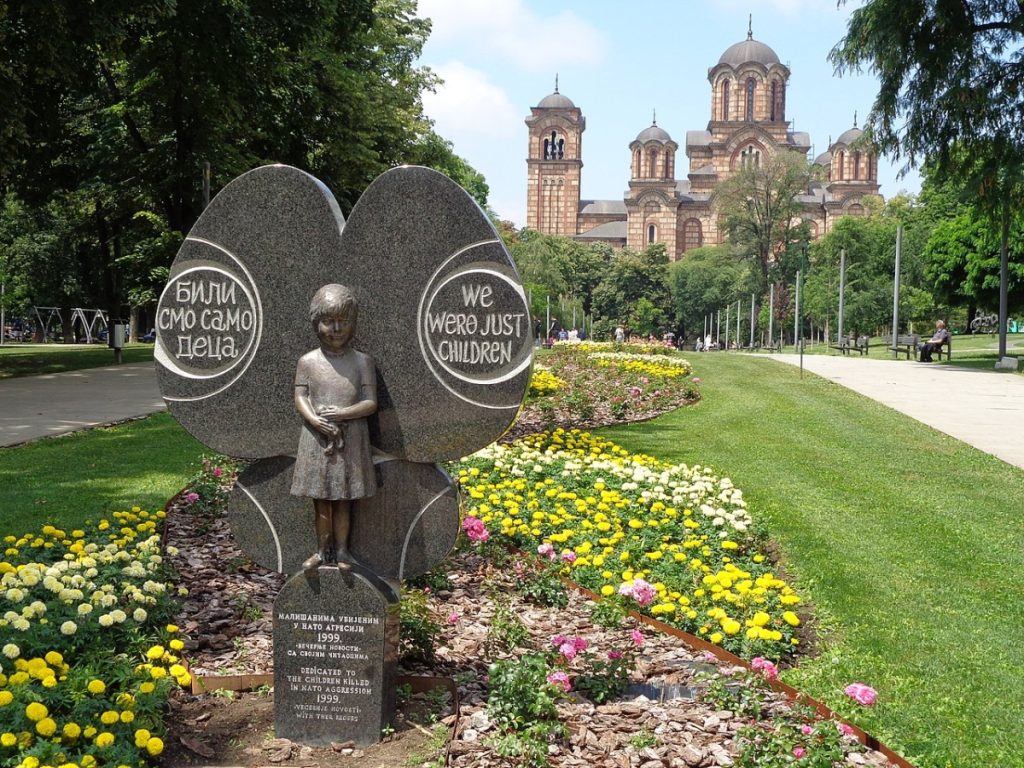
The number of Serbian civilian victims in the NATO bombing has still not been precisely established, and current estimates vary depending on the source. According to Serbian sources, between 1,200 and 4,000 civilians died (approximately 2,500 is most commonly cited), while about 6,000 people were wounded, including 2,700 children. Over 1,000 members of the army, police, firefighters, and other security forces were killed.
Bridges, overpasses, refineries, fuel depots, gas stations, hospitals, health centers, military and civilian agricultural and sports airports were targeted. About 1,400 military facilities were destroyed and 2,000 damaged. The buildings of the Government of Serbia, the General Staff of the FRY Army, the Chinese Embassy, and 200 civilian objects (schools, hospitals, state authorities) were destroyed or damaged.
After the bombing, hundreds of thousands of Serbs had to leave their homes in Kosovo and Metohija. Since the arrival of KFOR security forces, 2,000 persons of Serbian nationality have gone missing, and many of them perished in the notorious “yellow house” in Albania, where their organs were removed and used for sale on the illegal human organ market.
War crimes trials for crimes against Serbs in KiM are still ongoing, but so far no high-ranking leader from so-called Kosovo has been legally convicted. During the process being conducted against Hashim Thaçi, Ramush Haradinaj, and others, numerous witnesses have mysteriously disappeared.
During the 78 days of aggression, NATO aviation engaged 1,200 aircraft that carried out 26,095 flights – of those, combat aviation carried out 18,168, and auxiliary 7,927 flights. The average daily flight rate of the aviation was 334 flights (232 combat and 101 auxiliary flights). Acting on ground targets, NATO aviation carried out 14,191 flights and 2,300 attacks, and engaged in combat 8,200 times. Between 400,000 and 420,000 projectiles of various types were launched at the FRY, with a total mass of 22,000 tons.
NATO destroyed 119 and damaged 907 infrastructure objects, cultural-historical monuments and museums (15), economy, health, and education facilities, as well as 59 religious buildings. Seven large industrial and 5 economic objects were destroyed, along with 11 energy plants, 87 infrastructure objects, 38 bridges, 28 radio and TV repeaters, and 44 transmitters. As many as 595km of railway lines and 12 airports were disabled. During the bombing of Belgrade alone, 19 diplomatic missions, embassies, and residences were damaged.
The bombing caused a humanitarian disaster in KiM. Hundreds of thousands of civilians, mostly women, children, and the elderly, were forced to leave their homes due to fear of the bombing. During the aggression, 600,000 workers lost their jobs in Serbia, and 2,500,000 people were left without basic existential living conditions.
The estimate is that the damage caused by the NATO aggression amounted to about one hundred billion dollars.
The political leaders were American President Bill Clinton, his Secretary of State Madeleine Albright, as well as British Prime Minister Tony Blair.
MORE TOPICS:
FORMER PORTUGUESE KFOR GENERAL: NATO violated law and its own principles by bombing Serbia!
SERB KIDNAPPED GREEK PROSTITUTE IN SWITZERLAND: Accused of multiple rape and abuse!
Source: Serbian Times; Photo: Wikimedia Creative Commons