




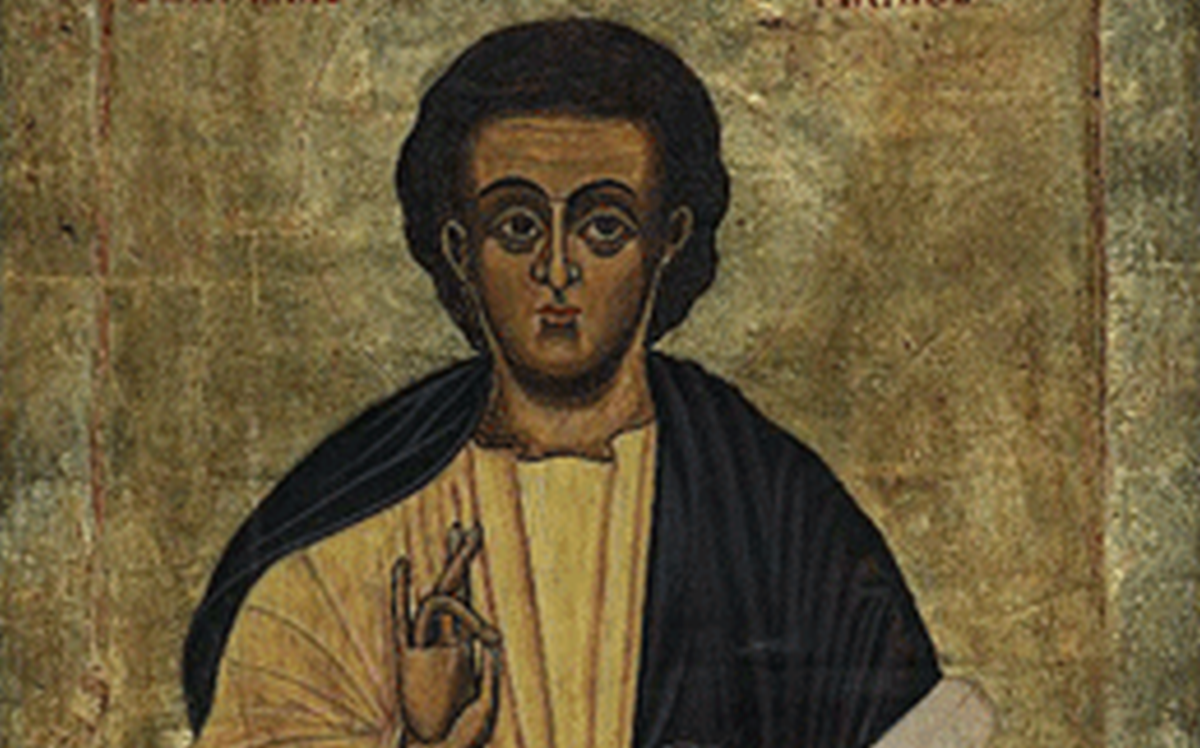
The Serbian Orthodox Church and its believers today celebrate the feast day of Holy Apostle Philip, a holiday in the people’s tradition also known as the Christmas Carnival (Božićne poklade).
This holiday is also significant because this day marks the carnival before the Christmas Fast, which is therefore sometimes called Philip’s Fast.
Holy Apostle Philip was a native of Bethsaida near the Sea of Galilee. He zealously preached the Gospel in Asia and Greece, where the Jews wanted to kill him, but God saved him with powerful miracles. Thus, the Jewish High Priest, who rushed at Philip to beat him, suddenly became blind and completely black.
He suffered martyrdom at the age of 86 when he and Bartholomew were crucified on a tree by pagans. People rushed to take them down but managed to save only Bartholomew, while Philip passed away.
The relics of Saint Philip were later transferred to Rome.
FOLK BELIEFS
According to an old folk belief, on this day one should prepare a rich dinner and rejoice with their household members to drive evil out of the house.
The celebration of Christmas is, namely, preceded by the Great Christmas Fast lasting 40 days, but before it comes the Christmas Carnival, or feasting. These are precisely rich in various folk customs.
According to an old folk belief, on this day one should prepare a rich dinner and rejoice with their household members.
Carnival is considered a day for forgiveness and merriment, so processions of costumed dancers are organized, who, with noise and music, visit settlements and perform various tricks.
After the Carnival, the fast begins, which includes abstaining from rich food, food of animal origin, and alcoholic beverages. This is the physical fast, while the spiritual fast also includes abstaining from bad thoughts, desires, and most importantly, deeds.
In this way, they fight against evil forces and witches, who are believed to have a stronger influence during the Carnival period.
Various customs are associated with this day, which varies from region to region. In some places, all chains in the house are tied up after dinner, eggshells are thrown into the fire, the soles of the feet are rubbed with garlic, and children are dressed in turned-inside-out pajamas and shirts before bedtime.
There is a belief that one should rub the soles of the feet with garlic in the evening and utter the following words: “A witch like a thread, in me teeth like a stake” (Veštica kao konac, u mene zubi kao kolac).
Folk beliefs linked the Carnival period with an increased danger from evil forces and witches, from which people protected themselves in symbolic ways, such as with garlic or by lighting ritual fires (“olalija”). In Homolje, among the Vlach population, there was a custom of jumping over fires and dancing around them.
In Kosovo, some Carnival processions symbolized the wedding guests of Prince Marko (Kraljević Marko).
MORE TOPICS:
RESIGNATION OF ŽELJKO OBRADOVIĆ REJECTED: Partizan’s Executive Board made a unanimous decision!
Source: Novosti, Photo: Wikimedia Creative Commons