




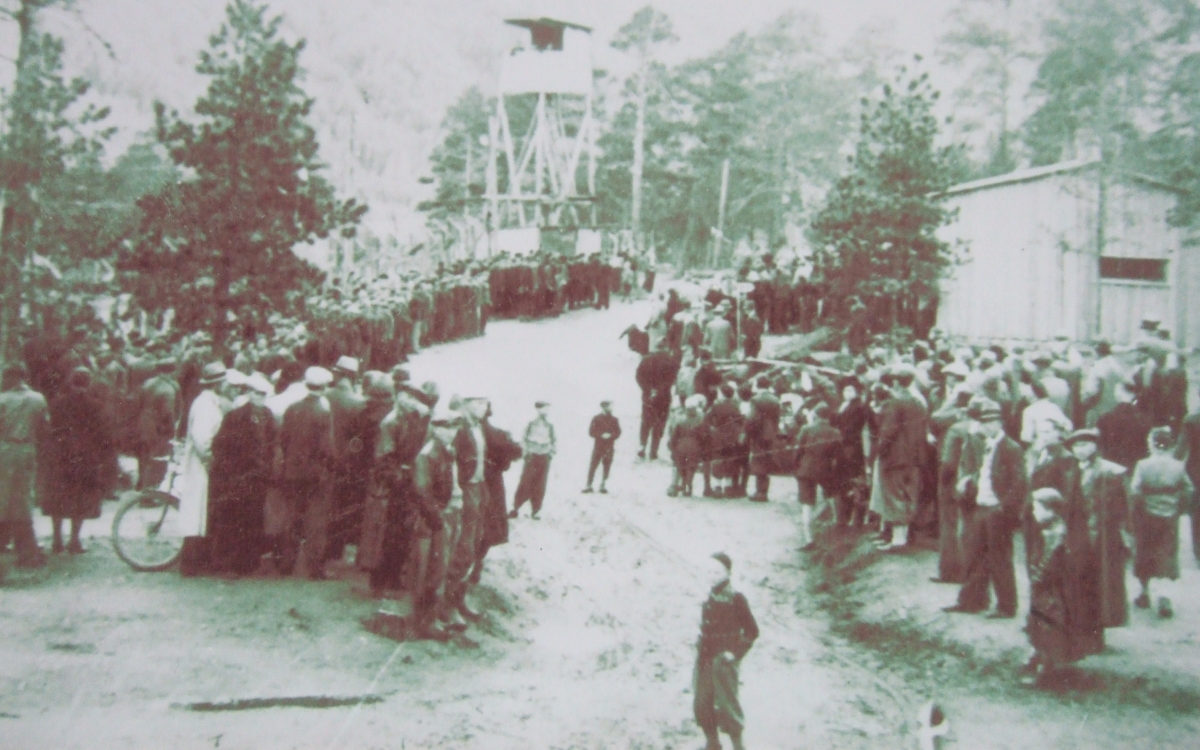
More than eight decades after the end of the Second World War, the truth about the suffering of Serbian children in Nazi camps in Norway is again gaining a place in the public eye.
Thanks to the many years of research work by Branko Dimovic Dimeski, a Serbian writer and publicist who has long dealt with this topic, many families have finally learned the fate of their loved ones.
Historical testimonies indicate that Serbian camp inmates in Norway were deployed to labor camps where they built roads and railways. Among them were minors who, despite their age, were treated the same as adults.
According to some records, children died of exhaustion and hunger. There are also testimonies that some detainees were forced to dig graves, and were then killed and thrown into them and buried without religious markings and a dignified funeral service. The exact number of deceased minors has not been fully established to this day, but it is estimated that it involves hundreds of young lives.
Branislav Gajic’s Vow
One of the families that lived in uncertainty for decades is the Gajic family. Branislav Gajic gave a vow to his father that he would find the grave of his minor uncle Branko Gajic, a sixteen-year-old taken to Norway during the war.
For years he tried to obtain information, without success. The turning point occurred after contact with Branko Dimovic Dimeski. After a detailed check of data and archival documentation, it was determined that the grave is located in Moholt krigsgravplass in Trondheim.
Branislav traveled to Norway and, after eight decades, stood before the grave of his uncle. “I asked for nothing more than the truth and a place where I can light a candle,” he said after the visit.
The fact that after the war, some grave sites were marked with Orthodox crosses, while later the monuments were reduced to general, ideological markings without the emphasized national identity of the victims, draws special attention in this story.
Researchers believe that preserving historical truth is crucial for future generations. It is not about deepening divisions, but about preserving the dignity of the victims and the accuracy of historical facts.
Stories like this one about Branislav Gajic show how strong the need of families is to find and mark the places of suffering of their loved ones. The research of Branko Dimovic Dimeski opened the way to a more systematic study of the suffering of Serbs and Serbian children in Norway and the return of names to those who for decades were only a number in the archives.
MORE TOPICS:
Source: B92; Photo: Wikimedia Creative Commons